Witnessing Ramisa: Grief, Digital Sociality, and the Making of a Public in Bangladesh
Introduction: The Field Interrupted Me
On my way home, I found myself unexpectedly trapped in traffic along Kalshi Road in Mirpur. Vehicles had slowed to a halt. Motorcycles stood motionless. Small groups of people had begun gathering along the roadside and across the street. Television microphones moved through the crowd. Smartphones floated above heads. Children stood beside adults. Some people watched quietly while others shouted slogans.
At first, I assumed I had encountered a temporary interruption of ordinary movement.
I did not stop.
Even after the road became blocked, I continued moving forward.
I parked my motorcycle beside a small vehicle repair shop near the roadside. A young worker from the shop stood nearby. Through a brief gesture of the eyes, I asked him to keep an eye on it. Without much conversation, he appeared to understand.
I started walking.
Initially, I did not immediately take out my camera. I moved slowly through the gathering, observing movements, bodily expressions, conversations, and emerging patterns of interaction. For approximately twenty minutes, I remained mostly within the crowd as another body among many others.
Gradually, I sensed that suspicion surrounding my presence had begun decreasing.
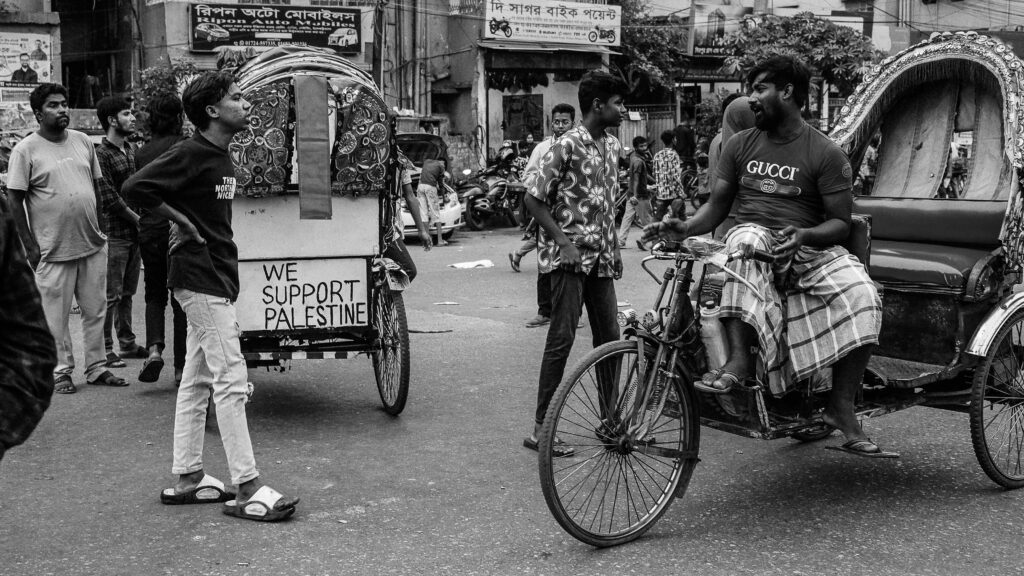
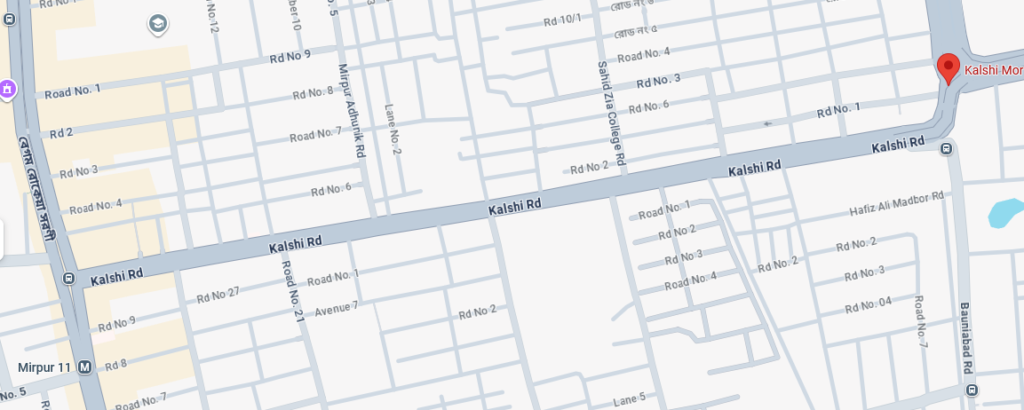
Kalshi Road before becoming a field site.
Only then did I take out my camera.
One local participant approached me and said:
“ঘটনা কি কি হচ্ছে জানতে হলে আপনাকে সামনে যেতে হবে।”
(“If you want to understand what is happening, you need to move further ahead.”)
The statement was small but significant.
It functioned almost like a temporary invitation into the field itself.
I moved forward.
After walking further into the gathering, another spatial pattern gradually became visible. The protest was no longer confined to a single road. It had begun reorganizing surrounding urban space itself.
Roads connecting to the main route had gradually been closed off. Gates along adjacent streets had been shut. In places where no gates existed, temporary barriers had appeared: stools, handcarts, roadside vendor stalls, and whatever objects were available had been moved into place to block entry points.
The occupation appeared improvised, yet organized.
Meanwhile, pressure continued building behind the gathering. Vehicles accumulated. Motorcycles searched for alternate routes. Drivers increasingly turned back whenever possible.
The protest was not merely occupying a road.
It was reorganizing movement itself.
Ramisa’s death had already created a violent disturbance within me as well.
Until that moment I had attempted to maintain distance through observation: recording images, following conversations, and entering the field through the camera lens. Yet the distinction between observer and event had gradually begun weakening.
I was not entering the field untouched.
I had already entered carrying grief.
At several moments I also became aware that the field itself was observing me back.
People repeatedly approached me, questioned me, guided me, included me within conversations, or silently evaluated my presence. My camera did not make me invisible. It made my position negotiable.
Suspicion gradually shifted into temporary acceptance.
One local participant instructed me to move further ahead if I wanted to understand the event properly. Others spoke directly to me about punishment, justice, police, memory, and fear. At one point, while moving through the crowd, I realized I was no longer simply documenting the protest.
I was being incorporated into its emotional field.
Anthropology often imagines fieldwork as entering another world.
Yet sometimes the field interrupts ordinary life and enters the observer instead.
After following the procession for some distance, I stepped slightly away from its movement and attempted to understand not only what was happening, but also what people themselves were making of it.
Within moments, women, children, and other participants carrying banners began organizing themselves into a procession.
Then the march began.
I found myself moving with them, camera in hand.
At that point, I was no longer simply observing a protest from outside.
I had entered the formation of a public.
Methodological Note
This essay draws upon participant observation conducted during and immediately after the protest at Kalshi–Mirpur, alongside photographs, videos, fieldnotes, informal conversations, screenshots, social media posts, and subsequent digital archival collection. Visual materials are treated not merely as illustrations but as ethnographic data.
Online materials are approached not as objective representations of public opinion, but as traces of emerging digital publics, contested moralities, and competing meaning-making processes unfolding across interconnected physical and digital spaces.
This essay avoids reproducing graphic descriptions or images of violence and instead focuses on the social life surrounding the event: grief, witnessing, circulation, negotiation, memory, and public formation.
Most conversations occurred informally while moving through the protest rather than through structured interviews. Many interactions emerged unexpectedly during roadside conversations, movement through crowds, and moments of interruption.
Ramisa and Moral Shock
Not every act of violence becomes a public event.
Bangladesh repeatedly witnesses incidents involving violence against children and women. Many briefly enter news cycles before disappearing into routine circulation. Some remain confined within families and neighborhoods. Others acquire a different social life and expand far beyond the immediate event itself.
Ramisa’s case appeared to become one such moment.
According to circulating reports and public discussions, the killing of Ramisa generated intense emotional reactions across both physical and digital spaces. Yet the force of public response cannot be understood only through the brutality of the event itself. Violence alone does not automatically produce collective action. Public life repeatedly demonstrates that some tragedies remain socially distant while others become sites around which larger anxieties begin gathering.
Social movement scholars have used the term moral shock to describe moments that abruptly disturb ordinary assumptions and compel people toward action. Moral shocks do not simply produce sadness or anger; they reorganize attention itself. They interrupt routines and create situations in which people who may not ordinarily enter public action suddenly feel personally implicated.
Ramisa gradually became more than an individual victim within public discourse.
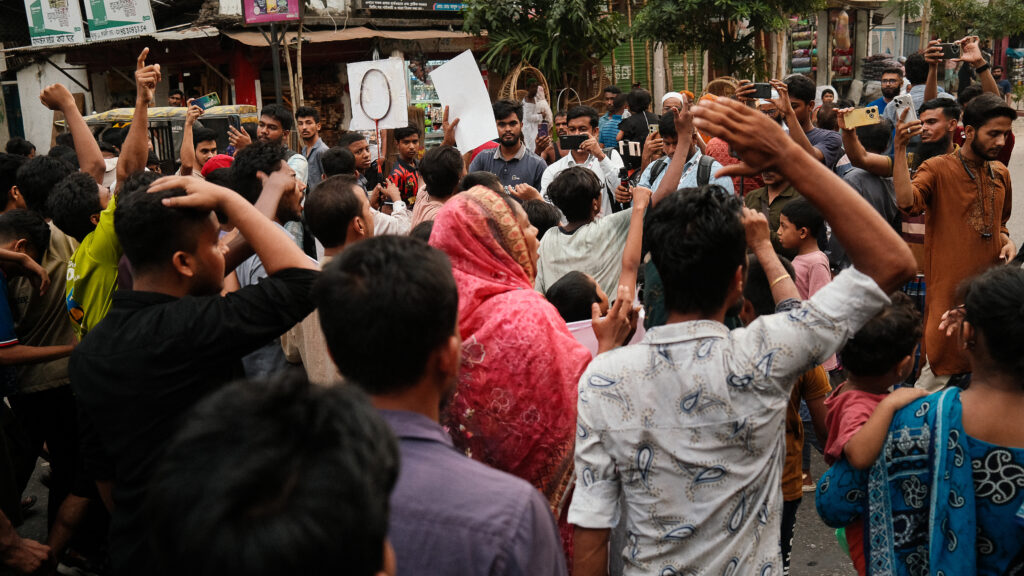
Private grief becoming collective attention.
While moving through conversations in the gathering, I noticed that people rarely remained focused only on Ramisa herself. Participants repeatedly shifted toward broader concerns: daughters, children, women, safety, police, and society itself.
The event repeatedly expanded outward.
People appeared to speak about Ramisa while simultaneously speaking about much larger fears.
People repeatedly attached the event to broader concerns:
- the safety of children,
- violence against women and girls,
- distrust toward institutions,
- fears regarding justice,
- recurring experiences of public disappointment,
- and anxieties surrounding social change.
This process became visible both online and within the field itself.
During the gathering, people rarely spoke only about Ramisa as an individual child. Conversations repeatedly moved outward. People connected her death to previous incidents, to other children, to women they knew, to daughters and sisters, to broader frustrations regarding police, law, and society itself.
The movement gradually shifted:
Ramisa as child
↓
Ramisa as symbol
↓
Ramisa as social question
This transformation could also be observed through the materials circulating online. Statistical graphics connected Ramisa with broader patterns of child violence. Activists framed the event through women’s safety. Others transformed grief into arguments for legal reform, institutional change, religious solutions, or political critique.
The event therefore was no longer experienced simply as:
What happened to Ramisa?
Increasingly it became:
What is happening to society?
This distinction matters.
A crime does not become a public event merely because violence occurred.
It becomes a public event when people begin seeing within it accumulated fears, unresolved frustrations, and larger moral questions.
For a brief moment, Ramisa ceased being experienced only as a family tragedy.
She became a collective rupture.
Gendered Fear and Public Space
Ramisa’s symbolic power within public discourse cannot be separated from gender.
The event was repeatedly discussed not only as violence against a child, but specifically as violence against a girl child. Conversations repeatedly moved toward broader anxieties surrounding daughters, sisters, women, safety, mobility, and vulnerability within everyday public life.
Women appeared throughout the protest not merely as observers but as active participants occupying space, organizing movement, carrying banners, and remaining visibly present within the blocked road.
This matters because roads in Dhaka often remain deeply gendered spaces structured through unequal experiences of visibility, safety, and movement.
Yet during the protest, women did not remain confined to symbolic mourning.
They physically participated in holding public space.
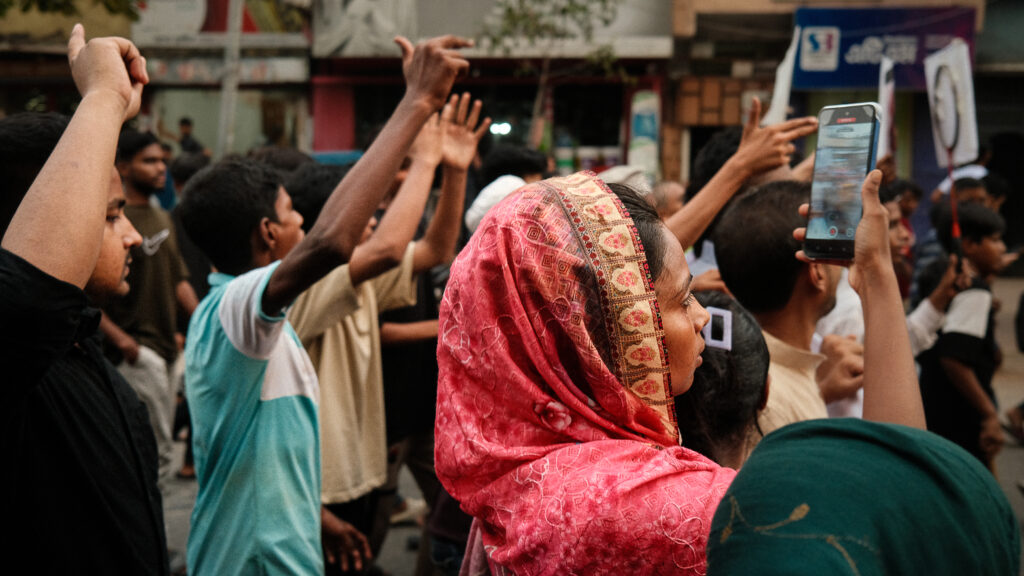
Private grief becoming collective attention.
Anthropologically, violence against women and girls often reorganizes public space through fear. Here, however, grief temporarily reorganized fear into collective presence.
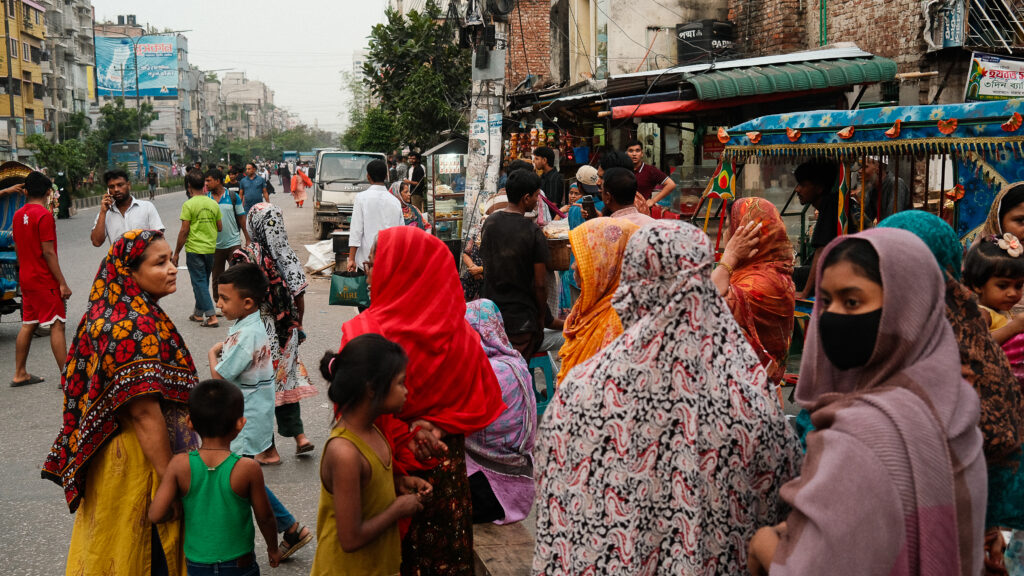
The road became not only a site of mourning but also a site where women visibly participated in producing the public itself.
One detail repeatedly drew my attention.
Women were not merely present within the gathering. Many occupied sections of the road itself. Women carrying banners stood alongside men while others remained within groups holding positions across the occupied space.
Several covered their heads with cloth while remaining visibly present within the gathering.
Streets and Screens Moving Together
My initial assumption after entering the protest was relatively simple: a tragic event had occurred, people had gathered in the streets, and later social media would amplify the response.
The collected materials gradually complicated this assumption.
The streets and screens were not operating sequentially.
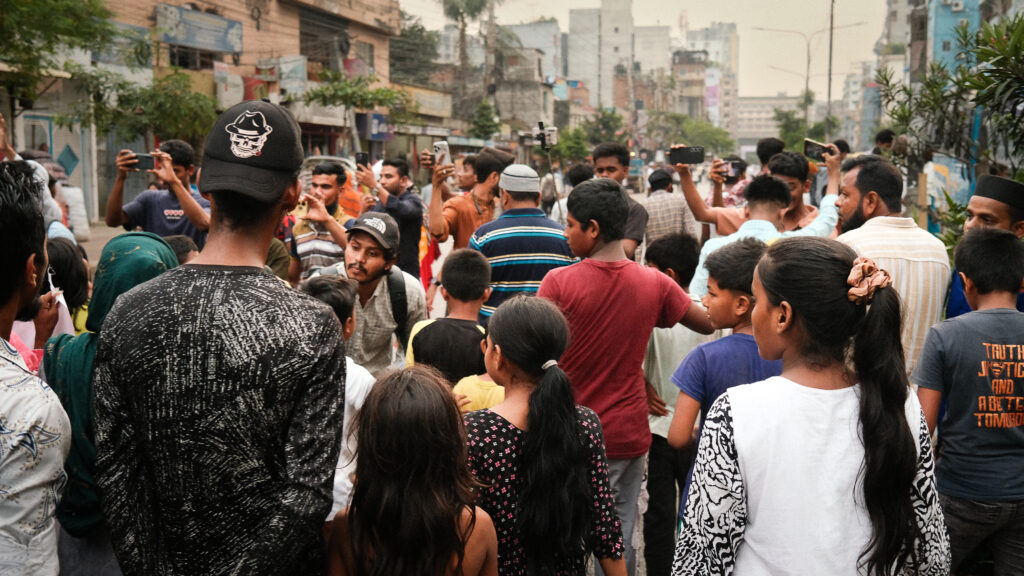
Roads and screens moving simultaneously.
They were operating simultaneously.
While people occupied Kalshi Road and surrounding areas, online spaces were already producing and circulating meanings around the event. Protest calls appeared alongside livestreams. Statistical graphics circulated beside emotional quotations. News screenshots moved together with commentary, posters, legal debates, and demands for punishment. New interpretations continued emerging while the gathering itself was still unfolding.
The event therefore was not moving through a linear trajectory:
Event → Protest → Online reaction
Instead, it increasingly appeared closer to:
Event ↔ Street ↔ Platform ↔ Public meaning
Each space continuously shaped the others.
During the event, digital circulation was not limited to emotional reactions or political arguments. Platforms were also generating immediate forms of public coordination. Social media posts repeatedly circulated:
Traffic Alert
“Mirpur 10 circle blocked by protesters.”
and:
“মিরপুর ১০ পুরো রাস্তা একেবারে ব্লক করে দেওয়া হয়েছে।”
(“Mirpur 10 has been completely blocked.”)
At first glance such posts appear merely informational.
Yet the field suggested a more complicated process.
Rather than reducing participation, the protest itself appeared to be accumulating people.
Small groups repeatedly arrived, paused, watched, asked questions, and joined surrounding conversations. Individuals moved in and out of the gathering while motorcycles, pedestrians, and local residents gradually converged around the site.
The digital notifications did not simply announce obstruction.
They announced an event.
Information appeared to transform the road into a point of attention.
The movement looked less like:
Road blockade
↓
Traffic information
↓
Withdrawal
and increasingly resembled:
Road blockade
↓
Digital circulation
↓
Attention and curiosity
↓
Arrival and gathering
↓
Expanded public formation
Anthropologically, this suggests that information does not merely travel outward from events.
Information can pull people toward events.
Repeated visibility itself appeared to produce social momentum.
People were not only receiving information.
They were receiving signals of collective presence.
Within the field this process became physically observable. The crowd did not appear to be shrinking.
It gradually expanded.
Individuals who had never met one another repeatedly found themselves standing beside one another, watching, discussing, recording, and participating.
The protest therefore was not only occupying urban space.
It was reorganizing urban attention.
As information moved, bodies moved.
The city itself gradually began reorganizing around the event.
The state itself also circulated through these same infrastructures.
It did not appear only through police or administrative presence on the street. It entered the protest through televised speeches, screenshots, statements from ministers, circulating promises of justice, and repeated references to governmental response.
The state therefore was not encountered only institutionally.
It was encountered mediatically.
Phones repeatedly became points through which authority attempted to speak into grief.
While standing within the gathering, I repeatedly noticed people arriving who appeared initially uncertain about what exactly had happened. Many stopped briefly, watched, asked questions, looked at phones, spoke with nearby people, and remained.
The crowd did not appear to be shrinking.
It appeared to be learning about itself while growing.
Witnessing Sociality: Phones, Bodies, and the Production of Visibility
One object repeatedly returned throughout the field materials and photographs:
the smartphone.
Initially, the phone appeared to function merely as a recording device. Yet repeated observation gradually suggested something more complex. Phones were not simply documenting the protest; they were participating in it.
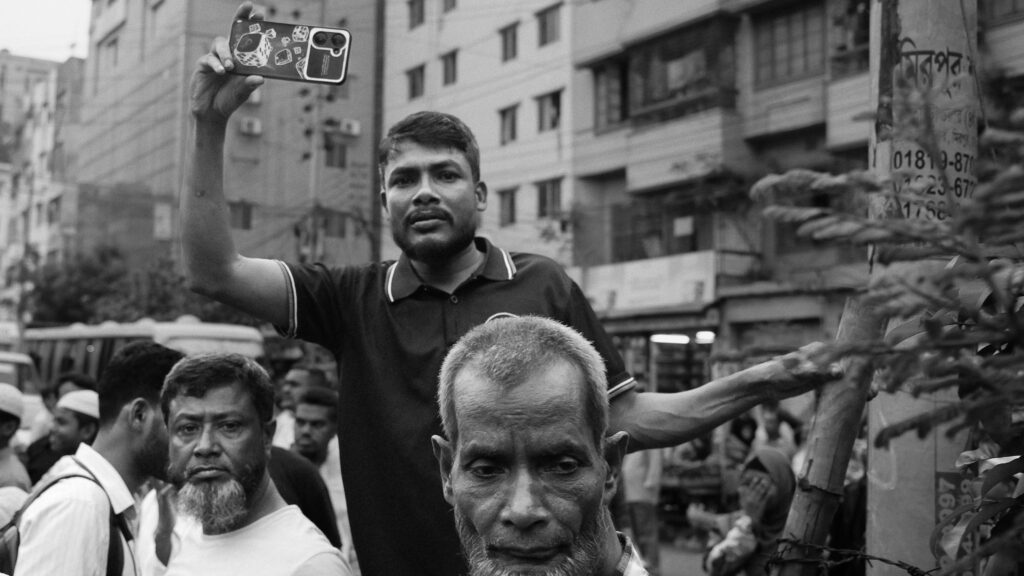
The protest was watching itself.
Across the gathering, raised phones repeatedly appeared above heads. Participants filmed speakers. Protesters filmed journalists while journalists filmed protesters. People filmed one another while simultaneously becoming visible within the recordings of others. Children stood beside adults observing these practices of documentation and circulation.
The boundaries separating participant, observer, witness, journalist, and audience increasingly became unstable.
The protest was not merely being watched.
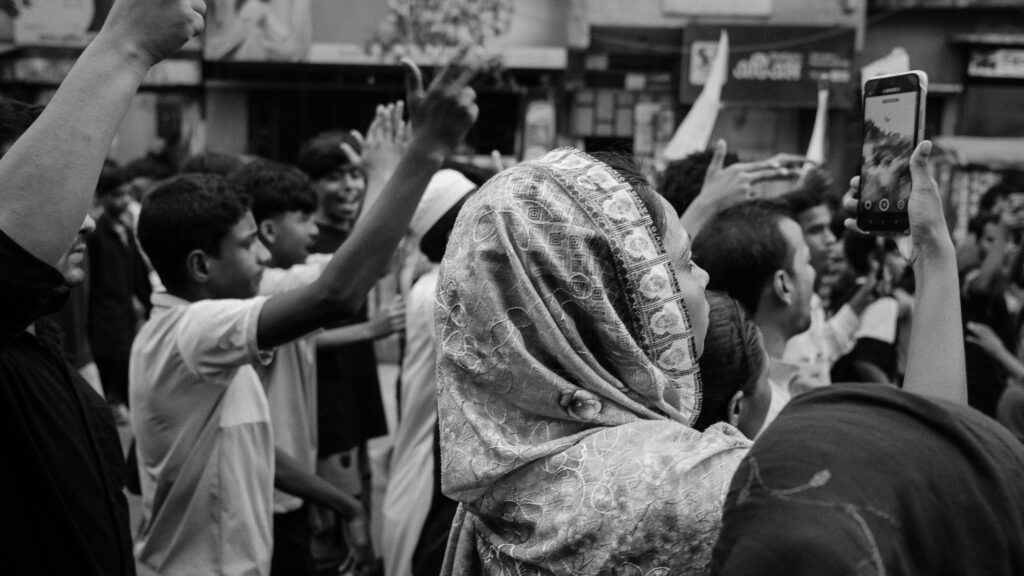
It was watching itself.
Yet the act of witnessing did not remain confined to digital recording alone. It also unfolded through bodily movement and social incorporation.
After following the procession for some distance, I stepped slightly away from its immediate movement and tried to understand not only what was happening, but also what people themselves were making of it.
The gathering looked different from a distance.
Rather than appearing as a single mass, the crowd gradually revealed internal differences and shifting roles. Some shouted slogans. Some watched silently. Some organized movement. Others simply stood and observed. Children moved beside adults. Women carrying banners gathered near the front. Participants repeatedly moved between roles.
People were not merely attending the protest.
They were learning how to inhabit it.
Throughout the field, witnessing repeatedly appeared less as passive observation and more as a social practice.
People were not simply saying:
I saw this.
Nor were they only saying:
I was there.
Increasingly they appeared to say:
Others must see that I saw this.
Visibility itself had become a form of participation.
I refer to this process as Witnessing Sociality:
forms of social connection emerging through shared practices of observation, recording, circulation, and collective moral attention.
Unlike conventional understandings of social movements that focus primarily on organizations, leadership structures, or ideological alignment, witnessing sociality emerges through acts of making attention public.
People who may not know one another become temporarily connected through shared visibility.
Within the field this process repeatedly reproduced itself:
Children observed adults.
Adults observed speakers.
Journalists observed protesters.
Protesters observed journalists.
Participants observed themselves through mobile screens.
The event continuously generated new layers of spectatorship:
observer observing observer observing observer.
What emerged therefore was not simply protest.
It was a public assembled through practices of witnessing.
Importantly, witnessing here should not be understood as passive observation. Witnessing increasingly appeared as a moral activity through which individuals signaled concern, solidarity, outrage, and belonging.
To witness publicly increasingly meant saying:
I refuse to remain absent.
For a brief moment, phones became more than technological objects.
At multiple moments I found myself lowering the camera and simply watching.
Children stood beside adults watching speakers.
Some participants raised phones continuously while others watched the people raising phones.
The protest increasingly appeared to observe itself.
They became temporary public spaces.
My earlier work used the concept of Resistance Sociality to describe forms of collective relation emerging through practices of resistance within digitally mediated political life.
The materials surrounding Ramisa suggest a related but distinct process.
If Resistance Sociality described social relations formed through collective acts of resistance, Witnessing Sociality may describe relations emerging through collective practices of visibility, recording, circulation, and moral attention.
People did not necessarily gather around shared ideology.
They gathered around shared witnessing.
Competing Publics and Competing Futures
If grief initially appeared to gather people together, the field materials gradually suggested something more complicated.
Ramisa’s death did not generate a single public.
It generated multiple publics.
People assembled around the same event, but they did not necessarily assemble around the same meaning.
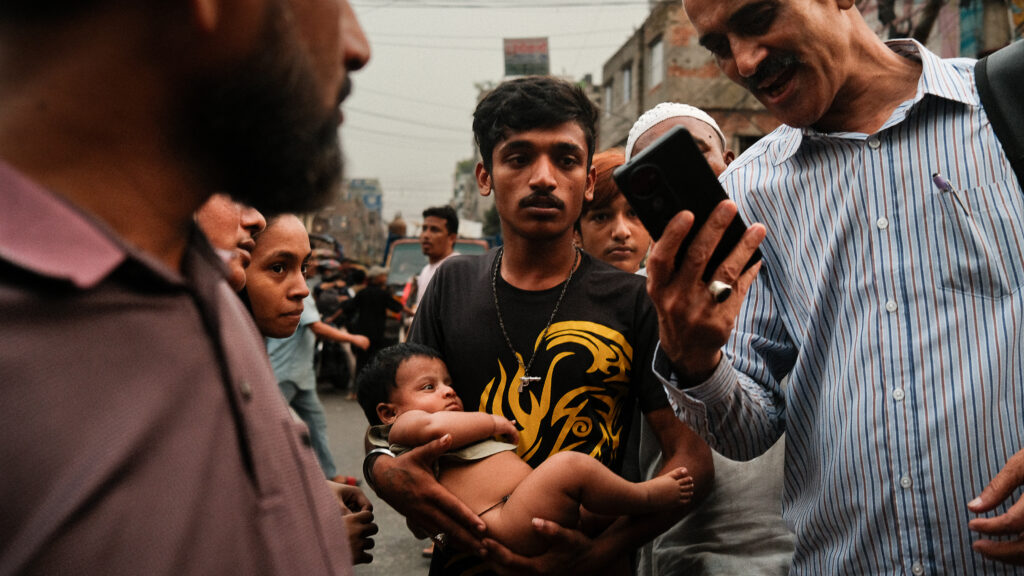
Competing meanings within the same public.
During the protest, a man identifying himself as a journalist moved into the crowd and repeatedly attempted to calm participants. Holding up his mobile phone, he said:
“এই দেখেন, স্বরাষ্ট্র মন্ত্রীর বক্তব্য। মাত্র শেষ হলো। আমি ওখান থেকে আসছি। অবশ্যই বিচার হবে।”
(“Look, here is the Home Minister’s statement. It has just ended. I came from there. Justice will happen.”)
The moment was striking not simply because of the content of his message, but because of the position he occupied within the gathering.
For a brief moment he functioned as a mediator carrying institutional authority into the street. His phone itself became an object of legitimacy. Through the screen, the state appeared to enter the protest space.
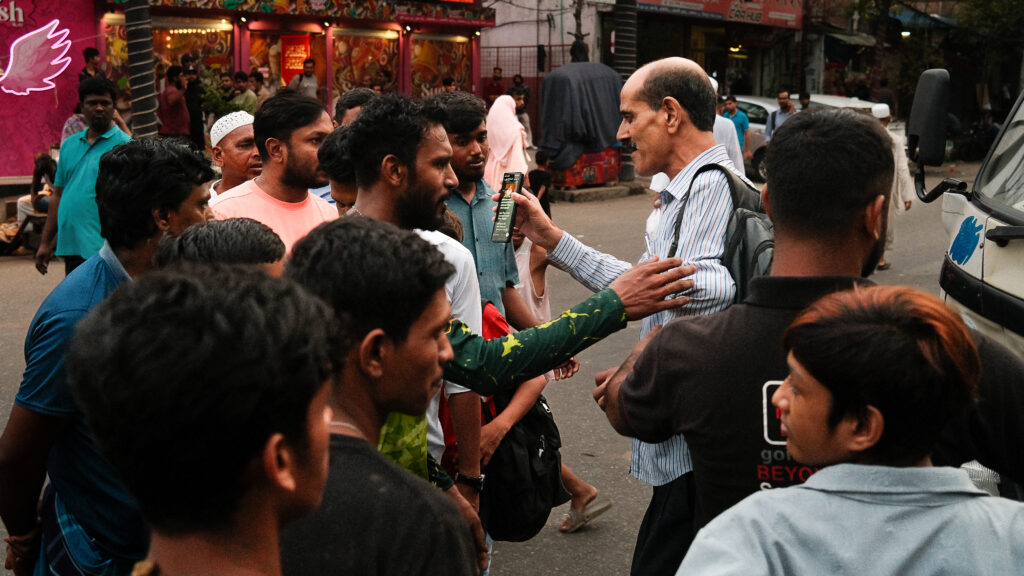
Yet the intervention did not create agreement.
Almost immediately, a younger participant responded sarcastically, questioning both the neutrality and credibility of the speaker. Nearby people reacted, smiled, commented, and entered smaller discussions of their own.
The issue at stake was not merely whether justice would happen.
The issue increasingly became:
Who possesses the authority to persuade people that justice is possible?
Similar struggles repeatedly emerged throughout the online archive as well.
As the event expanded through social media, the discussion gradually moved beyond immediate grief and punishment.
Some demanded:
- immediate punishment,
- exceptional punishment,
- religious legal frameworks,
- and stricter moral regulation.
Others argued for:
- judicial reform,
- police accountability,
- institutional transparency,
- sexual education,
- and broader social transformation.
Still others questioned whether political actors and ideological groups were attempting to occupy grief itself for larger projects.
At times, users debated religion.
At other moments, they debated state failure.
Elsewhere they debated morality, gender relations, legal systems, or the future direction of society itself.
Gradually the central question shifted.
People were no longer only asking:
What happened to Ramisa?
Increasingly they asked:
What kind of Bangladesh should emerge from this moment?
Ramisa’s death became attached to competing futures.
The event transformed into a symbolic terrain where different actors attempted to define:
- justice,
- morality,
- citizenship,
- religion,
- safety,
- and social order.
Anthropologically, this reveals an important feature of contemporary publics.
Publics do not emerge as unified spaces of agreement.
They emerge as contested spaces where different actors struggle to define reality itself.
For a brief moment, Kalshi Road and Facebook timelines appeared connected through a similar process:
both had become arenas where people were not merely expressing grief.
They were competing to determine what grief should mean.
Punishment, Trust, and Moral Urgency
Among the strongest moments during the protest were not the speeches or slogans themselves, but the ordinary conversations unfolding around them.
While moving through the blocked road and documenting the gathering, a young man suddenly approached me and began explaining what he believed should happen to the accused. As he spoke, he placed his hand on my shoulder and physically enacted punishment through gestures. His body moved before his words did. His hands repeatedly illustrated what he imagined justice should look like.
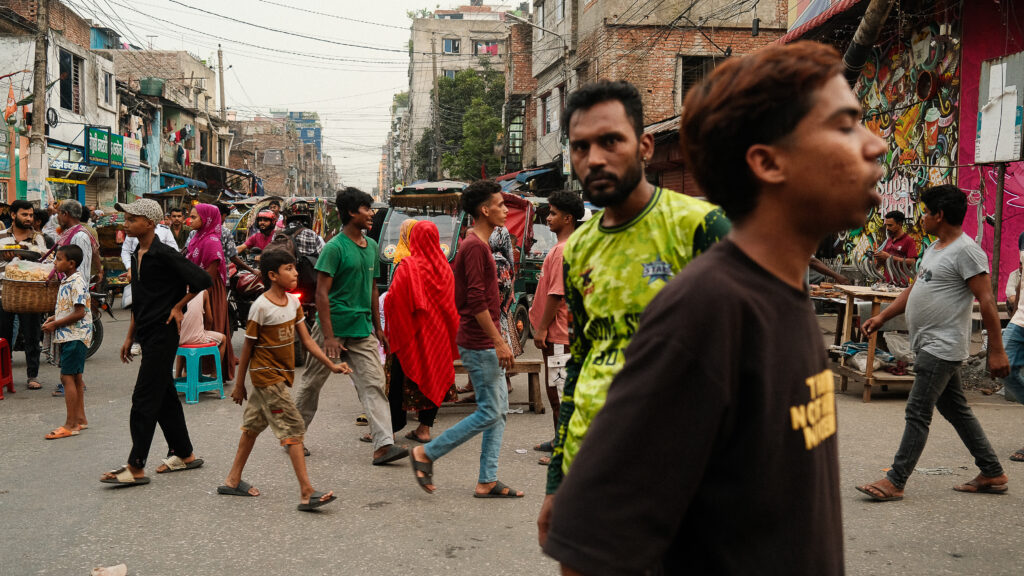
Justice appeared not only as speech but as bodily intensity.
What remained striking was not the specific punitive imagination itself.
It was the manner in which punishment was being embodied.
Justice was not being imagined as an abstract legal process unfolding through institutions and procedures. It was being expressed physically through movement, proximity, and emotional intensity.
Across the protest, similar expressions repeatedly surfaced.
Slogans echoed through the occupied road:
“উই ওয়ান্ট জাস্টিস”
(“We want justice”)
Alongside these chants, demands for immediate and exemplary punishment repeatedly emerged from different sections of the crowd.
At first glance, these slogans appeared to communicate the same demand.
Yet closer observation suggested otherwise.
Two different understandings of justice seemed to coexist.
The first invoked institutional language:
justice through law, accountability, and state action.
The second reflected a more immediate moral urgency:
justice as emotional restoration.
The distinction became increasingly visible through ordinary conversations.
One older woman standing within the gathering said:
“বিচার হবে না। এখনই যা করার করতে হবে, কয়েকদিন পর সব ঠান্ডা হয়ে যাবে।”
(“There will be no justice. Whatever has to be done must be done now; after a few days everything will become quiet again.”)
The statement carried more than frustration.
It expressed a particular temporality of public grief.
Justice here was imagined as something constrained by time itself. The fear was not only that institutions might fail, but that public attention would disappear before justice could arrive.
Elsewhere, similar anxieties repeatedly surfaced. Conversations repeatedly returned to police, legal procedures, delays, and uncertainty.
Anthropologically, these statements reveal something deeper than anger.
Beneath demands for punishment lay a recurring crisis of trust.
Participants were not only expressing rage toward the accused.
They were expressing uncertainty regarding institutions themselves:
- trust in police,
- trust in legal processes,
- trust in public memory,
- and trust in whether justice would remain socially meaningful after media attention faded.
Within such environments, punitive imagination acquires emotional force because it appears immediate and certain.
Institutional justice unfolds slowly and procedurally.
Public grief often unfolds through urgency.
The issue therefore gradually shifted from:
How should the accused be punished?
toward:
Can institutions move at the speed of grief?
And beneath this question lay another anxiety:
Can grief survive longer than the news cycle?
For a brief moment, the protest revealed a tension extending far beyond Ramisa:
between procedural time and emotional time.
Law moves slowly.
Pain rarely does.
Negotiating Public Life: Roads, Learning Protest, and Temporary Publics
As the protest continued, Kalshi Road gradually transformed into something more than a site of demonstration.
It became a temporary social institution.
Roads are generally imagined as infrastructures of movement. Their purpose is circulation: vehicles move, people travel, goods pass, and everyday life reproduces itself through mobility. Yet during moments of crisis, ordinary infrastructures sometimes acquire different meanings.
Kalshi Road temporarily ceased functioning only as a road.
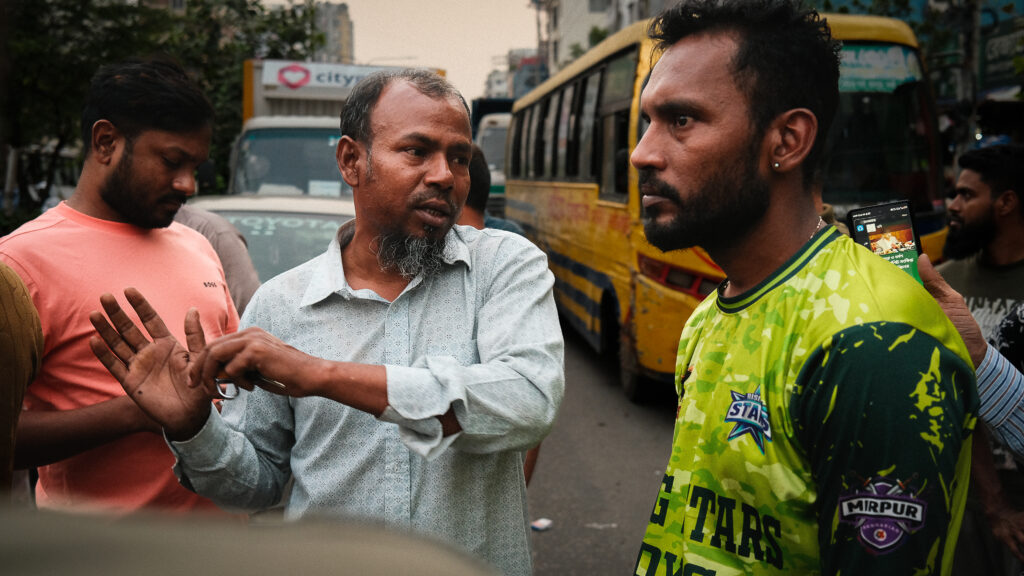
Shared suffering became a language of negotiation.
It became a meeting place, a site of grief, a space of negotiation, and a public arena where strangers encountered one another.
This transformation became visible through the ordinary interactions unfolding around the blocked road itself.
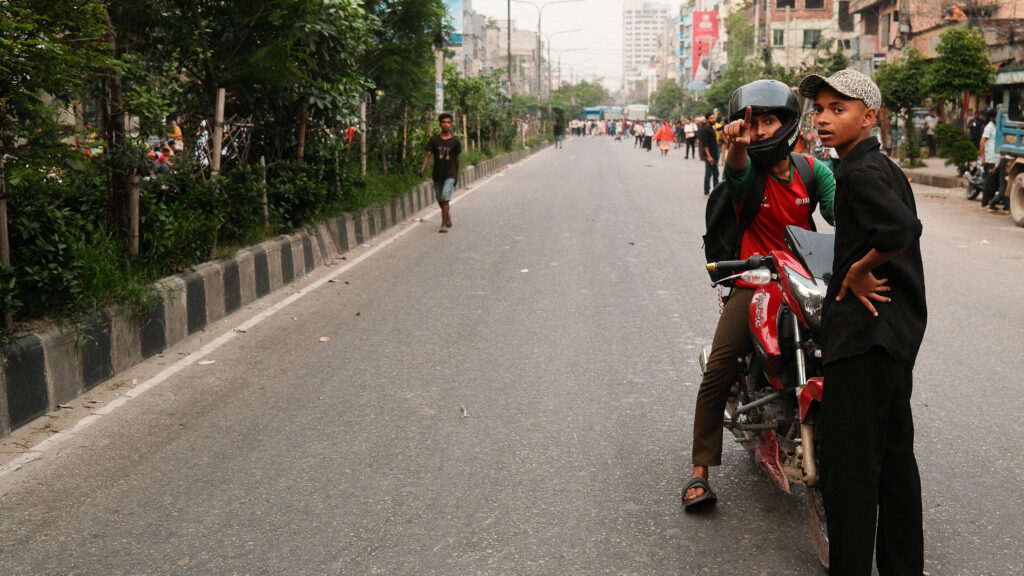
The blockade learned flexibility.
As traffic accumulated and movement slowed, drivers and passengers trapped behind the gathering gradually stepped out of their vehicles. Rather than immediately responding with anger, several approached participants and attempted to negotiate passage through expressions of shared emotion.
Some said:
“ভাই, আমরা কানছি, কষ্ট পাইছি। আমাদের ছেড়ে দেন।”
(“Brother, we are crying too, we are hurting too. Please let us pass.”)
The statement was revealing.
Those interrupted by the protest did not necessarily reject the moral basis of the protest itself.
They did not say:
Move away.
Nor did they say:
Stop protesting.
Instead they said:
We are suffering too.
Suffering itself had become a language of negotiation.
Another feature gradually became visible as I remained within the gathering.
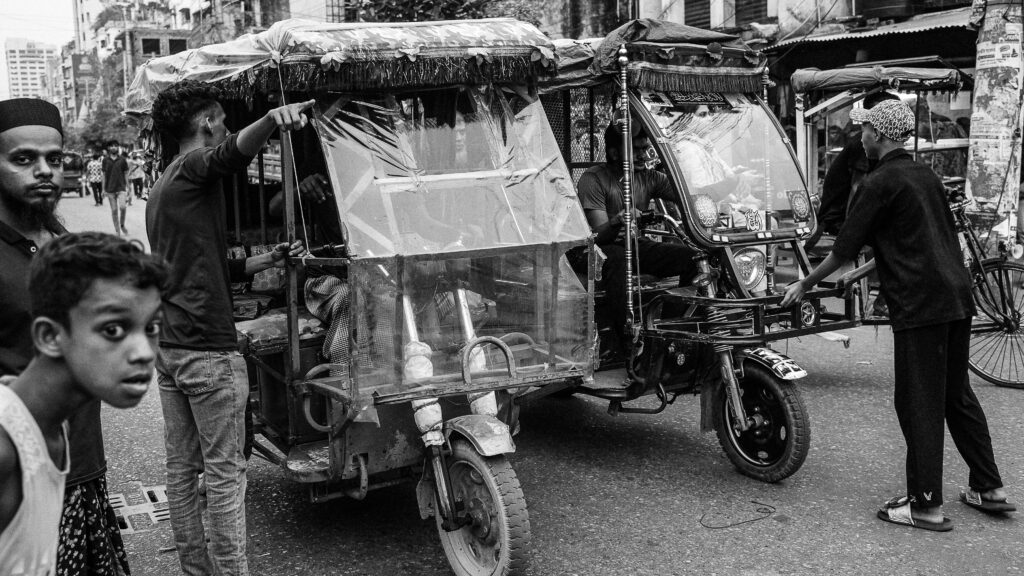
Most participants did not appear to be professional activists or experienced organizers. There was little evidence of formal choreography, established leadership structures, or disciplined coordination. Roads were blocked, adjusted, reopened in parts, and reorganized through trial and error. Participants repeatedly discussed where people should stand, how movement should be controlled, and how surrounding roads should be managed.
The protest itself seemed to be teaching people how to protest.
Anthropologically, this is significant because collective action is often imagined as emerging through organized structures and experienced actors. Yet many forms of public action emerge differently.
People were not entering the protest already knowing what to do.
They were becoming protesters through doing.
At the same time, this learning process did not create rigid boundaries.
At one point, two motorcyclists approached the gathering and explained that they needed to reach a hospital. Participants immediately allowed them to pass.
The interaction was striking.
Despite road occupation and emotional intensity, the blockade did not operate through absolute closure.
Exceptions were negotiated through shared moral reasoning.
Elsewhere, a pedestrian who had become stranded while passing through the area remarked:
“ঠিকই আছে। এত যে আন্দোলন করে পাব্লিক, এইবার ঠিক জিনিসের জন্য করছে।”
(“This is right. People protest so much these days; this time they are protesting for the right thing.”)
The statement revealed another process unfolding within the protest:
legitimacy itself was being socially produced.
Not everyone present had arrived as a participant.
Some arrived as observers.
Some arrived accidentally.
Some arrived because movement itself had become impossible.
Yet even among those initially external to the protest, judgments gradually emerged regarding whether the gathering itself was morally justified.
The question was no longer simply:
Is the road blocked?
Increasingly it became:
Is this blockage morally worth it?
The road itself had also become socially reorganized.
Women appeared in large numbers alongside men. Many stood shoulder to shoulder occupying sections of the street, some carrying banners while others remained within discussion groups and movement formations. Several had covered their heads with cloth while maintaining visible presence within the occupied road.
The significance of this observation did not lie simply in demographic presence.
It lay in spatial presence.
Women were not merely standing within the protest.
They were helping hold the road itself.
For a brief moment, roads stopped functioning only as infrastructures of movement.
They became temporary publics where grief, negotiation, learning, interruption, and collective presence encountered one another.
I eventually moved toward the roadside and stood beside a fruit seller’s cart.
There, away from slogans and microphones, smaller negotiations repeatedly unfolded.
At one point an older woman asked the shopkeeper to move his cart into the road blockade.
Standing with folded hands, he repeatedly apologized.
The fruit cart appeared caught between economic life and protest life.
Later, two motorcyclists explained that they needed to reach a hospital.
Participants immediately opened a path.
Silent Witnesses
Not everyone within the protest shouted slogans or entered visible confrontation.
Some simply watched.
Children stood beside adults observing the gathering without speaking. Some women remained within clusters of people silently holding presence rather than publicly leading chants. Others recorded events quietly through phones. Some stranded commuters stood at the edges of the road watching conversations unfold without directly entering them.
Anthropologically, publics are not assembled only through speech.
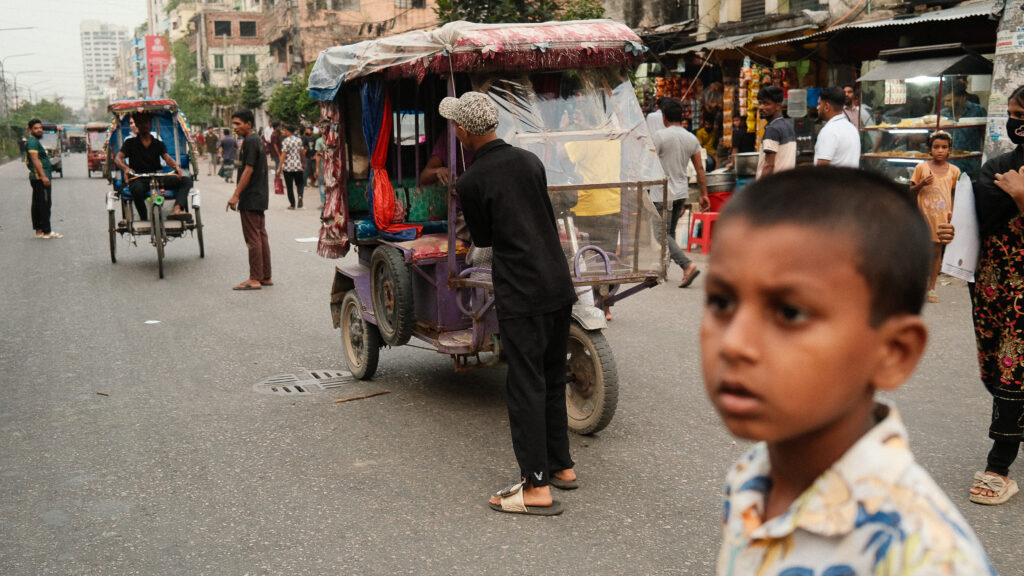
Not everyone shouted.
They are also assembled through silence, waiting, watching, and bodily presence.
Silence itself appeared socially meaningful within the protest.
People did not need to speak loudly to become part of the event.
To remain present was often enough.
This is important because political analysis frequently privileges visible speech, slogans, leadership, and declaration. Yet many forms of public participation emerge differently: through attention, observation, proximity, and silent witnessing.
The protest therefore consisted not only of voices.
It also consisted of listeners.
Place Matters: Kalshi, Mirpur, and Urban Sociality
The spatial location of the protest also mattered.
Kalshi and the surrounding Mirpur–Pallabi area carry layered urban histories and socially diverse populations, including long-settled Urdu-speaking communities often identified as Bihari alongside Bengali residents and other migrant urban populations.
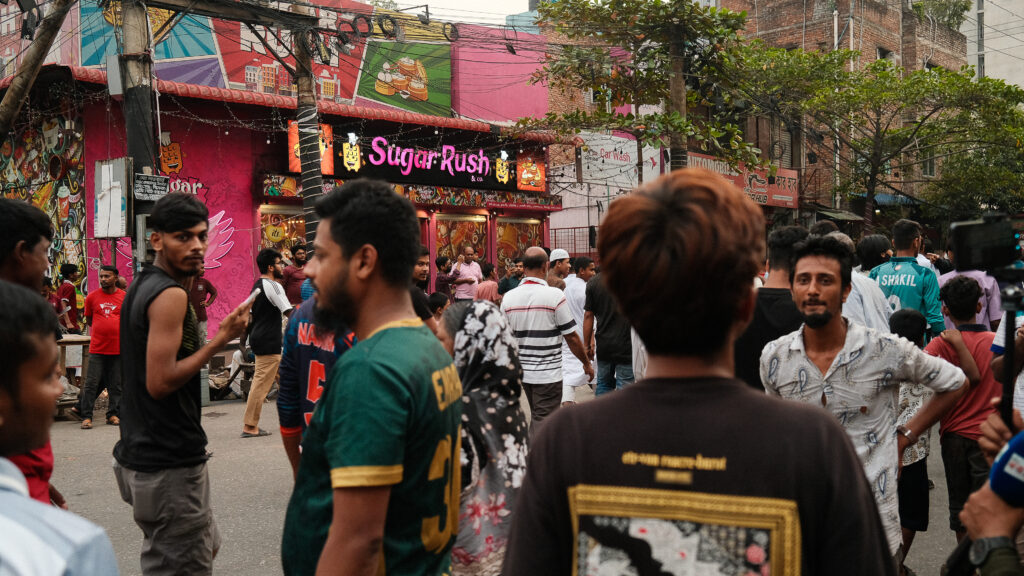
The crowd itself reflected this heterogeneity.
During the gathering I became aware that participants did not appear socially homogeneous. Local residents later mentioned the presence of long-established Bihari communities alongside Bengali residents and others living within surrounding neighborhoods.
The crowd repeatedly moved across these boundaries.
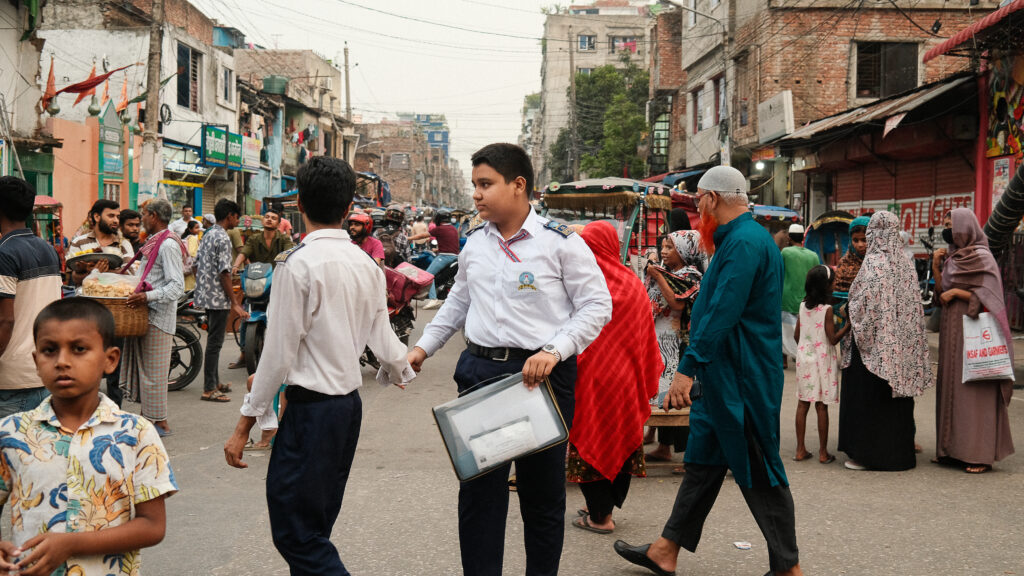
Participants did not appear socially uniform. Children, local residents, commuters, workers, women, youth, bystanders, and temporary observers repeatedly moved in and out of the gathering.
Differences did not disappear.
Yet for a brief moment they appeared suspended beneath a shared moral concern.
Anthropologically, publics do not emerge in abstract space.
They emerge through historically layered localities carrying memories, inequalities, tensions, and everyday forms of coexistence.
The protest therefore was not occurring within an empty road.
It was unfolding within a socially dense urban landscape already shaped by histories of migration, marginality, and shared proximity.
Beyond Outrage: Memory, Visibility, and the Struggle Against Disappearance
Throughout the protest, one concern repeatedly returned—not only through slogans or online posts, but through ordinary conversations among participants.
People feared forgetting.
The concern appeared in different forms. Some worried that justice would not happen. Others worried that public attention itself would disappear. Beneath anger, grief, and demands for punishment lay a quieter anxiety:
that Ramisa would gradually become another name briefly remembered and then absorbed into routine social memory.
One older woman standing within the gathering had said:
“বিচার হবে না। এখনই যা করার করতে হবে, কয়েকদিন পর সব ঠান্ডা হয়ে যাবে।”
(“There will be no justice. Whatever has to be done must be done now; after a few days everything will become quiet again.”)
Her words carried more than distrust toward institutions.
They expressed fear regarding time itself.
People were not only documenting events. They were resisting disappearance.
Justice here was not imagined as an abstract legal possibility unfolding slowly through procedures and institutions. It was imagined as something threatened by disappearance. The anxiety was not only that institutions might fail, but that collective attention itself might move elsewhere before justice could arrive.
Throughout the collected materials, similar concerns repeatedly surfaced:
- another event would replace the present one,
- public attention would shift,
- outrage would fade,
- grief would become ordinary,
- and memory itself would weaken.
Anthropologically, contemporary digital publics contain an important paradox.
Digital infrastructures make suffering extraordinarily visible.
At the same time, they accelerate replacement.
One image appears.
Then another.
One tragedy emerges.
Then another.
One name circulates.
Then another.
Visibility expands.
Attention fragments.
Yet the materials surrounding Ramisa revealed something else as well.
People did not simply consume grief.
They archived it.
They photographed.
They recorded.
They livestreamed.
They reposted.
They circulated screenshots.
They gathered.
These acts were not merely communicative.
They were acts of preservation.
Perhaps this explains why phones repeatedly rose above heads throughout the protest. People were not only documenting events.
They were resisting disappearance.
Forgetting is rarely experienced merely as absence.
For many participants, forgetting appeared closer to another form of social violence—a second loss occurring after the first.
To disappear from public memory is to risk remaining socially unfinished.
People therefore were not only demanding justice.
They were struggling to keep memory alive.
For a brief moment, roads, bodies, phones, screenshots, and timelines appeared to work together against forgetting.
Later, while reviewing photographs and videos, I repeatedly found myself returning to small moments I had initially overlooked: children watching quietly, folded hands, roadside conversations, and people standing at the margins.
Sometimes what survives fieldwork is not the slogan itself.
Sometimes it is the pause surrounding it.
Conclusion: Entering a Public While It Was Becoming
When I first stopped at Kalshi Road, I thought I had encountered a blocked road and a gathering interrupting ordinary movement. I assumed I had briefly paused within an unexpected disruption of everyday life.
Later, after revisiting photographs, conversations, screenshots, videos, and fieldnotes, that interpretation gradually became insufficient.
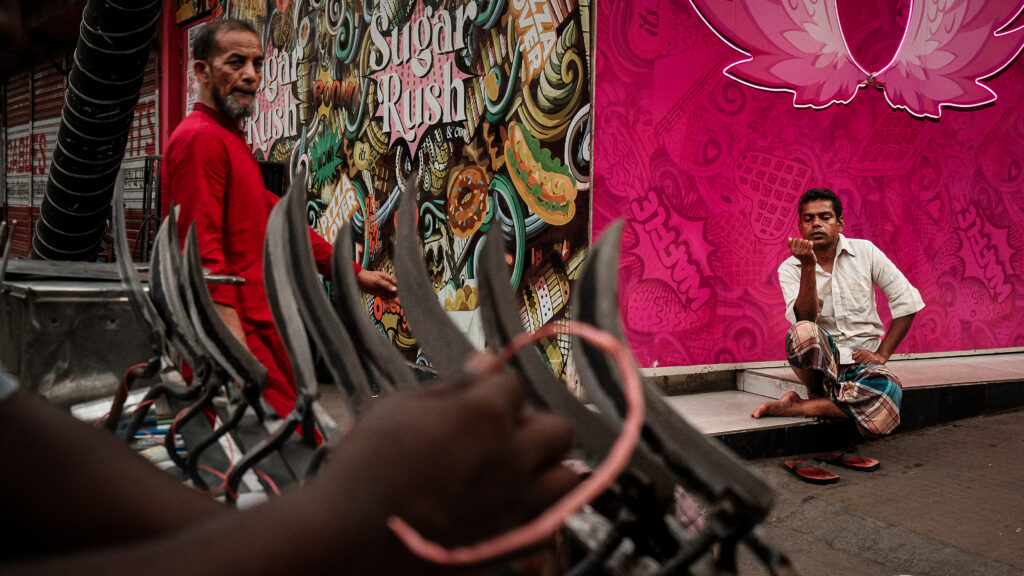
The road stopped. Social life accelerated.
I had not simply encountered a protest.
I had entered the formation of a public.
Ramisa’s death generated more than grief.
It generated movement.
People moved into roads.
People moved toward screens.
People moved toward conversations.
People moved toward explanations.
People moved toward anger, memory, punishment, religion, reform, and competing futures.
The event repeatedly crossed boundaries that ordinarily remain separate:
private grief and public life,
street and platform,
observer and participant,
documentation and memory,
emotion and politics.
What emerged therefore was not a singular public united around one meaning.
Multiple publics appeared simultaneously, each attempting to define justice, morality, responsibility, and the future differently.
Yet despite these differences, one concern repeatedly surfaced throughout the field and online materials:
the fear that suffering would disappear.
Perhaps this explains why people repeatedly raised phones above their heads.
Perhaps this explains the urgency within slogans, the emotional intensity of conversations, the repeated screenshots, the livestreams, and the constant circulation of images and posts.
People were not simply reacting.
They were attempting to prevent disappearance.
Throughout this essay, I suggested that contemporary public life increasingly emerges through what I call Witnessing Sociality:
forms of social connection produced through collective practices of observation, recording, circulation, and moral attention.
People who had never met one another became temporarily connected through shared acts of witnessing.
To witness publicly increasingly meant more than seeing.
It meant saying:
I refuse to remain absent.
For a brief moment, roads became archives.
Phones became public spaces.
Strangers became witnesses.
And a child’s death became a mirror through which society briefly looked back at itself.
When I first parked my motorcycle beside the roadside shop and walked into the crowd, I thought I was entering a field site.
Looking back now, the field had already entered me.
Throughout this essay I argued that contemporary public life increasingly emerges through practices of collective witnessing.
People who had never met one another became temporarily connected through shared acts of observation, circulation, grief, and moral attention.
If Resistance Sociality described collective relations formed through acts of resistance, Witnessing Sociality may describe collective relations formed through practices of visibility itself.
In contemporary digital life, publics increasingly emerge not only through ideology or organization, but through shared attention directed toward suffering, memory, and presence.
The unresolved question remains:
What survives after the crowd leaves?
Because perhaps the most important issue is not whether publics emerge.
Perhaps the more difficult question is whether they can remain alive after grief fades.
When I parked my motorcycle beside the roadside shop and walked into the crowd, I thought I was entering a field site.
Looking back now, the field had already entered me.
References
Ahmed, S. (2004). The cultural politics of emotion. Edinburgh University Press.
Appadurai, A. (1996). Modernity at large: Cultural dimensions of globalization. University of Minnesota Press.
Butler, J. (2004). Precarious life: The powers of mourning and violence. Verso.
Butler, J. (2009). Frames of war: When is life grievable? Verso.
Castells, M. (2008). The new public sphere: Global civil society, communication networks, and global governance. The Annals of the American Academy of Political and Social Science, 616(1), 78–93. https://doi.org/10.1177/0002716207311877
Castells, M. (2015). Networks of outrage and hope: Social movements in the internet age (2nd ed.). Polity Press.
Chowdhury, M. Z. (2019). Resistance Sociality in the Shahbag Movement: A Critical Understanding of Social Media, Sociality and Resistance in Bangladesh (Doctoral dissertation, Hiroshima University).
Chowdhury, M. Z. (2026). Post-Shahbag: The rise of social-commerce and transformative online “Islamic public sphere” in Bangladeshi digital space. In M. Togawa, H. Kabir, & M. M. Imran (Eds.), Islamization in ‘Secular’ Bangladesh: Beyond Bipolar Opposition. Springer.
Chowdhury, M. Z. (2026). Fieldnotes, photographs, informal conversations, and participant observation materials collected during the Kalshi–Mirpur protest following Ramisa’s death [Unpublished ethnographic archive].
Chowdhury, M. Z. (2026). Digital archive including screenshots, social media discussions, protest announcements, comments, and online circulation collected during and immediately after the Ramisa protest [Unpublished archive].
de Certeau, M. (1984). The practice of everyday life. University of California Press.
Fuchs, C. (2012). Some reflections on Manuel Castells’ book Networks of outrage and hope. tripleC: Communication, Capitalism & Critique, 10(2), 775–797.
Geertz, C. (1973). The interpretation of cultures. Basic Books.
Gerbaudo, P. (2012). Tweets and the streets: Social media and contemporary activism. Pluto Press.
Habermas, J. (1989). The structural transformation of the public sphere: An inquiry into a category of bourgeois society (T. Burger, Trans.). MIT Press. (Original work published 1962)
Jasper, J. M. (1997). The art of moral protest: Culture, biography, and creativity in social movements. University of Chicago Press.
Lefebvre, H. (1991). The production of space. Blackwell.
Lefebvre, H. (2003). The urban revolution. University of Minnesota Press.
Papacharissi, Z. (2015). Affective publics: Sentiment, technology, and politics. Oxford University Press.
Papacharissi, Z. (2016). Affective publics and structures of storytelling: Sentiment, events and mediality. Information, Communication & Society, 19(3), 307–324. https://doi.org/10.1080/1369118X.2015.1109697
Trottier, D., & Fuchs, C. (Eds.). (2015). Social media, politics and the state: Protests, revolutions, riots, crime and policing in the age of Facebook, Twitter and YouTube. Routledge.
Turner, V. (1969). The ritual process: Structure and anti-structure. Aldine Publishing.
News, Public Reports, and Empirical Sources
Bangladesh Sangbad Sangstha (BSS). (2026, May 21). PM arrives at slain Ramisa’s family residence at Pallabi. BSS report on PM visit
The Business Standard. (2026, May 21). Justice for Ramisa: Outrage grows nationwide, calls mount to end child abuse. TBS report on nationwide protests
The Daily Star. (2026, May 22). Public outrage mounts over Ramisa murder. Daily Star protest report
Jago News 24. (2026, May 21). Protest at Pallabi police station demanding justice for Ramisa. Jago News report on Pallabi protest