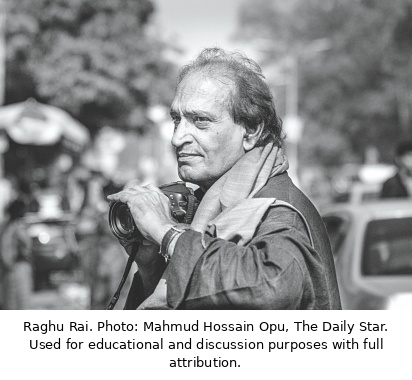
After the Witness: Raghu Rai and the Ethics of Seeing in the Age of Promptography
Photo full credit: Raghu Rai . Photo: Mahmud Hossain Opu, The Daily Star Used for educational and discussion purposes with full attribution.
Raghu Rai’s photographs remind us that photography is not merely image-making but an ethical act of witness. This essay reads Rai through visual anthropology, Bangladesh 1971, Bhopal, and the age of AI promptography.
Notes from a Photographer, Visual Anthropologist, and Teacher of Digital Culture
Raghu Rai’s death is not only the death of a great photographer. It is the passing of a discipline of seeing.
In one of his early remembered images, a baby donkey stands in the everyday dust of North India. There is nothing spectacular in the scene: no state leader, no disaster, no war, no decisive historical event announcing itself. Yet the image already contains the grammar of Rai’s lifelong practice: attention to the ordinary, tenderness without sentimentality, form without theatricality, and a refusal to separate life from history. The small animal is not forced into symbolism. It is allowed to be present.
This may be the first lesson of Raghu Rai: the ordinary is never merely ordinary.
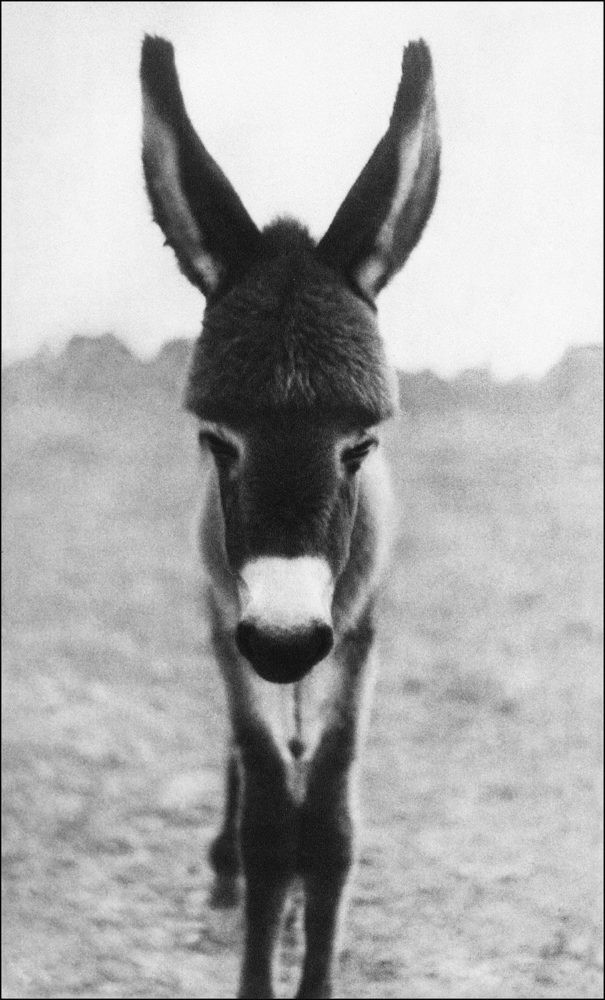
Delhi/Haryana, 1965: A baby donkey, one of the first photographs by Raghu Rai, Delhi, 1965. © Raghu Rai Foundation
Across six decades, Rai photographed streets, crowds, rituals, cities, political leaders, refugees, disasters, spiritual figures, domestic scenes, and public life. Magnum Photos remembers him as a photographer who chronicled Indian culture, spirituality, political conflicts, and major public figures over sixty years; he died in Delhi on 26 April 2026 at age 83. The Guardian’s obituary describes a career that included Bangladesh 1971, Bhopal, Indira Gandhi, Mother Teresa, the Dalai Lama, and India’s changing everyday life.
But to call Rai simply a photojournalist is insufficient. He began inside journalism, but his best photographs exceed the event. They do not only ask, “What happened?” They ask, “What kind of world made this moment possible?” That is where Rai enters the terrain of visual anthropology.
Photojournalism asks: what happened? Documentary photography asks: what condition shaped what happened? Visual anthropology asks: what forms of life, relation, memory, power, ritual, suffering, and historical meaning are visible here?
Raghu Rai belongs at the crossing of all three. His camera reported events, documented conditions, and revealed worlds.
Rai’s career began in the 1960s. Magnum’s profile states that he took up photography in 1965, joined The Statesman newspaper the following year, and became associated with Magnum Photos in 1977 after Henri Cartier-Bresson nominated him. This biographical detail matters because it tells us something about the formation of his eye. Rai came from the speed of newspaper photography, but his images often resisted the thinness of news. They did not merely inform. They stayed.
That ability to stay is central to his work. In photography, there is always a tension between taking and receiving. The photographer takes a photograph, but the world also gives something: light, presence, gesture, hesitation, relation. Rai’s best images seem to come from this second movement. He did not only seize moments; he received them. This is why his photography often feels dense, layered, and alive. The frame becomes an encounter rather than a capture.
For Bangladesh, Raghu Rai cannot be read as only an Indian master photographer. He is part of Bangladesh’s visual archive of becoming.
His photographs of the Bangladesh Liberation War and refugee crisis belong to a larger subcontinental memory of violence, displacement, birth, and survival. The Raghu Rai Foundation’s Bangladesh archive includes photographs titled “Refugees coming into India,” “Carrying their old mother,” “Uncertainty and grief,” and “In the search of a shelter,” all from 1971. Bangladeshi coverage after his death also emphasized that his 1971 photographs remain a powerful visual record of the Liberation War and the refugee crisis.
But for Bangladeshi viewers, the importance of these photographs is not simply documentary. They raise a deeper question: who has the right to remember a nation’s birth visually?
Only the state? Only citizens? Only victims? Only national archives? Or can a photographer from across the border become part of the ethical memory of another nation?
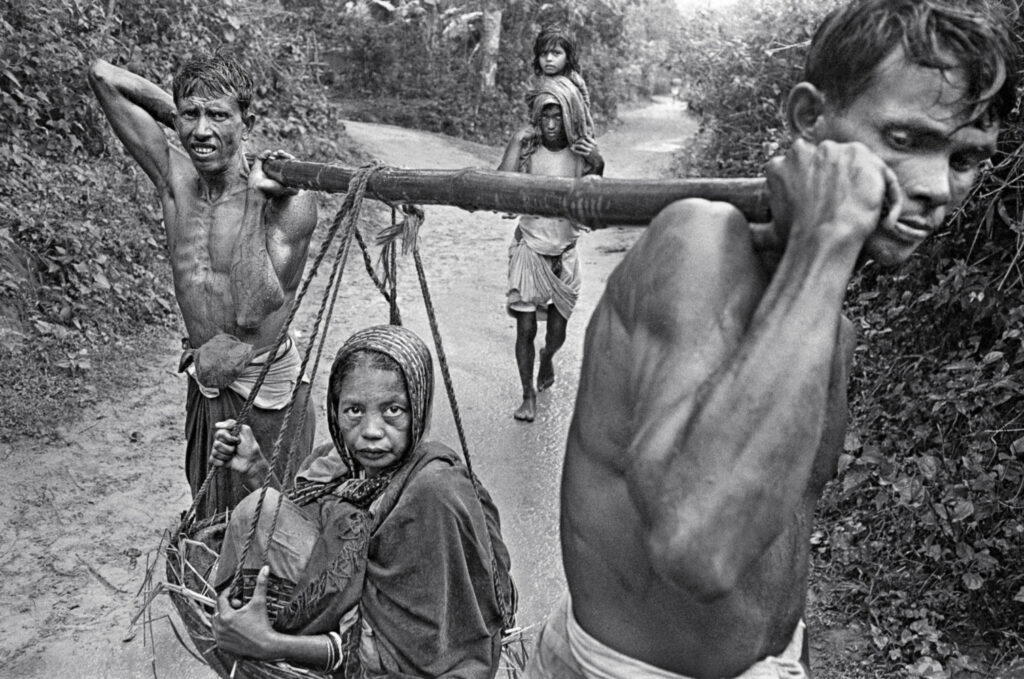
Shot in Bangladesh by Raghu Rai/ Credits: Magnum Photos
Rai’s 1971 images force us to think beyond methodological nationalism. The Liberation War was Bangladeshi history, but it was also a regional event: refugees crossed borders, Indian towns and camps became temporary shelters, global media circulated images of suffering and resistance, and the birth of Bangladesh unfolded through a South Asian geography of war. Rai’s camera moved within this border-crossing history.
National memory often wants ownership. It wants to say: this is ours, this pain is ours, this victory is ours, this archive is ours. But visual memory is less obedient. It travels. It crosses borders. It appears in newspapers, exhibitions, books, family albums, museums, classrooms, and now digital feeds. Rai’s Bangladesh photographs therefore belong to a difficult but necessary category: they are not Bangladeshi by nationality, but they are part of Bangladesh’s visual consciousness.
To read Raghu Rai from Bangladesh is to read the subcontinent as an entangled archive.
This is why Rai’s work matters to visual anthropology. Anthropology teaches us that history does not live only in official documents, speeches, monuments, or textbooks. History also settles into faces, streets, gestures, clothes, ruins, rituals, waiting bodies, and exhausted landscapes. Rai understood this visually. His photographs do not treat the ordinary as outside history. Rather, they show that the ordinary is one of history’s most powerful hiding places.
A street in Rai is never only a street. It is a choreography of class, labor, movement, patience, and disorder. A crowd is never only a crowd. It is a temporary social body. A religious gathering is never only ritual. It is also architecture, atmosphere, devotion, discipline, vulnerability, and public life. A political leader is never only power. A leader also has posture, fatigue, domesticity, silence, and theatre.
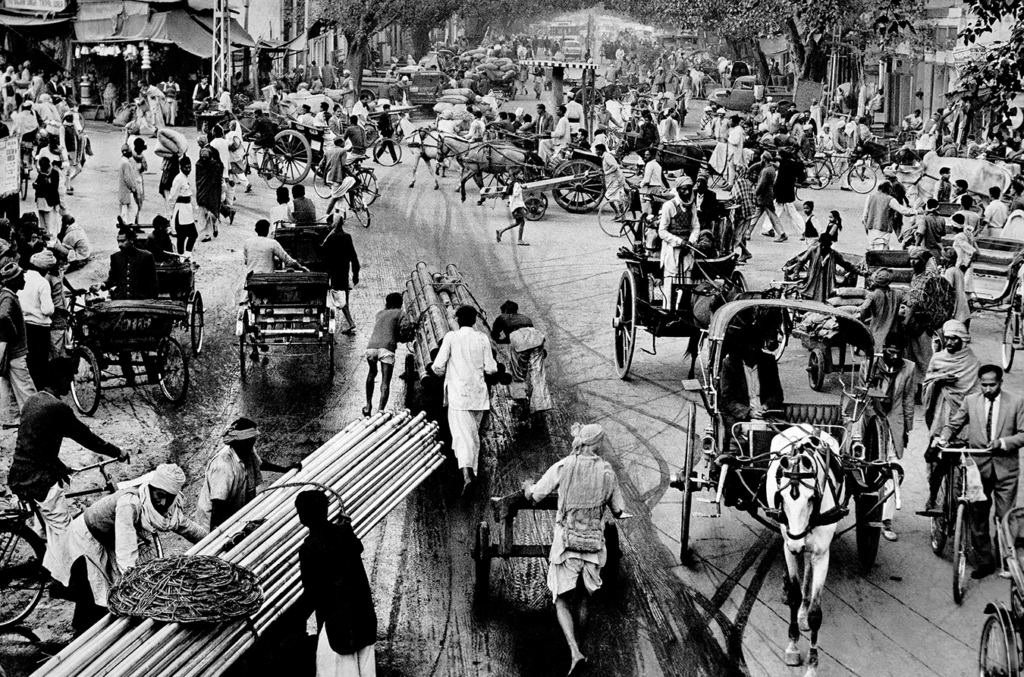
Traffic at Chawri Bazar Delhi, 1965. Photo © Raghu Rai, Magnum Photos, Raghu Rai Foundation
This is why Rai’s photographs continue to endure. They are not merely records of what happened. They are records of how life felt while history was happening.
The ethical crisis of photography becomes most urgent in Rai’s Bhopal work. Magnum describes Exposure: Portrait of a Corporate Crime as Rai’s documentation of the ongoing tragedy after the 1984 Union Carbide pesticide plant disaster in Bhopal. The Raghu Rai Foundation notes that “Burial of an Unknown Child” became a symbol of the disaster and that Rai returned to photograph survivors living near the still-toxic site.
Bhopal is not only a disaster in Rai’s archive. It is a test of photography itself.
How does one photograph suffering without consuming it? How does one show pain without aestheticizing it? How does one make the dead and injured visible without turning them into objects of pity? How does a photograph resist forgetting when corporations, states, and publics move on?
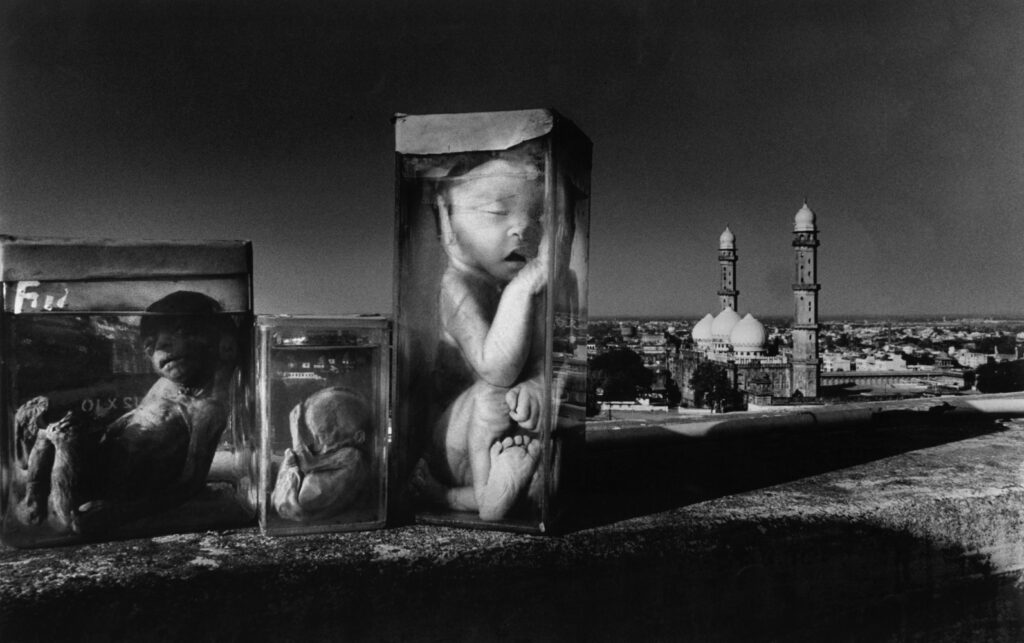
Bhopal Tragedy, 1986. Photo © Raghu Rai/Magnum Photos/Raghu Rai Foundation
Foetuses which were aborted by pregnant women while escaping from the gas were preserved by Dr. Satpathy, a forensic expert at the State Government’s Hamida Hospital, to establish the exact cause of death.
Rai’s Bhopal photographs are difficult because they do not allow the viewer to remain innocent. They implicate us. They make us ask whether seeing can become responsibility rather than spectacle. The photograph becomes more than an image; it becomes evidence against erasure.
This is why Bhopal must be read not only through grief, but through accountability. Rai’s camera does not merely show suffering. It keeps the disaster politically alive. It says: this did not end when the news cycle ended. This did not end when the factory gates closed. This did not end when the world looked away.
Here, Rai’s work enters a larger ethical conversation about photography. Susan Sontag warned that images of suffering can both awaken conscience and risk turning pain into spectacle. Roland Barthes taught us that photographs carry a strange relation to death, time, and the trace of what-has-been. Ariella Azoulay argued that photography is not simply an object or image, but a relation among photographer, photographed person, and viewer. These theoretical frames help us understand why Rai’s photographs are not only visual documents. They are ethical encounters.
This is also where the age of promptography changes the stakes.
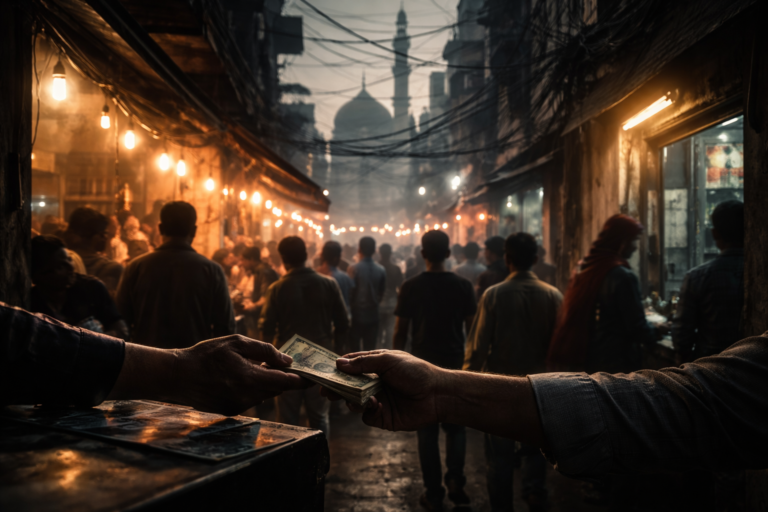
Promptography has unsettled the image-world. Artificial intelligence can now generate images of imagined events, imagined people, imagined ruins, imagined wars, imagined futures, and imagined memories. It can imitate documentary style, analogue grain, archival texture, cinematic realism, and the emotional atmosphere of suffering.
This does not make AI image-making meaningless. It can be creative, speculative, pedagogical, poetic, and politically useful. As a teacher of digital culture, I do not teach students to reject promptography. I teach them to understand its difference.
The danger of promptography is not that it produces unreal images. Art has always produced unreal images. Painting, cinema, theatre, literature, collage, and digital art have long created worlds that never literally existed. The danger is more specific: synthetic images can now imitate the moral texture of documentary photography.
They can borrow the grain of the archive, the light of the street, the posture of grief, the drama of disaster, the blur of emergency, the face of exhaustion, and the visual grammar of witness without anyone having stood before the event.
This is why Raghu Rai matters now.
A prompt-generated image may help us imagine a lost city, visualize a future disaster, reconstruct an absent archive, or critique propaganda. But it should not borrow the authority of documentary truth without disclosure. The problem begins when synthetic images claim the emotional authority of witness without accepting the ethical responsibility of encounter.
Raghu Rai’s photographs remind us that documentary authority does not come only from what is visible inside the frame. It comes from the relation that produced the frame. Someone was there. Someone waited. Someone faced another person. Someone entered a street, a camp, a room, a disaster zone, a political gathering, a prayer space, a city in motion. Someone accepted the burden of having seen.
Promptography can produce an image of suffering. But it has not stood before suffering.
This does not make photography morally pure. The camera can also extract, simplify, aestheticize, and exploit. But photography at least begins from an encounter with the world. Promptography begins from instruction, dataset, imagination, and synthesis. Both can create images. Only one can claim witness.
Rai’s work also helps us think beyond the familiar Western vocabulary of the photographic gaze. The Guardian notes that Rai understood photography as a deeply attentive, almost spiritual act of seeing connected to the idea of darshan. The term should not be used casually. Darshan is not simply looking. It implies a charged relation between seer and seen. In this sense, Rai’s best photographs are not just observations. They are encounters of presence.
This gives us a South Asian vocabulary for photography: not the colonial gaze, not the surveillance gaze, not the touristic gaze, not even only the journalistic gaze, but a relational gaze. This gaze is not innocent. It still has power. But at its best, it is attentive, implicated, and answerable.
When I teach photography, visual anthropology, and digital space today, I do not want students to become nostalgic. I do not want them to imagine that film was pure, digital was corrupt, and AI is the end of truth. That is too simple.
The real task is harder.
Students must learn to distinguish image, document, evidence, memory, imagination, and witness. They must learn that a beautiful image is not necessarily an ethical image. They must learn that a realistic image is not necessarily a truthful image. They must learn that a photograph is not important simply because it shows something, but because it emerges from a relation to the world.
Raghu Rai is therefore not only someone to be admired. He is someone to be taught.
He teaches young photographers to slow down. He teaches them that the street is already a classroom. He teaches them that history hides in ordinary gestures. He teaches them that suffering must be approached with humility. He teaches them that power has a domestic life. He teaches them that faith is also body, space, light, rhythm, and public arrangement. He teaches them that the camera is not only an instrument of expression; it is an instrument of responsibility.
In an age of endless images, Raghu Rai asks us to recover the ethics of attention.
Today, we are surrounded by photographs, screenshots, reels, generated images, filters, memes, surveillance footage, and algorithmic feeds. The problem is not that we lack images. The problem is that we often lack attention. We see too much and remember too little. We scroll through catastrophe, comedy, death, beauty, war, advertisement, and private life in the same gesture of the thumb. Everything appears; very little stays.
Rai’s photographs resist this disappearance. They ask to be looked at slowly. They do not merely deliver content. They gather time.
After Raghu Rai, what remains?
Not only an archive. Not only books. Not only iconic photographs. What remains is a discipline: a way of seeing that refuses speed, a way of entering public life without losing intimacy, a way of photographing suffering without surrendering dignity, a way of reading the ordinary as historical, and a way of making images that remain answerable to the world.
Raghu Rai’s camera did not look at the subcontinent from above. It moved through its dust, heat, crowds, prayers, wounds, trains, leaders, refugees, streets, and waiting rooms of history.
This is why he matters after AI.
In the age of promptography, when images can be produced without encounter, Rai reminds us that photography is not merely the production of an image. It is the acceptance of responsibility for having seen.
References
Azoulay, A. A. (2008). The civil contract of photography. Zone Books.
Barthes, R. (1981). Camera lucida: Reflections on photography (R. Howard, Trans.). Hill and Wang.
Magnum Photos. (n.d.). Raghu Rai: Photographer profile. Magnum Photos.
Magnum Photos. (n.d.). Exposure: Portrait of a corporate crime. Magnum Photos.
Magnum Photos. (2026, April 28). Remembering Raghu Rai (1942–2026). Magnum Photos.
Raghu Rai Foundation. (n.d.). Bangladesh.
Raghu Rai Foundation. (n.d.). Bhopal.
Sontag, S. (1977). On photography. Farrar, Straus and Giroux.
Sontag, S. (2003). Regarding the pain of others. Farrar, Straus and Giroux.
The Guardian. (2026, May 4). Raghu Rai obituary.
Dhaka Tribune. (2026, April 26). Raghu Rai dies: The lens that chronicled Bangladesh’s Liberation War.References
Azoulay, A. A. (2008). The civil contract of photography. Zone Books.
Barthes, R. (1981). Camera lucida: Reflections on photography (R. Howard, Trans.). Hill and Wang.
Magnum Photos. (n.d.). Raghu Rai: Photographer profile. Magnum Photos.
Magnum Photos. (n.d.). Exposure: Portrait of a corporate crime. Magnum Photos.
Magnum Photos. (2026, April 28). Remembering Raghu Rai (1942–2026). Magnum Photos.
Raghu Rai Foundation. (n.d.). Bangladesh.
Raghu Rai Foundation. (n.d.). Bhopal.
Sontag, S. (1977). On photography. Farrar, Straus and Giroux.
Sontag, S. (2003). Regarding the pain of others. Farrar, Straus and Giroux.
The Guardian. (2026, May 4). Raghu Rai obituary.
Dhaka Tribune. (2026, April 26). Raghu Rai dies: The lens that chronicled Bangladesh’s Liberation War.
One Comment