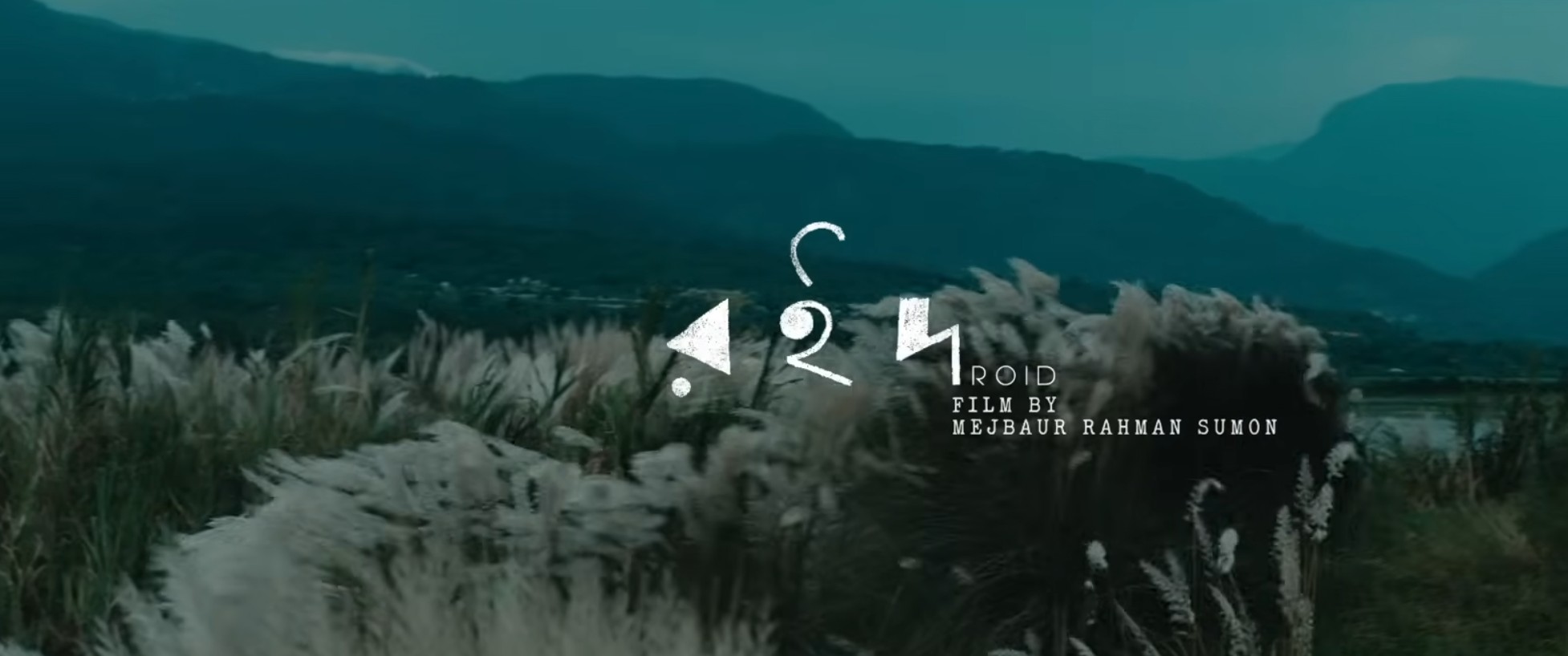
Roid and the Anthropology of Incompleteness: Notes on Rivers, Rituals, and the Unfinished Human Condition
Roid (2026): Rivers, Rituals and Human Incompleteness
There are films that tell stories.
There are films that deliver messages.
And there are films that alter the atmosphere in which one thinks.
Mejbaur Rahman Sumon’s Roid belongs to the third category.
I left the cinema carrying not a narrative but a feeling. The feeling remained difficult to name. It was not sadness, though sadness was present. It was not hope, though traces of hope survived. It was not even loss, despite the film’s persistent engagement with absence. What lingered was something more elusive: an awareness of incompleteness.
In contemporary culture, we are surrounded by narratives of resolution. Stories promise closure. Relationships promise fulfillment. Politics promises arrival. Self-help literature promises healing. Social media rewards certainty. Algorithms privilege immediacy. Everywhere we are encouraged to believe that life moves toward completion.
Roid offers a different proposition.
It suggests that incompleteness is not a problem to be solved. It is the condition through which human life unfolds.
This is one reason why the film may frustrate some viewers. It refuses many of the conventions that contemporary spectators have come to expect. It does not hurry. It does not explain everything. It does not transform uncertainty into certainty. Instead, it asks viewers to remain inside ambiguity.
That demand feels increasingly radical.
A Film That Refuses Speed
One of the first criticisms directed at Roid has concerned its pacing. Viewers accustomed to rapid editing, constant narrative movement, and immediate emotional rewards have described the film as slow. In one sense, they are correct.
The film is slow.
But the more interesting question is: slow compared to what?
Compared to the rhythm of contemporary life, almost everything meaningful appears slow. Friendship is slow. Grief is slow. Love is slow. Healing is slow. Waiting is slow. Rivers are slow.
The problem may not be the film.
The problem may be us.
Over the past two decades, attention has become one of the most contested resources in human history. Social media platforms compete for seconds. Short-form videos compress experience into fragments. Notifications interrupt continuity. The result is not merely technological change. It is a transformation of perception itself.
Many of us now consume images faster than we can inhabit them.
Roid quietly resists this condition.
The film does not seek to capture attention through spectacle. Instead, it asks viewers to dwell within duration. Scenes unfold according to the rhythms of weather, movement, waiting, and distance. The camera often lingers long after contemporary editing conventions would have cut away. Silence is permitted to exist. Darkness is permitted to exist. Nothing significant happens quickly.
This slowness should not be mistaken for aesthetic indulgence.
It is a form of discipline.
The film asks viewers to recover capacities that contemporary digital culture increasingly discourages: patience, contemplation, uncertainty, and sustained attention.
In this sense, Roid belongs to a broader tradition of slow cinema associated with filmmakers such as Andrei Tarkovsky, Béla Tarr, Tsai Ming-liang, and Apichatpong Weerasethakul. Yet its temporality does not feel imported from elsewhere. It emerges from a distinctly Bangladeshi ecology.
Its rhythm grows from water.
The River as Philosophy
To understand Roid, one must first understand the river.
Not as scenery.
Not as symbolism.
Not as a picturesque backdrop for human drama.
The river in Roid functions as a way of thinking.
Watching the film, I was repeatedly reminded of the borderland landscapes of northern Bangladesh. The precise location remains secondary. What matters is the atmosphere: waterways cutting through fields of reeds, scattered homesteads, grazing animals, distant blue hills, and a horizon that seems perpetually unfinished. The landscape feels simultaneously inhabited and abandoned. It exists between worlds.
This in-between quality is crucial.
The film unfolds within a geography of thresholds.
River and land.
Settlement and wilderness.
Presence and absence.
Bangladesh and elsewhere.
The characters are not the only beings inhabiting liminal space. The landscape itself appears suspended between states.
This instability shapes everything.
Modern life often assumes permanence. Buildings remain where they were yesterday. Roads lead where they led before. Property appears fixed. Maps appear stable. We imagine the world as something solid.
Riverine Bangladesh teaches a different lesson.
Land appears and disappears.
Riverbanks collapse.
Settlements emerge only to be eroded.
People build homes knowing that water may one day reclaim them.
Such environments cultivate a particular relationship with uncertainty. Permanence becomes difficult to assume. Stability becomes provisional. The future remains negotiable.
Roid absorbs this philosophy completely.
Its characters seek certainty within a world that refuses certainty. They search for permanence within landscapes shaped by movement. They build lives in places where even the ground cannot be trusted to remain.
Again and again, the film returns to boats moving across uncertain waters. These journeys rarely feel like acts of arrival. They feel like acts of passage. The characters are almost always moving between places rather than fully inhabiting them.
The river transforms movement itself into a condition of existence.
Even the emotional life of the film follows this logic.
Love remains unstable.
Memory remains unstable.
Home remains unstable.
Identity remains unstable.
Like the river, none of them stay where they are.
Perhaps this is the film’s most profound insight. The river is not simply part of the story. The river thinks. Its movement becomes the film’s philosophy. Its instability becomes the film’s anthropology. Its refusal of permanence becomes the condition through which every human relationship must be negotiated.
In a world increasingly obsessed with certainty, Roid returns us to a more difficult truth:
Everything flows.
Everything changes.
Everything remains unfinished.
The Woman Without a Name
If the river provides Roid with its landscape, Pagli provides it with one of its deepest questions.
Who has the authority to name another human being?
Throughout the film, the woman at its center remains known simply as Pagli—the mad woman. It is a description, a category, a judgment. It is not a name.
The distinction matters.
Names recognize individuality. They place a person within memory, kinship, and belonging. Categories do the opposite. They reduce complexity into something manageable.
Again and again, people speak about Pagli, desire her, protect her, abandon her, and attempt to understand her. Yet almost nobody truly knows her. The closer others move toward certainty, the more elusive she becomes.
What makes this particularly powerful is that the audience also participates in the reduction. We too call her Pagli. We inherit the category offered by the film’s social world. Only gradually do we begin to recognize the violence hidden within that act of naming.
Yet Roid never turns her into a mystery waiting to be solved. Contemporary cinema often promises revelation. Hidden motives are explained. Psychological interiors become visible. Ambiguity eventually gives way to knowledge.
Roid refuses this logic.
Pagli remains partially unknowable.
Not because she lacks depth, but because she possesses more depth than available categories can contain.
In many ways, she becomes the film’s challenge to the viewer. How do we respond to someone we cannot fully understand? Can we care without possessing? Can we remain close without demanding certainty?
The film offers no easy answers.
Instead, it asks us to accept a difficult possibility: that every human being exceeds the stories told about them.
Pagli is not simply a character.
She is a reminder that recognition begins where certainty ends.
Kulsum and the Limits of Human Exceptionalism
Among the many unforgettable presences in Roid, none surprised me more than Kulsum.
At first, she appears to be just a goat. A familiar part of rural life. An animal moving quietly through the household’s everyday rhythms. Yet as the film unfolds, Kulsum gradually becomes something else. She becomes part of the emotional life of the story.
What makes this particularly striking is that Kulsum has a name.
The woman at the center of the film remains Pagli. The goat is Kulsum.
The contrast is impossible to ignore.
Kulsum is remembered, called, cared for, and mourned. She enters the film’s moral universe not as property but as a being with whom people share a life. In doing so, Roid quietly challenges the rigid boundary that modern thinking often draws between human and non-human worlds.
The film reaches one of its most moving moments when Kulsum gives birth to two kids.
Birth arrives.
Then death arrives.
The sequence unfolds with devastating simplicity. Milk from Kulsum’s dead body is fed to her newborn kids. Life continues through loss. Presence survives within absence. In a film filled with uncertainty, this becomes one of its most tender images.
Yet Roid does not stop there.
What follows is among the film’s most disturbing scenes. Sadhu skins Kulsum, cooks her meat, and begins to eat. At first the act appears ordinary. Then it becomes excessive. He continues eating with an intensity that feels less like hunger than desperation.
The scene is difficult to watch because it is not really about food.
It is about grief.
It is about the impossible desire to keep close what has already been lost.
No amount of eating can bring Kulsum back. No act of possession can overcome absence. The more Sadhu consumes, the more visible the limits of human desire become.
In this sense, Kulsum becomes one of the film’s deepest teachers.
Through her, Roid reminds us that love does not abolish loss. Care does not guarantee permanence. And some departures remain beyond recovery.
The tragedy is not that loss exists.
The tragedy is that we never stop trying to undo it.
Fire, Failure, and the Work of Continuing
Most films are built around success.
Even when characters suffer, the story usually moves toward resolution. Loss becomes meaningful. Struggle produces growth. Pain eventually finds redemption.
Roid offers a more difficult vision.
Its deepest concern is not success.
It is failure.
Not moral failure. Not personal failure. Human failure.
The failure to fully understand another person.
The failure to keep what one loves.
The failure to protect what one builds.
The failure to return to what has been lost.
This becomes most visible in the film’s recurring cycles of departure and return. Pagli is left behind. Then she returns. Distance is created. Yet nothing is resolved. Later, another abandonment follows. Again, separation fails to provide closure.
The same pattern appears in the material world.
Among the film’s most haunting images are the burning houses. Flames consume fragile structures built through labour, memory, and hope. In the darkness, smoke rises into the night while people watch a world disappear before their eyes.
A house is never simply a house.
It contains dreams of permanence.
That is why its destruction hurts.
Yet Roid refuses the dramatic finality usually associated with catastrophe.
The houses are rebuilt.
People continue.
Life resumes.
The river keeps moving.
This is where the film reveals one of its deepest insights. The rebuilding does not erase the loss. The new house does not replace the old one. What has burned remains burned.
The wound remains.
And yet people continue.
This quiet persistence runs through the entire film. Characters endure disappointments they cannot repair. They carry absences they cannot overcome. They remain vulnerable to forces beyond their control.
Still, they continue.
Perhaps this is what makes Roid so moving. It does not celebrate resilience as triumph. It presents endurance as necessity. Human beings go on not because they have solved their problems, but because life demands continuation.
The river does not stop.
Neither do they.
In a world increasingly obsessed with achievement, optimization, and success stories, Roid reminds us of a simpler truth:
Much of life consists of learning how to continue after failure.
Not because failure has been overcome.
But because it has become part of what it means to be human.
Ritual Without Reintegration
If there is a single idea that stayed with me after Roid, it is this: some journeys never truly end.
Anthropologists often describe rituals as processes of transformation. A person leaves one state, passes through a period of uncertainty, and eventually returns to society changed but reintegrated. The ritual concludes. A new order emerges.
Roid follows this structure only to quietly abandon it.
Throughout the film, people leave and return. Relationships fracture and resume. Homes disappear and are rebuilt. The same desires, wounds, and longings return again and again. Rather than moving toward resolution, the film unfolds through repetition.
This repetition becomes particularly visible through the recurring presence of tal and taler pitha.
At first, they appear as ordinary food. Yet with each return they accumulate emotional weight. They become linked to memory, intimacy, care, and longing. At one point, Sadhu eats taler pitha and remarks with childlike wonder that he has never tasted anything like it before. The moment is small, yet it lingers.
The food returns.
The memory returns.
The desire returns.
Like the river itself, these moments refuse to remain in the past.
What makes Roid remarkable is that these repetitions never lead to closure. The houses are rebuilt, but the old houses remain lost. People return, but they do not return unchanged. Relationships continue, but their wounds remain visible.
Nothing is fully restored.
The film refuses the comforting fantasy that every rupture can be repaired.
Yet it is not pessimistic.
On the contrary, it remains deeply humane.
Because it locates dignity not in completion but in continuation.
Not in certainty but in vulnerability.
Not in arrival but in movement.
This is why Roid often feels less like a story and more like a ritual. It does not simply narrate events. It changes the way we inhabit them. By the end, viewers are left with something more unsettling than an answer.
A recognition.
The recognition that human beings are creatures of thresholds. We live between who we are and who we hope to become. Between attachment and separation. Between memory and forgetting. Between the desire for permanence and the reality of change.
The ritual ends.
The river does not.
The water continues.
The longing remains.
The River Does Not End
There are films that remain in memory because of their stories.
Roid remains because of its questions.
The film begins with a landscape shaped by water, uncertainty, and movement. By the end, one realizes that these qualities belong not only to the river but to human life itself. Nothing in the film remains entirely stable. Homes are built and destroyed. People leave and return. Relationships deepen and fracture. Desire persists. Loss persists. The river keeps moving.
What distinguishes Roid from many contemporary films is its refusal to transform these realities into lessons about triumph or redemption. It does not promise healing. It does not promise closure. It does not suggest that every wound can be repaired or every absence overcome.
Instead, it asks a more difficult question:
How do we live with what cannot be resolved?
The film’s answer is neither philosophical nor political. It is existential.
We continue.
We continue to love despite misunderstanding.
We continue to build despite impermanence.
We continue to hope despite uncertainty.
We continue to return even when arrival remains impossible.
In this sense, Roid offers more than a story about a particular place or a particular group of people. It transforms the riverine landscape of Bangladesh into a meditation on the unfinished human condition. Its concerns are local, but its questions are universal.
Perhaps this is why the film lingers long after the final scene.
Not because it provides certainty.
But because it recognizes something many of us already know yet rarely articulate: that human life is not defined by completion.
It is defined by the ability to continue within incompleteness.
The ritual ends.
The river does not.
Further Reading
Bachelard, G. (1964). The poetics of space. Beacon Press.
Crary, J. (2013). 24/7: Late capitalism and the ends of sleep. Verso.
Glissant, É. (1997). Poetics of relation. University of Michigan Press.
Haraway, D. J. (2008). When species meet. University of Minnesota Press.
Ingold, T. (2000). The perception of the environment: Essays on livelihood, dwelling and skill. Routledge.
Schimmel, A. (1975). Mystical dimensions of Islam. University of North Carolina Press.
Turner, V. (1969). The ritual process: Structure and anti-structure. Aldine.
van Gennep, A. (1960). The rites of passage. University of Chicago Press.
Great content! Keep up the good work!