Social Media as Living Memory in Post-July Bangladesh
Grievance, Justice, and Moral Breakdown
After July, social media in Bangladesh stopped being just a platform. It became a living memory—where grief, justice, documents, and moral judgment collide in real time
Abstract
In post-July Bangladesh, social media has emerged as a central arena where grievance, protest, and moral judgment are remembered, contested, and re-activated. This essay argues that social media now functions not merely as an archive of events but as a living memory system—one that continuously reinterprets the past to evaluate the ethical legitimacy of the present.
Through a close reading of a cascade of Facebook posts, comments, images, documents, and counter-narratives surrounding a single tragic incident—the death of a woman and her infant while her husband remained incarcerated—the essay traces how digital memory evolves through multiple stages: grievance memory, ethical memory, structural diagnosis, forensic and documentary memory, counter-memory, moral breakdown, and finally, calls for universal justice.
The analysis demonstrates how living memory can both enable ethical reasoning and, when saturated by grievance and distrust, fracture into hostility and moral exhaustion. The essay concludes that the struggle in post-July Bangladesh is not only over justice, but over how memory itself will be allowed to function—as ethical learning, or as justification for renewed cruelty.
Introduction: From Platform to Moral Arena
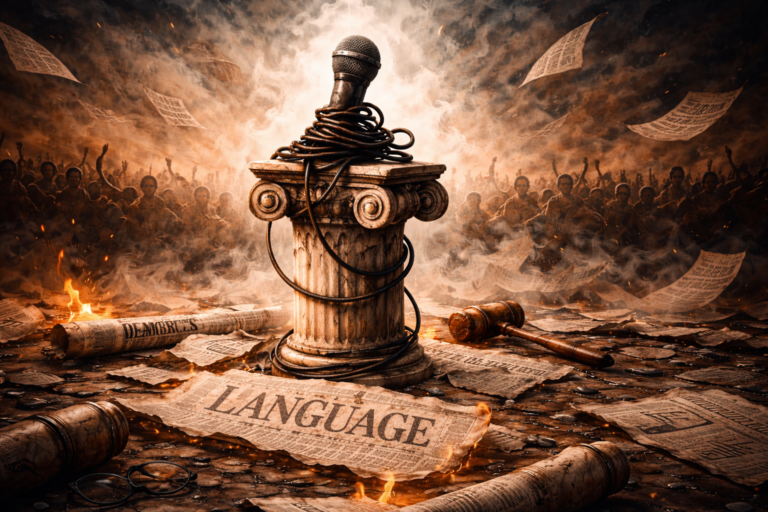
Social media is often discussed as a technology of communication, mobilization, or misinformation. Yet in moments of political rupture, it performs another function: it becomes a site of memory. Not memory as a static record, but memory as an active, contested, and affective process.
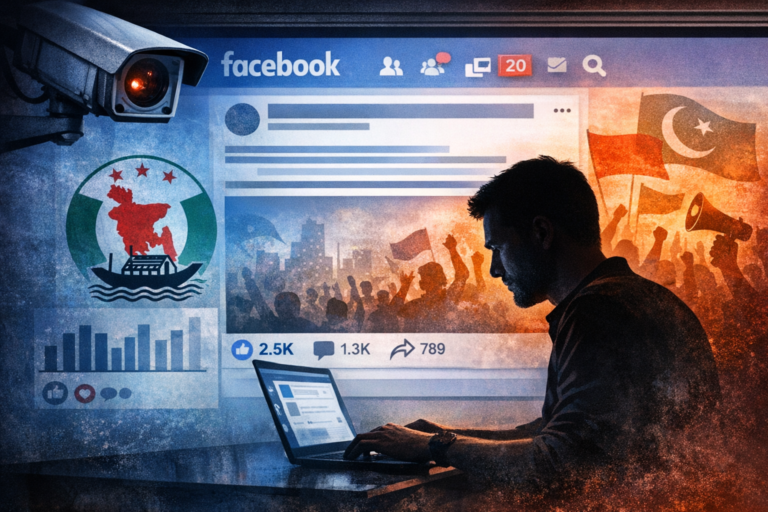
After July, social media in Bangladesh stopped being merely a platform. It became a living archive where grief, justice, documents, and moral judgment collide in real time. Old posts return, screenshots resurface, images circulate, and statements are reinterpreted.
The core question animating this living memory is simple but destabilizing:
Who were you before July, and what does that say about what you are doing now?
Memory is no longer retrospective alone. It is evaluative, predictive, and accusatory. This essay reads social media not as public opinion but as memory work—a collective struggle to assign meaning, responsibility, and ethical direction in a post-uprising moment.
Conceptual Framework: From Collective Memory to Living Memory
Classical theories of collective memory emphasize how societies remember through shared narratives, rituals, and institutions. Digital platforms transform this process by collapsing the boundaries between archive, communication, and everyday life.
Connective and Digital Memory
Digital platforms enable what scholars describe as connective memory: memories that circulate, reappear, and intervene in the present. Past posts do not remain past; they return as reminders, accusations, or evidence. Digital memory is unstable, affective, and algorithmically resurfaced rather than institutionally curated.
Memory as Ethical Practice
Memory becomes ethically meaningful not when it affirms collective identity, but when it constrains collective action. In post-uprising contexts, this distinction is crucial. Victimhood can either deepen ethical restraint or become a license for new forms of injustice.
Structural Violence and Secondary Punishment
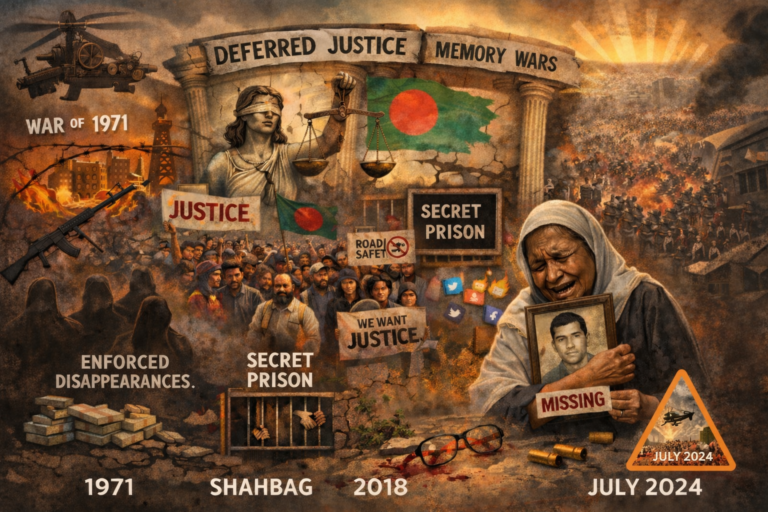
Punishment rarely ends with incarceration. Families—especially spouses and children—often bear the invisible costs of detention. In Bangladesh, digital narratives increasingly foreground this secondary punishment, revealing an “invisible prison” structured by fear, uncertainty, and social stigma.
The Case: A Tragedy and Its Digital Afterlives
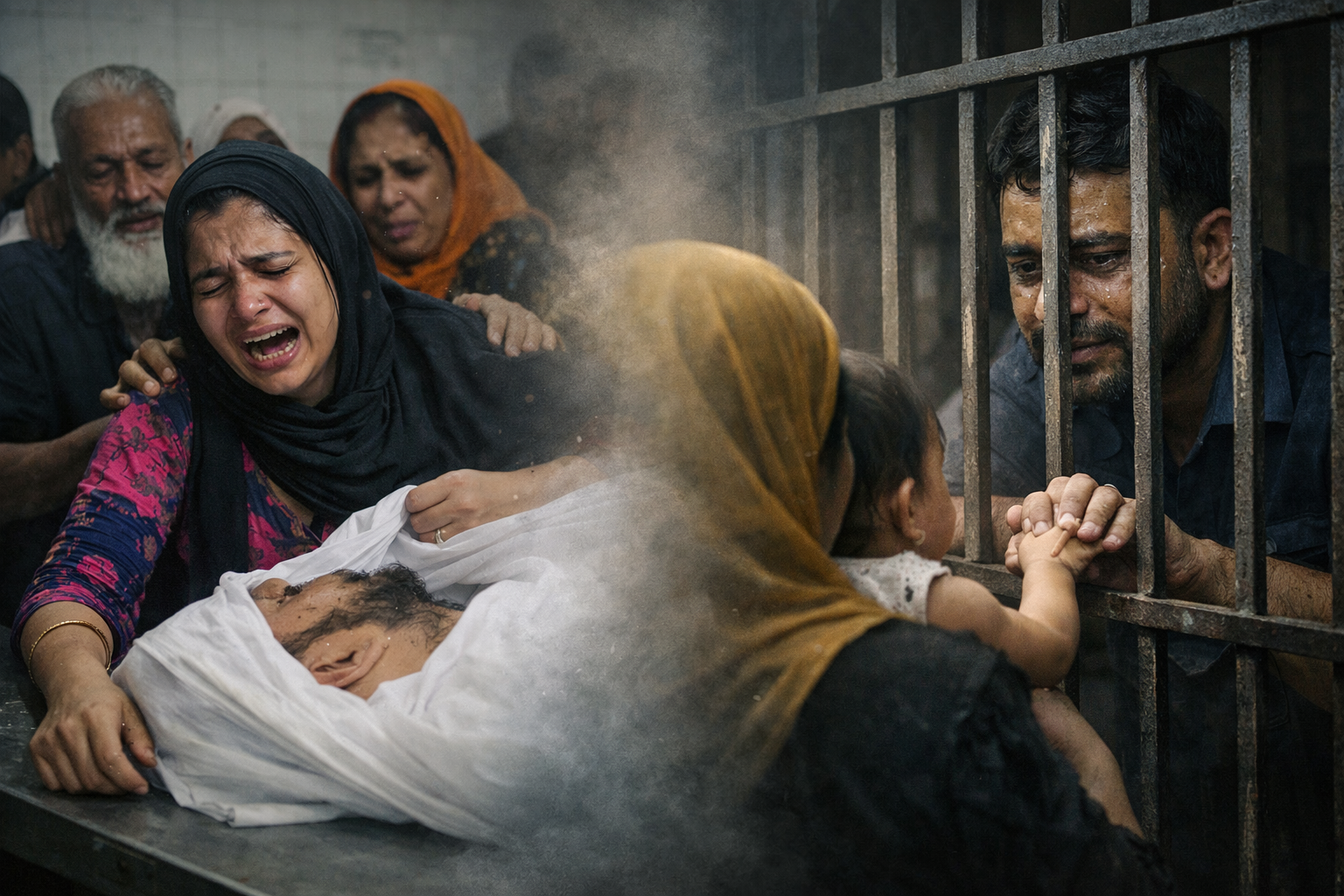
According to widely circulated media reports and social media posts, a young woman and her infant child were found dead while her husband remained incarcerated in another district. Multiple narratives claimed that the husband was not granted parole to attend the funeral and could only see the bodies briefly at the prison gate.
These claims cannot all be independently verified. Accordingly, this essay treats them as reported narratives, not established legal findings. What matters analytically is not adjudicating truth, but examining how memory was produced, contested, and mobilized.
Stages of Living Memory in the Post-July Digital Sphere
Grievance Memory
Initial reactions framed the incident as evidence of cruelty and dehumanization. Language emphasized suffering, loss, and moral shock. Grief became political by being made visible and shareable.
Ethical Memory
Soon after, many voices explicitly rejected partisan defense and demanded due process. Guilt or innocence was framed as secondary to humane treatment. Parole and funeral attendance were articulated as rights, not favors.
Structural Diagnosis
The debate shifted from individual failure to systemic cruelty. The incident was framed not as an accident, but as an outcome of institutions operating “normally.”
Forensic and Documentary Memory
Social media users introduced documents, timelines, administrative jurisdictions, and alleged travel histories. Platforms became popular tribunals where evidence circulated without final resolution.
Counter-Memory
Counter-narratives reframed responsibility, emphasizing procedural non-compliance, family decisions, and personal conduct. Structural explanations were displaced by individualized moral failure.
Moral Breakdown
As contradictions accumulated, deliberation collapsed. Epistemic caution was read as betrayal. Media reports were dismissed as propaganda. Personal attacks replaced ethical reasoning.
Visual and Embodied Memory
Images and testimonies re-centered the debate. Illustrations of a dead child “visiting” his living father and first-person accounts of detention revealed the hidden costs of incarceration on families.
Universal Justice
Amid fragmentation, a restrained moral position emerged: justice must be grounded in verification and applied even to one’s enemies. This represents memory at ethical maturity.
Previous Regime vs Post-July: Continuity and Rupture
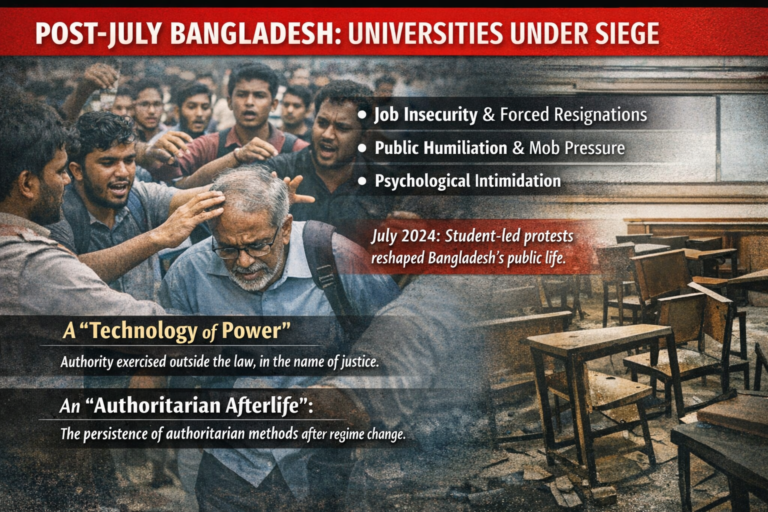
Under the previous regime, memory was suppressed through fear, law, and erasure. After July, memory was unleashed—but increasingly weaponized.
What changed was visibility.
What did not change was the logic.
Law continues to replace ethics. Procedure continues to displace humanity. Families remain collateral damage—only now through rhetoric rather than silence.
Discussion: What Living Memory Enables—and Endangers
Living memory enables exposure, accountability, and ethical scrutiny. It reveals invisible suffering and resists erasure.
But it also endangers justice when grievance becomes competitive, restraint is delegitimized, and cruelty is justified through past victimhood. When memory authorizes harm instead of limiting it, it becomes a vector of renewed authoritarianism.
The Future of Living Memory: Perpetual Crisis or Ethical Infrastructure?
The dynamics traced in this essay are not episodic. They point to a perpetual condition produced by the entanglement of social media, political grievance, and unresolved histories of violence. Living memory, once activated at scale, does not return to dormancy. It accumulates, mutates, and resurfaces—often at moments of renewed tension.
In post-July Bangladesh, social media has established a durable architecture of remembrance. Old posts, screenshots, images, and accusations do not disappear with legal outcomes or political transitions. They remain available for future mobilization. This means that every present action is now judged against a continuously reassembled past. Memory has become anticipatory: it is used not only to interpret what has happened, but to predict intentions, pre-empt legitimacy, and assign future blame.
This has two likely trajectories.
Memory as Perpetual Crisis
If left unchecked, living memory risks becoming a permanent state of moral emergency. In such a condition, every incident is immediately folded into older grievances; every call for restraint is read as betrayal; and every attempt at procedural justice is dismissed as manipulation. Political actors and informal groups learn to exploit this volatility, selectively activating memory fragments to justify coercion, exclusion, or revenge.
In this trajectory, social media does not merely reflect polarization—it institutionalizes it. Justice becomes impossible not because facts are unavailable, but because no shared ethical ground survives long enough to evaluate them.
Memory as Ethical Infrastructure
The alternative future is more demanding. It requires treating living memory not as a weapon, but as an ethical infrastructure—a shared constraint on action. In this model, memory does not authorize cruelty by recalling past suffering. Instead, it limits cruelty by remembering where suffering leads.
For this to occur, several conditions must hold:
- Epistemic restraint must be valued rather than punished.
- Verification must be distinguished from denial.
- Due process must be defended even when outcomes are emotionally unsatisfying.
- Human dignity must remain non-negotiable, regardless of political identity.
This is not a call for forgetting. It is a call for learning memory rather than retaliatory memory.
The Structural Challenge Ahead
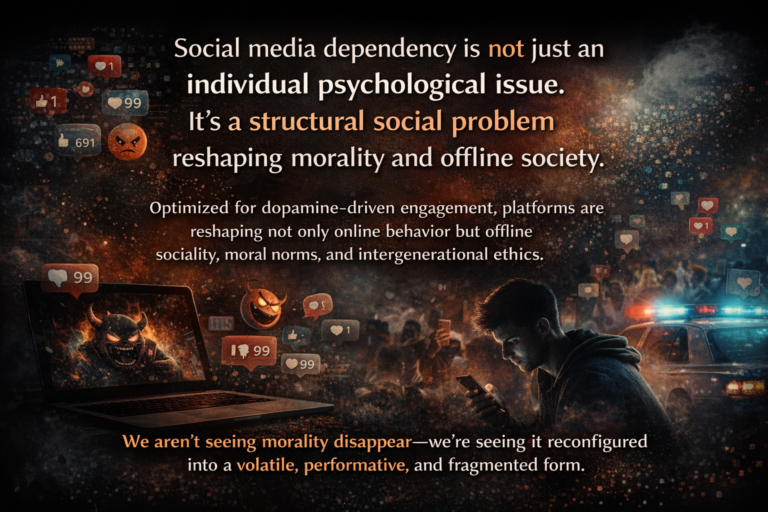
The most difficult challenge is that social media platforms are structurally optimized for amplification, not maturation. Grievance spreads faster than restraint. Moral outrage outperforms ethical ambiguity. As a result, the future of living memory will not be determined solely by users’ intentions, but by whether institutions—legal, media, civic—can provide credible, humane, and transparent processes that reduce the burden placed on digital memory to perform justice on its own.
Without such institutions, social media will continue to function as an improvised court, archive, and execution ground—roles it cannot sustain without ethical collapse.
The future question, then, is not whether living memory will persist. It will.
The question is whether society will discipline memory with ethics, or allow it to harden into a permanent justification for cruelty.
Conclusion: The Struggle Over Memory Itself
Post-July Bangladesh is not only negotiating justice or reform. It is negotiating what memory will be allowed to do.
Will memory demand restraint—or retaliation?
Will it constrain power—or license cruelty?
Social media has ensured that nothing is forgotten. The harder task is ensuring that remembrance does not become permission to harm.
The most consequential sentence in this debate remains:
“I want justice even for my enemy.”
That line marks the boundary between memory that reproduces violence and memory that interrupts it.
Author’s Note
This essay is based on publicly available social media posts, news reports, and visual materials circulating in Bangladesh following the July political rupture. All social media content referenced is treated as reported discourse rather than verified legal fact. The analysis does not seek to establish criminal responsibility, adjudicate individual guilt, or resolve contested factual claims.
The purpose of this essay is analytical and ethical: to examine how social media functions as a living memory system in moments of political transition, and how memory can both enable ethical reasoning and fracture into hostility. Individuals mentioned in circulating narratives are discussed only insofar as they appear within public discourse.
This essay takes no partisan position. It argues instead for due process, human dignity, and restraint as non-negotiable ethical principles—especially in post-uprising contexts where grievance and revenge risk reproducing the very injustices that were resisted.
References
Assmann, A. (2010). The ethical dimension of memory. Memory Studies, 3(3), 214–224.
Galtung, J. (1969). Violence, peace, and peace research. Journal of Peace Research, 6(3), 167–191.
Halbwachs, M. (1992). On collective memory. University of Chicago Press.
Hoskins, A. (2018). Digital memory studies: Media pasts in transition. Routledge.
Papacharissi, Z. (2015). Affective publics. Oxford University Press.
van Dijck, J. (2007). Mediated memories in the digital age. Stanford University Press.
Wacquant, L. (2009). Punishing the poor. Duke University Press.