Exposure Without Collapse: Epstein, Jamaat, July Bangladesh & Post-Ideological Power (PINPF 1.0)
Why exposure no longer collapses power. A PINPF analysis of Epstein, Jamaat-e-Islami, July Bangladesh, corruption allegations, and post-ideological survival.
(Applying the Post-Ideological Neoliberal Power Framework — PINPF)
This essay is part of the “Without Collapse” analytical series, developing the Post-Ideological Neoliberal Power Framework (PINPF).
Introduction
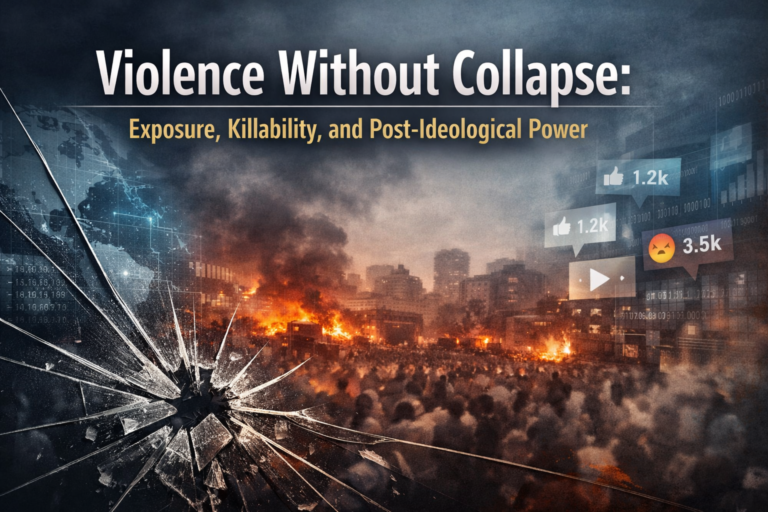
Exposure is commonly assumed to destabilize power. Leaks, hacks, investigative reporting, court disclosures, and human-rights documentation are expected to fracture legitimacy and produce accountability. Yet across ideological systems and geopolitical contexts, exposure increasingly generates turbulence without collapse.
This essay applies the Post-Ideological Neoliberal Power Framework (PINPF) to three distinct exposure sequences:
(1) the archival revelations surrounding Jeffrey Epstein in the United States;
(2) digital and historical exposure surrounding Jamaat-e-Islami; and
(3) post-July exposure of state power during the tenure of Sheikh Hasina in Bangladesh.
The analysis does not compare crimes, moral gravity, or ideological commitments. It compares how power responds to exposure.
The core argument is simple: when power operates post-ideologically, exposure does not guarantee structural rupture. Instead, responsibility is narrowed, displaced, or redistributed in ways that preserve institutional continuity.
PINPF: The Analytical Lens
PINPF starts from an observation shared across critical theory: contemporary power no longer depends primarily on belief or moral legitimacy for reproduction (Žižek, 1989). Ideology persists as discourse and symbolism, while power functions through liquidity, brokerage, simulation, sacrificial containment, and algorithmic mediation (Bauman, 2000; Baudrillard, 1994; Harvey, 2005).
The central question, therefore, is not whether exposure occurs, but what exposure does to structure.
The Epstein Case: Archive, Brokerage, and Contained Accountability
The Epstein case is among the most extensively documented exposure events involving elite networks. Investigative journalism, court filings, and unsealed documents revealed patterns of abuse, preferential legal treatment, and institutional failure spanning decades (Miami Herald Investigative Team, 2018; U.S. DOJ, 2020).
Despite the density of evidence, accountability remained highly individualized. Epstein became the primary locus of culpability; following his death in federal custody in 2019, central adjudication ceased (ABC News, 2019). Subsequent convictions—most notably Ghislaine Maxwell—further localized responsibility (U.S. DOJ, 2022).
PINPF interprets this as brokerage and disposability. Epstein functioned as a broker linking finance, philanthropy, and political access, while remaining personally expendable. His removal stabilized the system through sacrificial containment, allowing implicated institutions to persist without comprehensive reckoning (Comaroff & Comaroff, 2006).
Exposure expanded the archive, not accountability.
Jamaat-e-Islami: Digital Exposure, Allegations, and Narrative Displacement
Digital Exposure and Attribution Disputes
In early 2026, a statement attributed to Jamaat’s ameer via a verified X (formerly Twitter) account described women’s paid work in morally derogatory terms. The post triggered public outrage and student protests (New Age Bangladesh, 2026). Jamaat later claimed the account had been compromised, reframing the incident as a cyberattack rather than ideological expression (The Daily Star, 2026a). Opposition actors questioned this claim, and police reported detentions linked to the alleged hack (The Daily Star, 2026b).
Analytically, the episode illustrates narrative displacement: exposure is redirected from substance to authorship, preserving organizational continuity.
Historical and Legal Allegations (Contextual, Not Adjudicated Here)
Separately, Jamaat leaders have historically faced war-crimes convictions related to the 1971 Liberation War, including charges of genocide and rape, adjudicated by Bangladesh’s International Crimes Tribunal (ICT) (Reuters, 2016; The Guardian, 2013). These convictions are matters of record. Other allegations—such as abuse within madrasa contexts—have appeared in media reporting over years but vary in legal status and outcome; they are noted here only as reported, not adjudicated claims.
PINPF does not evaluate guilt. It observes that organizational survival persists despite cumulative exposure, through boundary-drawing between individuals and the institution.
NCP–Jamaat Alignment: Exposure Without Ideological Rupture
Post-July political realignments have included reported cooperation and coordination between Jamaat-aligned actors and newer political formations, including the National Citizen Party (as reported by Bangladeshi media). These developments have generated controversy precisely because they appear to cut across declared ideological lines.
From a PINPF perspective, this is not anomalous. Post-ideological power prioritizes strategic survivability over ideological coherence. Alignment occurs not despite exposure, but alongside it—illustrating how exposure does not preclude pragmatic coalition-building.
July Bangladesh: State Exposure and the Question of Responsibility
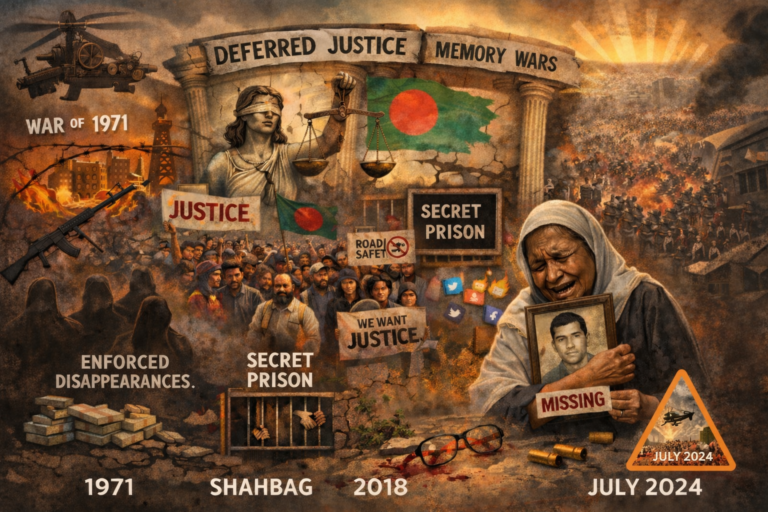
Following July’s political violence, extensive documentation emerged regarding state decisions, security-force conduct, and suppression of dissent. Human-rights organizations and international media published reports alleging excessive force, unlawful detention, and restrictions on civil liberties during the period (Human Rights Watch, 2024; Amnesty International, 2024).
These reports constitute exposure, but PINPF asks whether they produce structural accountability. Thus far, responsibility has remained diffuse—distributed across events, agencies, and procedural narratives—rather than concentrated within decision-making structures.
As with Epstein and Jamaat, exposure has generated pressure and instability without reorganizing authority. Archives grow; accountability stalls.
Comparative Analysis: Different Ideologies, Identical Outcomes
Across liberal-elite networks (Epstein), Islamist organization (Jamaat), and state power (July Bangladesh), the outcome converges:
- Exposure occurs
- Public turbulence follows
- Responsibility narrows or disperses
- Structure survives
PINPF explains this convergence by focusing on survivability, not secrecy. Power persists by preventing responsibility from settling—through legal localization, narrative displacement, coalition pragmatism, or procedural delay (Bauman, 2000; Harvey, 2005).
In Global South contexts, this absorption often occurs faster, as institutional accountability mechanisms are weaker and narrative reconstruction more effective.
Exposure as Event, Not Transformation
These cases demonstrate that exposure has become an event rather than a transformation. Documentation, outrage, and visibility are necessary but insufficient. Without mechanisms that bind exposure to structural redistribution of responsibility, revelation becomes part of governance rather than its undoing (Tufekci, 2017).
PINPF does not claim all exposure fails; it specifies the conditions under which it does.
Conclusion
Viewed through PINPF, Epstein, Jamaat, NCP alignments, and July Bangladesh are diagnostic cases. They show how contemporary power absorbs exposure through sacrifice, displacement, and coalition, while preserving its architecture.
The political question today is no longer whether power can be exposed. It is why exposure so often fails to reorganize responsibility—and what would make it succeed.
Methodological Note
This analysis relies on publicly available court records, investigative journalism, and human-rights reporting. It does not adjudicate guilt beyond established legal findings and treats unresolved claims as allegations.
References (Selected)
- ABC News. (2019). Jeffrey Epstein dies in apparent suicide.
- Amnesty International. (2024). Bangladesh: Excessive force during protests.
- Baudrillard, J. (1994). Simulacra and Simulation.
- Bauman, Z. (2000). Liquid Modernity.
- Comaroff, J., & Comaroff, J. (2006). Law and Disorder in the Postcolony.
- Harvey, D. (2005). A Brief History of Neoliberalism.
- Human Rights Watch. (2024). Bangladesh crackdown report.
- Miami Herald Investigative Team. (2018). Perversion of Justice.
- Reuters. (2016). Bangladesh executes Jamaat leader.
- The Daily Star. (2026a). Jamaat claims X account hacked.
- The Guardian. (2013). Bangladesh war crimes verdict.
- Tufekci, Z. (2017). Twitter and Tear Gas.
- U.S. DOJ. (2020). Epstein NPA review.
- U.S. DOJ. (2022). Maxwell sentencing.
- Žižek, S. (1989). The Sublime Object of Ideology.
This essay analyzes patterns of power and exposure, not individual culpability, and should not be read as a substitute for legal or judicial determination.
This essay introduces PINPF (v1.0). Subsequent essays extend the framework.