After Control and Chaos
Bangladesh has moved from digital censorship to speech chaos—but repeal alone cannot repair the damage. This essay explores what real repair would require: legally, institutionally, and socially.
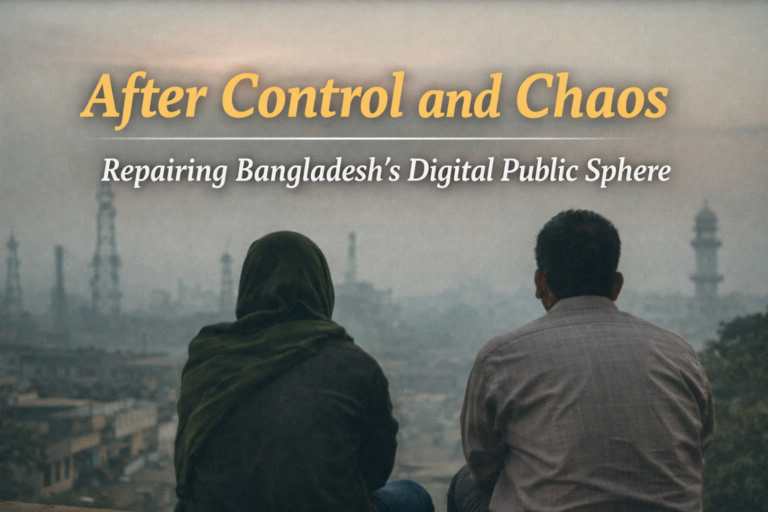
Bangladesh has moved from digital censorship to speech chaos—but repeal alone cannot repair the damage. This essay explores what real repair would require: legally, institutionally, and socially.
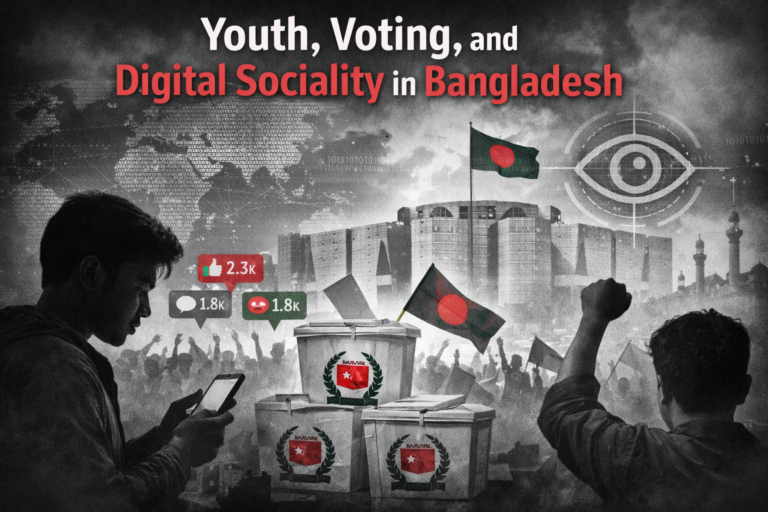
Resistance, Reform, and Electoral Uncertainty in a Platformized Political Order A critical analysis of youth voting behavior, digital sociality, meme warfare, and political reform in Bangladesh’s post-movement electoral landscape. “This essay is a theoretically driven critical analysis grounded in secondary data, institutional reports, and longitudinal observation of digital political practices in Bangladesh (2013–2026).” Author’s note:This…
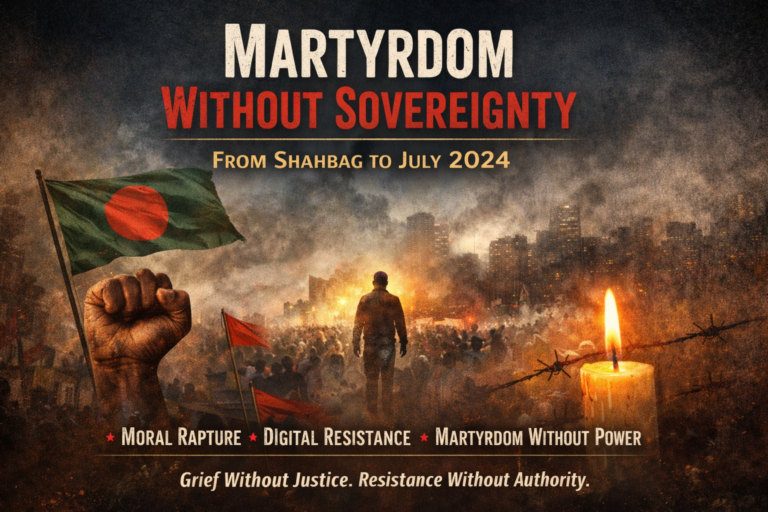
The killing of Osman Hadi did not rupture power in Bangladesh. It produced grief, outrage, deadlines, and moral clarity—without sovereignty. From Shahbag to July 2024 and beyond, moments of ethical intensity repeatedly fail to convert into institutional authority. This essay argues that Bangladesh has entered a political condition where resistance persists, rapture circulates, bodies are exposed, and power survives—unchanged.
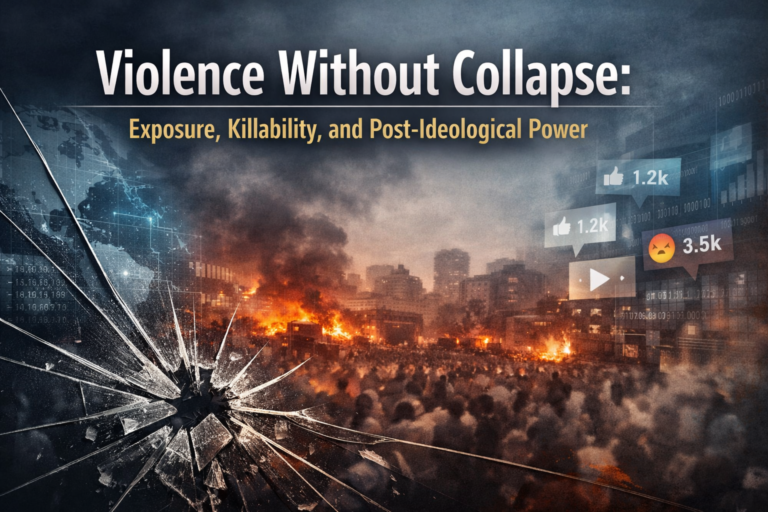
Why does violence remain politically survivable despite exposure, documentation, and global scrutiny?
This essay introduces PINPF to explain how power absorbs violence through diffusion, digital mediation, and the production of killability in contemporary Bangladesh.
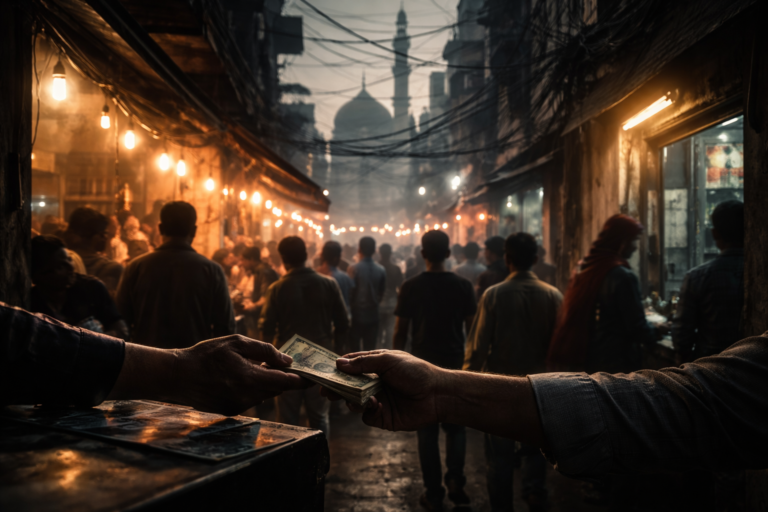
This essay examines how prolonged state failure and authoritarian governance in Bangladesh have transformed moral economy into a primary structure of survival, legitimacy, and power. It argues that women’s authority has not disappeared but has been recomposed into moral, financial, and digital infrastructures that sustain everyday life beyond the state.
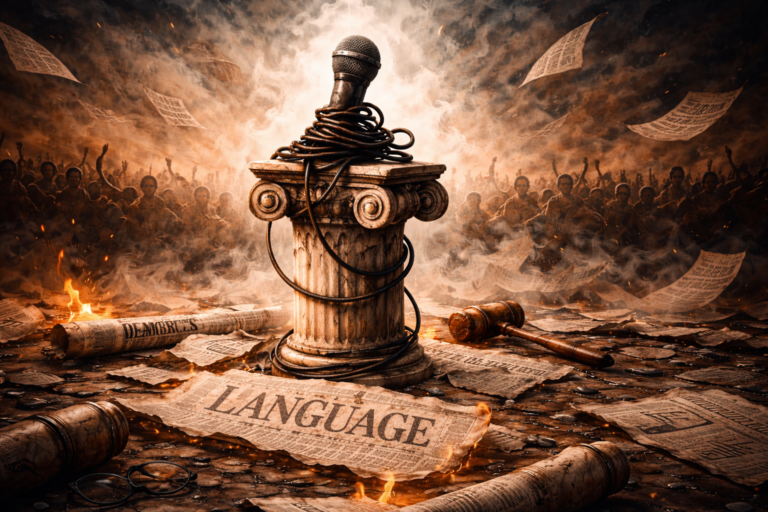
This essay examines a profound shift in contemporary politics: the collapse of democratic and liberal political grammar without the emergence of a viable democratic alternative. Drawing on long-term ethnographic observation in Bangladesh and situating it within a global conjuncture marked by populism, platform-mediated politics, and moral fracture, the essay argues that political language itself has been transformed.
In place of democratic mediation, a moral-vernacular mode of politics has gained authority—one that privileges authenticity over accountability, conviction over deliberation, and affect over procedure. Social media platforms, especially Facebook and YouTube, have accelerated this transformation by reorganizing how political authority is produced and recognized.
The essay does not defend failed liberal institutions, nor does it dismiss moral anger or resistance. Instead, it asks what becomes possible—and what is lost—when political speech is governed by moral certainty rather than democratic grammar, in a world increasingly shaped by global panic, selective solidarity, and platform power.
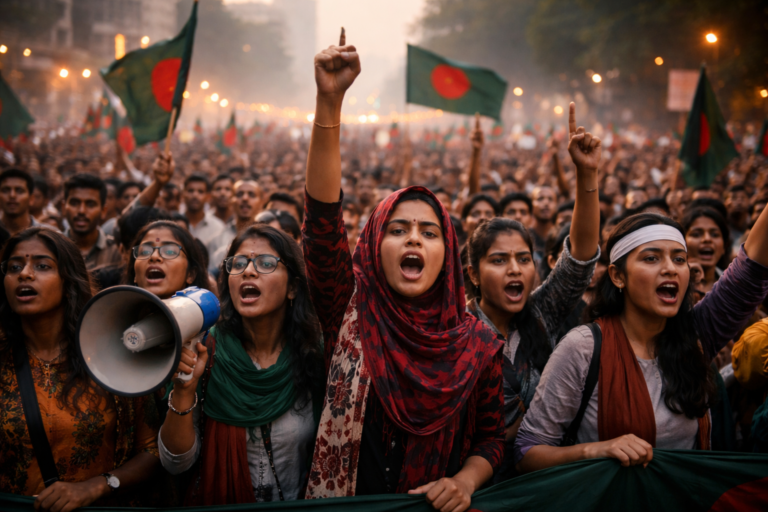
Gendered Erasure, Moral Governance, and the Post-July Political Order in Bangladesh An analysis of how women generate legitimacy during uprisings but are sidelined during political settlement through moral governance, symbolism, and digital discipline. Introduction: July and the production of legitimacy The July 2024 uprising in Bangladesh was unimaginable without women. They were present in the…
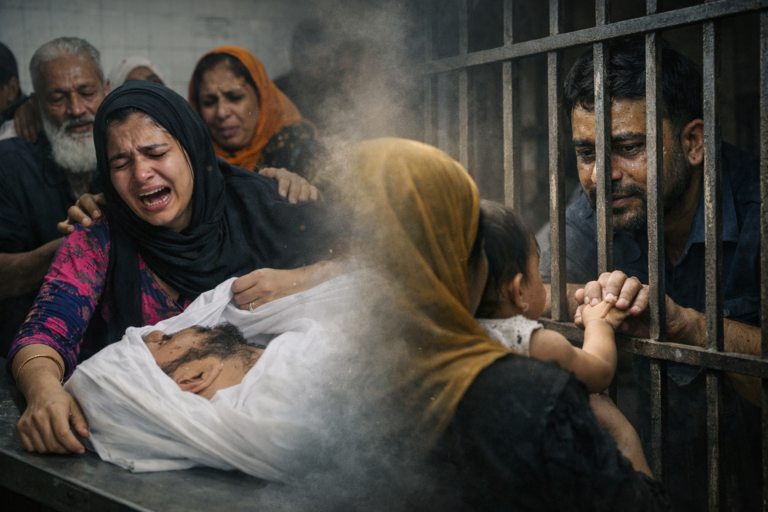
Grievance, Justice, and Moral Breakdown After July, social media in Bangladesh stopped being just a platform. It became a living memory—where grief, justice, documents, and moral judgment collide in real time Abstract In post-July Bangladesh, social media has emerged as a central arena where grievance, protest, and moral judgment are remembered, contested, and re-activated. This…
For nearly two decades, internet regulation has reshaped political life in Bangladesh. This essay traces how digital space became the country’s last political public sphere—first disciplined through law, and later destabilized into contentious speech anarchy after July 2024.
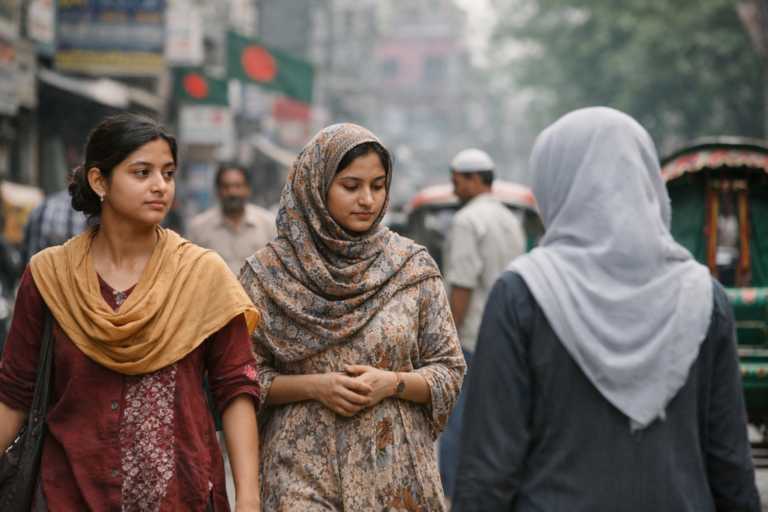
In post–July 2024 Bangladesh, women’s religious visibility has become a site of political struggle. This essay shows how moral anxiety, victimhood narratives, and power converge—and why forcing women into “secular” or “religious” roles is itself a form of coercion.