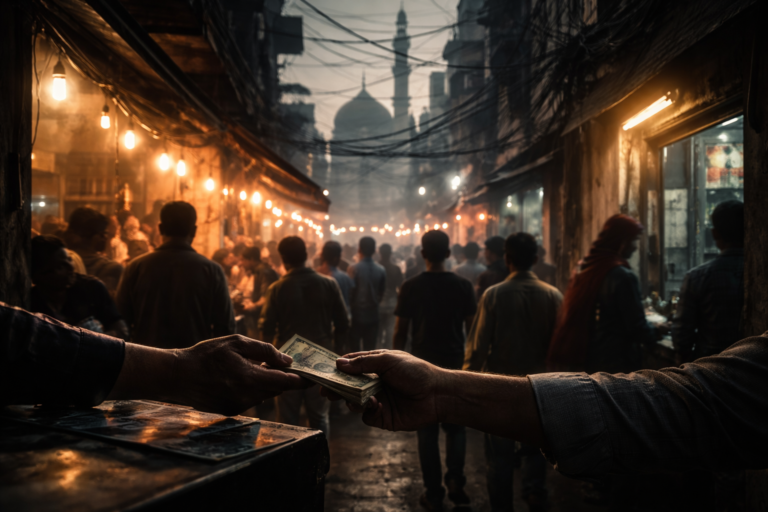
After July: Campus Politics, Moral Authority, and the Conditions of Islamist Ascendancy
A rigorous analysis of Shibir’s campus victories after July 2024—examining Generation Z, material politics, 1971 memory, violence, and why this is not yet Islamo-fascism.
Why the Question Is Being Asked Now
Since the July 2024 uprising, student union elections across Bangladesh’s public universities have produced a striking and consistent outcome: Islami Chhatra Shibir has won decisively, often without serious contest. For many observers, this has triggered an immediate and alarming question: Is this the rise of Islamo-fascism?
The question is not illegitimate. Islami Chhatra Shibir has a documented history of campus violence, and its parent organization, Jamaat‑e‑Islami Bangladesh, has never fully resolved its historical position regarding 1971. These facts matter.
But asking the right question does not guarantee the right answer.
This essay argues that what we are witnessing is not an ideological conversion of students, nor an inevitable march toward religious fascism. Instead, it is the outcome of a long structural collapse of student politics, welfare provision, and institutional credibility, combined with Generation Z’s deeply material and experiential political consciousness.
To understand why Shibir is winning, we must look beyond ideology to organization, beyond memory to material life, and beyond panic to structure.
The Long Collapse of Campus Politics and the Welfare Vacuum
Bangladesh’s student politics has historically been heroic: 1952, 1969, 1971, and 1990 established students as moral actors in national transformation. Yet alongside this legacy lies a persistent failure of the postcolonial state to construct a durable student welfare regime.
Public universities have long been defined by overcrowded halls, informal dining systems, financial precarity, and weak institutional support. Over time, student organizations filled this vacuum. Control over seats, food access, tutoring, protection, and mediation became political resources. Scholarship has repeatedly shown that Bangladeshi student politics evolved into resource-based and welfare-mediated competition, not merely ideological struggle (Suykens & Kuttig, 2016).
This structural condition predates Shibir’s current success. It is the soil in which all student politics has grown.
Authoritarian Consolidation and the Hollowing of State-Aligned Student Politics (2009–2024)
Between 2009 and 2024, Bangladesh functioned as a competitive authoritarian regime (Levitsky & Way, 2010). Elections continued, but meaningful power alternation ceased. During this period, the ruling party’s student wing ceased to operate as an autonomous organization and became an extension of state power.
Campus politics increasingly relied on administrative protection, coercion, and fear rather than persuasion or service. This produced organizational atrophy. When the July 2024 uprising shattered state legitimacy, state-dependent student politics collapsed almost instantly.
What disappeared from campuses was not simply a party, but an entire mode of political reproduction.
Generation Z and the End of Grand Narratives
Today’s university students are overwhelmingly Generation Z. Their political socialization occurred amid electoral stagnation, digital surveillance, shrinking employment prospects, and normalized repression. Global research shows that this generation evaluates politics through lived experience and material outcomes rather than ideological loyalty (Bennett & Segerberg, 2013; Loader et al., 2014).
In Bangladesh, this translated into skepticism toward grand slogans—particularly when appeals to history failed to deliver safety, dignity, or opportunity. The question became simple and unforgiving: What does politics actually do for my life?
Two Movements That Changed Everything
1. The 2018 Road Safety Movement: Politics of Survival
The 2018 Road Safety Movement marked a decisive shift. Triggered by student deaths in traffic accidents, it was non-partisan, youth-led, and focused on bodily safety. Students organized traffic, enforced rules, and modeled civic order—until violently suppressed.
The lesson internalized by Generation Z was stark: the state cannot guarantee safety, but will punish citizens who attempt to do so (Amnesty International, 2018). This was not moral politics. It was survival politics.
2. The Quota Movement: A Material Struggle
The quota reform movement is often misread as a cultural backlash. In reality, it was a material redistribution struggle. For lower- and middle-class students, government employment represents economic survival, family security, and social mobility. Quotas directly shape access to scarce opportunities.
This was not a symbolic debate about fairness. It was a struggle over resource allocation. Its repeated repression further confirmed the state’s hostility to material claims.
Together, these movements reshaped political consciousness: ideology receded, material life moved to the center.
Memory Politics: 1971, Shahbag, and Narrative Exhaustion
The Liberation War of 1971 remains foundational to Bangladesh’s national identity. Yet from 2009 to 2024, its monopolization by the ruling party transformed memory into an instrument of rule. Historical loyalty became a political test; dissenting interpretations were delegitimized.
The 2013 Shahbag movement initially mobilized moral outrage over war crimes, but over time became entangled with state power, repression, and partisan enforcement. For many young people, Shahbag ceased to represent justice and came to symbolize state-sanctioned moral domination (Tilly & Tarrow, 2015).
This did not only produce historical denial. It produced historical exhaustion.
When the Uprising Won but Institutions Did Not
The July 2024 uprising successfully shattered regime legitimacy, but it did not generate durable organizational alternatives. Movements won; institutions did not emerge. Leadership remained personal, not structural.
Politics without institutions quickly becomes politics without representation.
NCP, Strategic Alliances, and the Collapse of Moral Capital
Post-July, the National Citizen Party (NCP) briefly embodied hope for a new political alternative. That hope collapsed when NCP entered a strategic electoral alliance with Jamaat-e-Islami. Students interpreted this not as pragmatism, but as elite bargaining. Moral capital evaporated without being replaced by organizational capacity.
Student elections were left effectively uncontested.
Institutional Election Design: Neutrality with Bias
University administrations organized elections rapidly but retained hall-based voter control, compressed timelines, and law-and-order-centric governance. The result was procedural neutrality with substantive bias: only organizations with prior discipline and experience could compete effectively.
Identity Politics Reconfigured
Shibir’s contemporary appeal is not classical Islamist identity politics. It operates through ethical contrasts—discipline versus corruption, reliability versus abandonment, order versus chaos. Religion functions less as doctrinal ideology than as moral infrastructure.
Islamic Commerce and Moral Economy
The expansion of Islamic commerce—halal branding, faith-based entrepreneurship, digital Islamic marketplaces—has normalized non-state moral economies. While not organizationally identical to Shibir, these networks cultivate trust, ethical consumption, and legitimacy outside the state, indirectly reinforcing acceptance of welfare-based religious organizations.
Organization, Not Spectacle: How Shibir Operates
Islami Chhatra Shibir recruits not through mass rallies but via peer mentoring, dormitory networks, tutoring circles, and welfare mediation. Its operations emphasize discipline, low visibility, long-term cadre formation, and decentralized support. This is organizational politics rather than populist mobilization.
Violence, 1971, and the Fascism Question
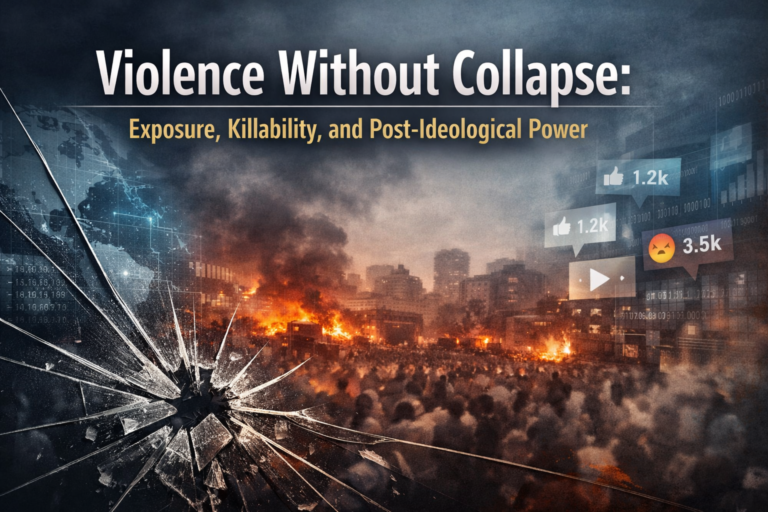
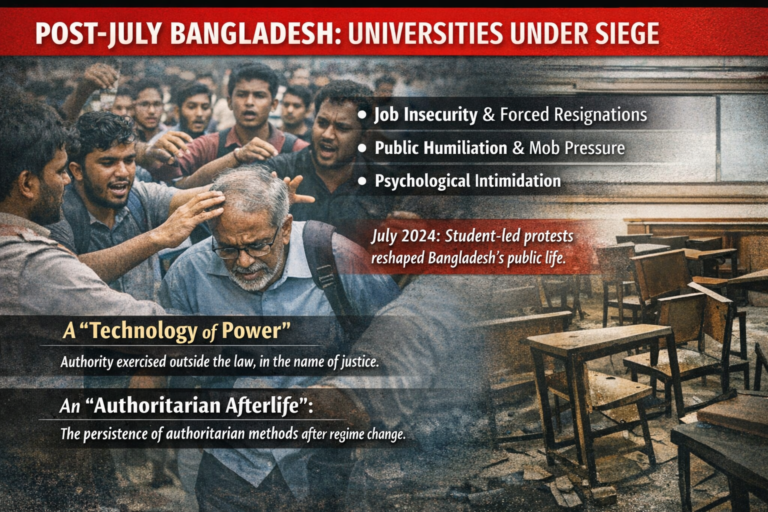
Any serious analysis must confront two facts: Shibir’s documented history of campus violence and Jamaat’s unresolved relationship with 1971.
Why this history does NOT automatically mean “Islamo-fascism” today
Fascist movements typically do three things with violent pasts:
Glorify past violence as heroic
Mythologize it as sacred necessity
Institutionalize it into state doctrine
(Paxton, 2004; Griffin, 1991)
At present:
Shibir does not publicly glorify past campus violence
Jamaat does not openly celebrate 1971 collaboration
The strategy is strategic silence and reframing, not mythic mobilization
This is not absolution—it is a diagnostic observation.
Silence is dangerous, but it is not yet fascist mobilization.
Why the Risk Remains Serious (Critical Warning)
Here is the key analytical point:
Unresolved violent history + organizational discipline + moral certainty
becomes dangerous only when combined with state power.
The danger is conditional, not automatic.
Red-flag convergence would occur if:
Jamaat/Shibir gain coercive state authority
historical accountability is permanently deferred
dissenting histories of 1971 are criminalized
moral authority is fused with legal power
That combination would meet fascism criteria.
Why Students Still Vote for Shibir Despite This History
This is analytically crucial:
Most Generation Z students are not endorsing 1971 positions
They are voting based on:
present-day material support
campus safety
organizational reliability
disgust with past state violence (2009–2024)
collapse of credible secular alternatives
For many, the calculation is:
“Everyone has blood on their hands. Who is here now?”
This is not moral approval—it is post-traumatic political pragmatism.
Comparative Perspective: Why Mislabeling Is Risky
Historically:
Italy/Germany → violence + myth + state fusion = fascism
Iran 1979 → unresolved violence + moral absolutism + state capture
Turkey (AKP) → conservative roots + elections + delayed authoritarianism
Bangladesh today resembles none fully, but contains fragments of all.
Conclusion
Shibir’s post-July dominance does not signal inevitable Islamo-fascism. It signals organizational survival amid state failure, welfare collapse, narrative exhaustion, and institutional absence. History raises serious warnings—but panic obscures analysis.
The real question is no longer why Shibir is winning, but whether democratic politics can rebuild welfare, accountability, and trust before organizational discipline fuses with unchecked power.
References
Amnesty International. (2018). Bangladesh: Brutal crackdown on student road safety protests.
Bennett, W. L., & Segerberg, A. (2013). The logic of connective action. Cambridge University Press.
Freedom House. (2023). Freedom in the World: Bangladesh.
Griffin, R. (1991). The nature of fascism. Routledge.
Levitsky, S., & Way, L. (2010). Competitive authoritarianism. Cambridge University Press.
Loader, B. D., Vromen, A., & Xenos, M. (2014). The networked young citizen. Information, Communication & Society, 17(2), 143–150.
Paxton, R. O. (2004). The anatomy of fascism. Knopf.
Suykens, B., & Islam, M. S. (2013). Political violence and student wings in Bangladesh. South Asia Multidisciplinary Academic Journal, 8.
Suykens, B., & Kuttig, S. (2016). Party politics and student activism in Bangladesh. Contemporary South Asia, 24(3), 1–15.
Tilly, C., & Tarrow, S. (2015). Contentious politics. Oxford University Press.