After 40 in Dhaka: Intimacy in the Gigacity
Why relationships after 40 feel fragile in Dhaka—where class, migration, religion, and gigacity life quietly reshape intimacy.
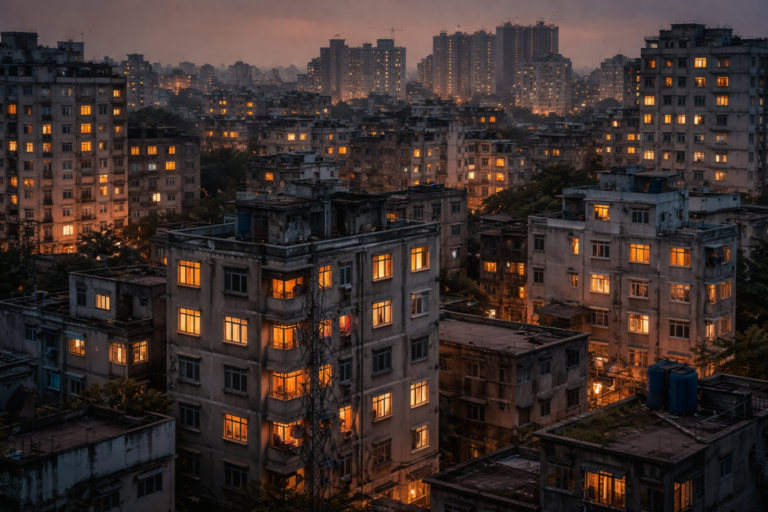
Why relationships after 40 feel fragile in Dhaka—where class, migration, religion, and gigacity life quietly reshape intimacy.
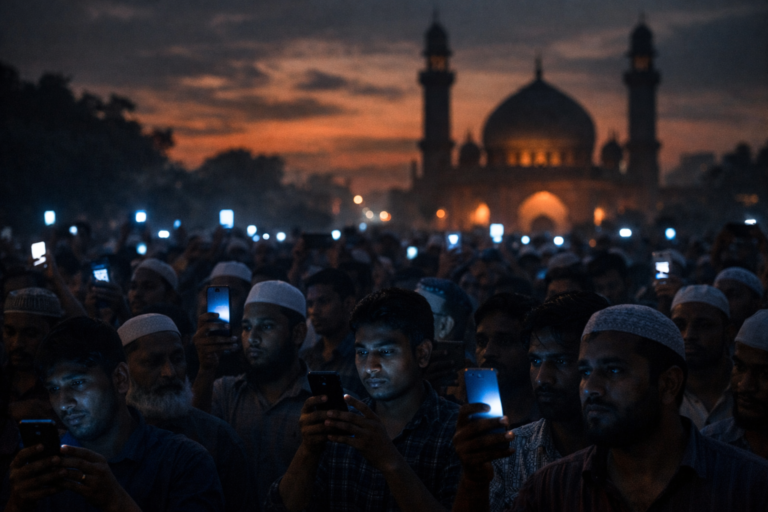
How subalternity, social media, and religion intersect in Bangladesh, producing Islamophobia, Islamo-fascism, and new forms of authoritarian power.
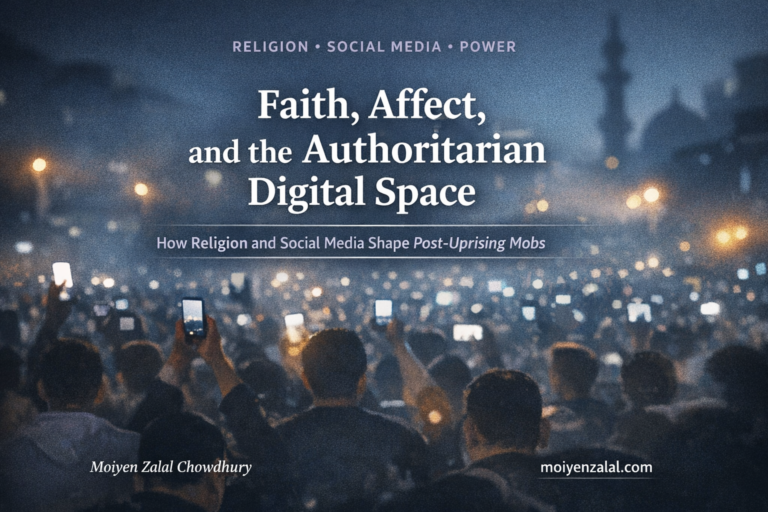
An in-depth analysis of religion, social media, and affective politics after uprisings. Focusing on Bangladesh, India, and Pakistan, this essay shows how digital platforms amplify religious sentiment, reshape public emotion, and increase the risk of authoritarian governance and mob violence in post-movement contexts.
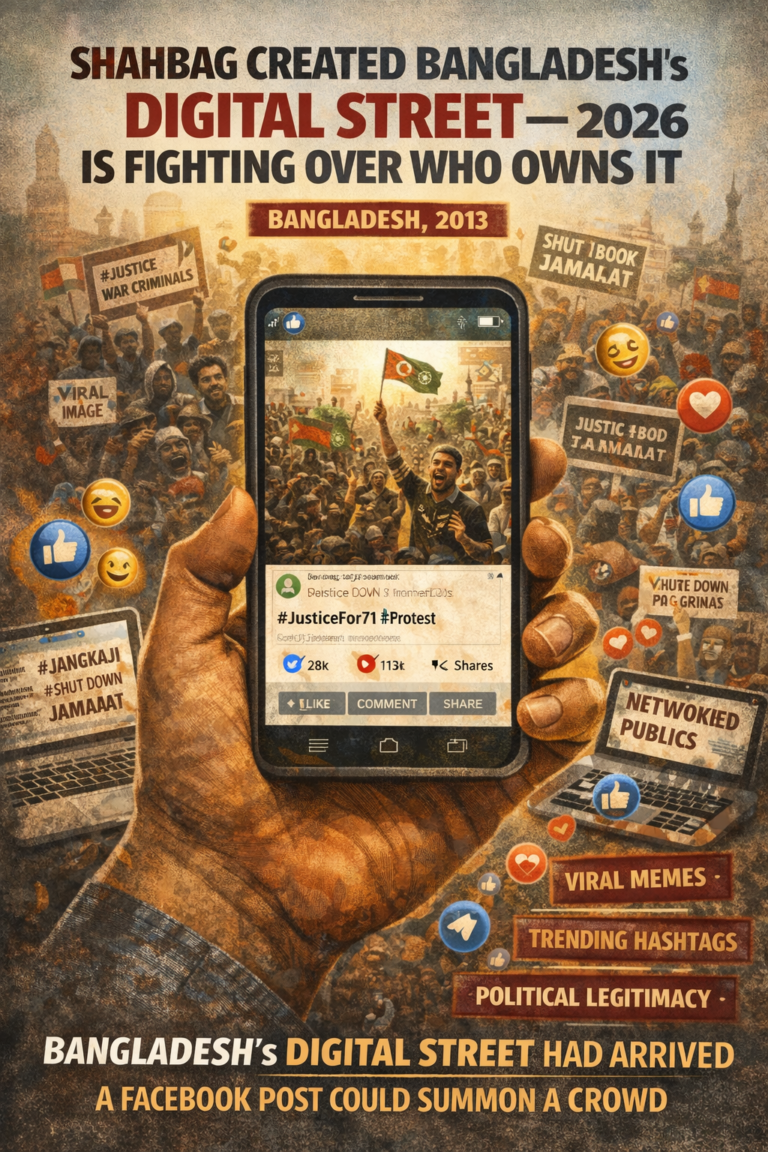
In 2013, Bangladesh’s politics changed forever—not in parliament, but on Facebook. The Shahbag movement created the country’s first digital street, where legitimacy was produced through visibility, circulation, and attention rather than organisations or party hierarchies. Thirteen years later, as the 2026 election approaches, that unresolved digital terrain has become the central battleground of politics—louder, faster, and far more manipulated, but still decisive.
July was not merely a political rupture in Bangladesh—it was a moral one. What collapsed was not only confidence in institutions, but the authority of a party-managed version of “secular” legitimacy that had long governed public life. In the vacuum that followed, moral authority began to circulate elsewhere: through religion, language, digital commerce, and everyday social structures. As the country approaches an election, the struggle is no longer only over votes, but over who gets to define the “good Muslim,” and with it, legitimacy, belonging, and power. This essay argues that Islamic populism did not arise despite authoritarian rule, but through it—and that July activated a moral infrastructure whose consequences will outlast the ballot box.