Subalternity, Social Media, and Authoritarian Power in Bangladesh
How Bangladesh Became Torn Between Islamophobia and Islamo-Fascism
This essay sits at the intersection of anthropology, political theory, and digital ethnography, examining how subalternity, religion, and social media reshape authoritarian power in South Asia.
The paradox of resistance in Bangladesh
In contemporary Bangladesh, political debate is saturated with a troubling paradox.
On one side, the state and elite institutions are accused of Islamophobia—of disciplining, surveilling, and delegitimizing religious publics in the name of order, development, and security.
On the other side, society is increasingly alarmed by the rise of Islamo-fascist tendencies—moral authoritarianism, mob justice, and religiously framed coercion.
These two forces are often framed as opposites. This essay argues they are mutually constitutive.
At the centre of this entanglement lies a concept once mobilized as a tool of resistance: subalternity.
Subalternity: from critical weapon to political shortcut
The concept of the subaltern originates in Antonio Gramsci, referring to groups structurally excluded from hegemonic power. It was later reworked by Subaltern Studies scholars and radically critiqued by Gayatri Chakravorty Spivak, whose question—Can the subaltern speak?—remains foundational.
Spivak’s warning is precise:
When elites claim to “give voice” to the subaltern, they often replace subaltern agency with elite representation.
Subalternity, then, is not an identity.
It is a structural position—defined by exclusion from institutionalized power and legitimate speech.
Authoritarianism and the temptation of subaltern politics
In authoritarian and post-authoritarian contexts, subalternity becomes politically seductive for intellectuals because it offers:
- Moral clarity against state power
- A language of authenticity
- A way to bypass compromised institutions
Across the Global South, local intellectual traditions have often:
- Positioned “the people” against “the elite”
- Framed marginalized groups as bearers of moral truth
- Treated subaltern rage as inherently emancipatory
This move is visible in:
- Iran after 1979
- Egypt after 2011
- India under majoritarian populism
- Pakistan’s post-Zia Islamist public sphere
Bangladesh is no exception.
Social media: where subalternity was amplified, simplified, and weaponized
Social media fundamentally altered how subalternity functions.
Research shows that platforms like Facebook:
- Collapse complex social hierarchies into binary moral frames
- Reward emotional intensity over structural analysis
- Privilege performative authenticity
In Bangladesh, social media enabled:
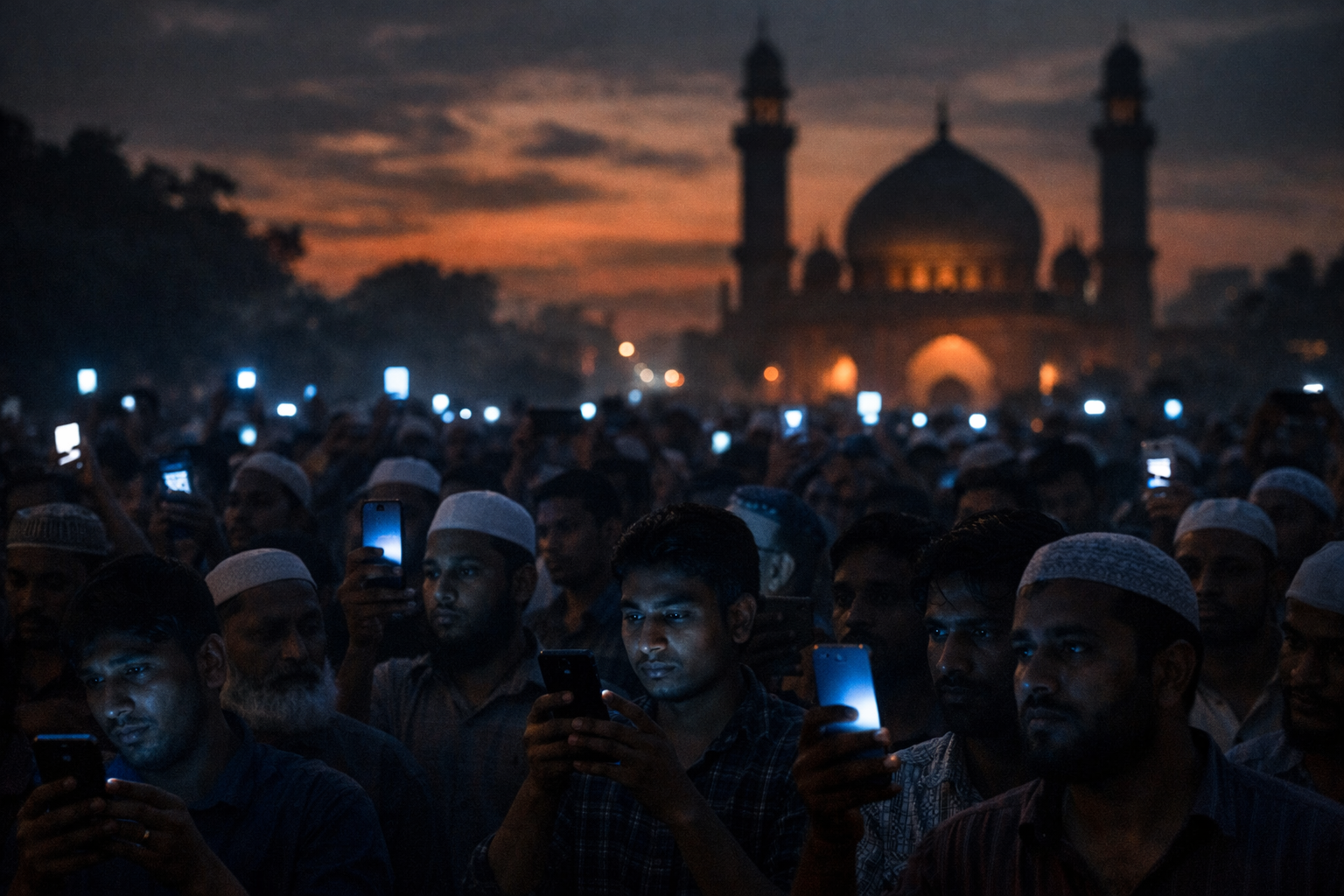
- Rapid circulation of religious sermons
- Viral framing of moral injury and humiliation
- The translation of local grievances into national outrage
Digital ethnographies of South Asia (e.g., Udupa, 2019; Gerbaudo, 2018) demonstrate that networked outrage transforms subaltern identity into mobilizable moral capital.
Subalternity becomes:
- Hashtag-ready
- Image-driven
- Morally absolutist
This is not accidental—it is algorithmic.
Platform ecology in Bangladesh
- Bangladesh has 55–57 million Facebook users (2024–2025 estimates), making Facebook the dominant political platform in the country
- YouTube is the second most influential platform, especially for long-form religious sermons
- TikTok is rapidly expanding among youth, but Facebook remains the primary site for political mobilization, rumor circulation, and moral policing
Sources:
DataReportal (2024, 2025); Meta Ads Library estimates; BTRC digital usage reports.
Analytical significance:
Unlike many countries where politics is platform-diversified, Bangladesh’s platform monoculture (Facebook-centrism) intensifies moral polarization and accelerates subaltern voice capture.
Religious content circulation on Facebook and YouTube
Empirical findings (Bangladesh-focused studies):
- Islamic sermons and religious commentary are among the highest-engagement political-moral content categories on Bangladeshi Facebook and YouTube
- Pages and channels featuring:
- Waz mahfils
- Moral guidance clips
- Anti-“secular elite” rhetoric
consistently outperform civic or policy-oriented pages in reach and interaction
Supporting research:
- Ahmed & Jaidka (2023): Facebook religious content in Bangladesh receives 2–4× higher engagement than secular civic content
- Udupa et al. (2020): South Asian religious nationalism thrives through affective virality, not organizational depth
Interpretation:
Social media reframes subaltern religiosity as algorithmic capital—emotionally resonant, morally absolute, and rapidly mobilizable.
Digital outrage and moral crowd formation
Documented patterns (journalistic + academic):
- Viral Facebook posts have preceded:
- Attacks on teachers and cultural workers
- Book fair shutdown incidents
- Threat campaigns against artists, women, and minorities
- Mobilization often occurs without centralized leadership, driven by:
- Screenshot circulation
- Short sermon clips
- Moral accusation posts (“insult,” “blasphemy,” “enemy of faith”)
Key observation:
Digital subaltern publics often bypass institutions entirely, replacing due process with moral consensus.
Interpretive claim:
This is not “people’s justice”—it is platform-mediated moral authoritarianism.
How subalternity was intellectually promoted and then collapsed
Empirical-discursive pattern (Bangladesh):
Across essays, talk shows, YouTube lectures, and Facebook long-form posts (2015–2024), a recurring intellectual move appeared:
- The authoritarian state was framed as:
- Elite
- NGO-ized
- Secular-performative
- The “ordinary religious people” were framed as:
- Ethically grounded
- Historically humiliated
- Politically silenced
This discourse:
- Helped challenge state authoritarianism
- Legitimated religious popular sentiment
- Repositioned subalternity as moral truth
Where it backfired:
Once subalternity became a moral shortcut, it:
- Lost its structural meaning
- Became immune to critique
- Enabled coercion “from below”
This aligns precisely with Spivak’s warning:
When subalternity is moralized, it becomes available for domination.
When subaltern publics become oppressors
Global parallels (established scholarship)
- Iran: Revolutionary religious subalterns → morality police
- India: “Culturally humiliated majority” → majoritarian authoritarianism
- Egypt: Popular religious legitimacy → repression of dissent
(Asad 2003; Bayat 2017; Jaffrelot 2021)
Bangladesh-specific manifestation
- Moral policing framed as “public sentiment”
- Threats justified as “defense of faith”
- Social media mobs replacing legal accountability
- Subaltern anger converted into authoritarian enforcement
Crucial insight:
Subalternity does not disappear—it changes position in the hierarchy.
Islamophobia and Islamo-fascism: digitally co-produced
Islamophobia (Bangladesh-specific form):
- Expressed through:
- Security logic
- Development discourse
- Cultural suspicion of piety
- Reproduced by:
- Media elites
- NGO language
- Policy frameworks
Islamo-fascism (platform-enabled):
- Expressed through:
- Moral absolutism
- Online shaming
- Crowd intimidation
- Amplified by:
- Algorithms
- Influencer sermons
- Viral outrage cycles
Shared feature:
Both deny plural Muslim subjectivities and suppress dissent.
The intellectual turn to subalternity—and its limits
In Bangladesh, facing a long-standing authoritarian political order, segments of the intellectual public sphere increasingly turned to subalternity as a counter-hegemonic language.
Without naming individuals, this discourse typically argued that:
- Elite secularism had become hollow and authoritarian
- The moral universe of the religious poor had been ignored
- Authentic politics lay outside NGOs, parties, and institutions
This intellectual move:
- Critiqued liberal elitism
- Challenged state violence
- Reclaimed cultural and religious marginality
But it also introduced a fatal simplification.
Subalternity was increasingly treated as:
- A moral position rather than a structural one
- A guarantee of justice rather than a site of struggle
Why uprisings intensified the problem
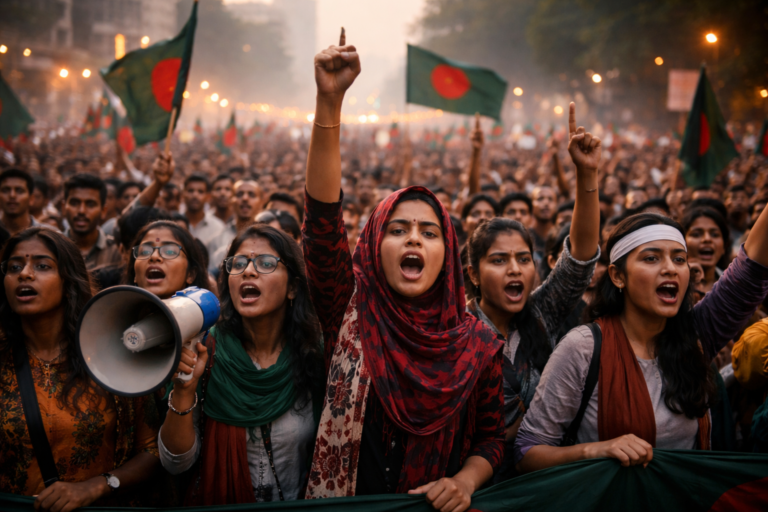
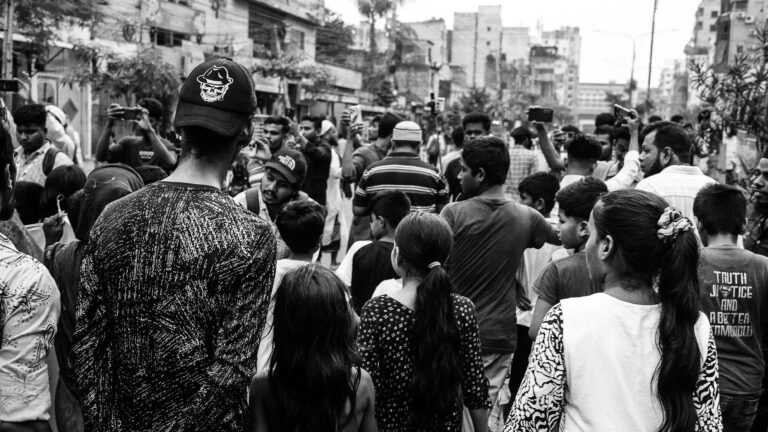
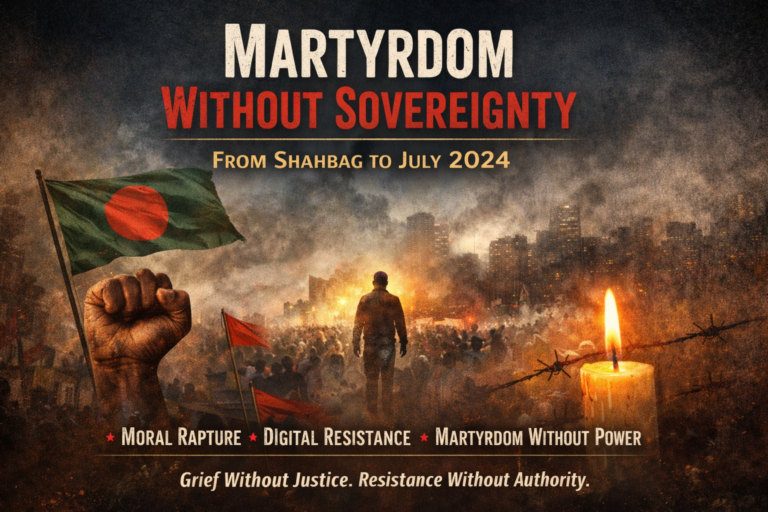
Moments like Shahbag (2013) and July 2024 fractured authoritarian legitimacy—but they also fractured moral consensus.
After uprisings:
- Institutions weaken
- Authority fragments
- Moral entrepreneurs rush in
Social media accelerates this process by:
- Amplifying extremes
- Punishing nuance
- Rewarding outrage
Thus, subalternity becomes not a tool of critique—but a currency of domination.
Why subalternity failed as an intellectual shortcut
Subalternity failed not because it is wrong—but because it was flattened.
Three errors proved fatal:
- Treating marginality as virtue
- Treating suffering as political wisdom
- Treating representation as emancipation
As Talal Asad reminds us, moral authority without institutional accountability often produces coercion, not justice.
Conclusion: reclaiming subalternity responsibly
Subalternity remains a powerful analytical tool—but only if used with discipline.
It must:
- Diagnose power, not sanctify anger
- Trace domination, not replace elites
- Protect plurality, not enforce purity
Bangladesh’s tragedy is not that subalterns spoke—but that their speech was allowed only through authoritarian grammars, secular and religious alike.
References
Ahmed, S., & Jaidka, K. (2023). Religious content and engagement patterns on Facebook in Bangladesh. Journal of Asian Communication.
Asad, T. (2003). Formations of the secular. Stanford University Press.
Bayat, A. (2017). Revolution without revolutionaries. Stanford University Press.
DataReportal. (2024). Digital 2024: Bangladesh.
Gerbaudo, P. (2018). The digital party. Pluto Press.
Gramsci, A. (1971). Selections from the prison notebooks. International Publishers.
Jaffrelot, C. (2021). Modi’s India. Princeton University Press.
Spivak, G. C. (1988). Can the subaltern speak? In Marxism and the interpretation of culture.
Udupa, S. (2019). Digital hate. Princeton University Press.
Udupa, S., et al. (2020). Online nationalism and affective polarization in South Asia. International Journal of Communication.