In April 2013, the collapse of Rana Plaza in Savar exposed not only the lethal failures of an industrial system, but also the fragile architectures of accountability, labor, and life that sustained it. What followed was not a singular event, but an extended social moment—marked by rescue operations, mourning, protest, silence, and contested memory. The photographs presented here emerge from that moment.
This archive brings together a curated selection of field photographs taken in Savar in the immediate aftermath of the Rana Plaza collapse. These images document spaces rather than spectacle, structures rather than scenes of injury, and collective presence rather than individual suffering. They are not intended to provide a comprehensive visual record of the disaster, nor to aestheticize its violence. Instead, they function as fragments—partial, situated, and necessarily incomplete—of a historical rupture that continues to shape labor, activism, and public discourse in Bangladesh and beyond.
The purpose of this archive is documentary and pedagogical. These images are shared as historical evidence and as material for reflection on industrial modernity, urban precarity, and the politics of visibility. They are offered to researchers, students, journalists, and members of the public as a resource for understanding how disaster unfolds not only through collapse, but through the social and spatial aftermath that follows it.
All photographs included here were taken in the course of on-site documentation during 2013. The selection avoids graphic depictions of injury or death, and identifiable individuals are presented only where contextually necessary and ethically appropriate. This reflects a commitment to witnessing without exploitation, and to preserving memory without reproducing harm.
This archive does not claim neutrality. It acknowledges that every act of documentation is shaped by proximity, access, and choice. What it seeks instead is responsibility: to memory, to those whose lives were altered or lost, and to the ongoing struggle over how such events are remembered, narrated, and learned from.
Savar remains more than a site of collapse. It is a city of epitaphs—written not only in stone or steel, but in labor histories, unfinished justice, and the enduring presence of those who are no longer visible.
This archive is part of an ongoing effort to preserve visual records of moments of collective rupture for research and public memory.
Photographic Records
Selected field photographs, Savar, April 2013
SECTION I — SEARCH, REGISTRATION, AND WAITING
In the days following the Rana Plaza collapse, public spaces in Savar were transformed into improvised sites of search and registration. Relatives gathered, posted notices, queued for information, and waited for confirmation in the absence of formal identification systems.
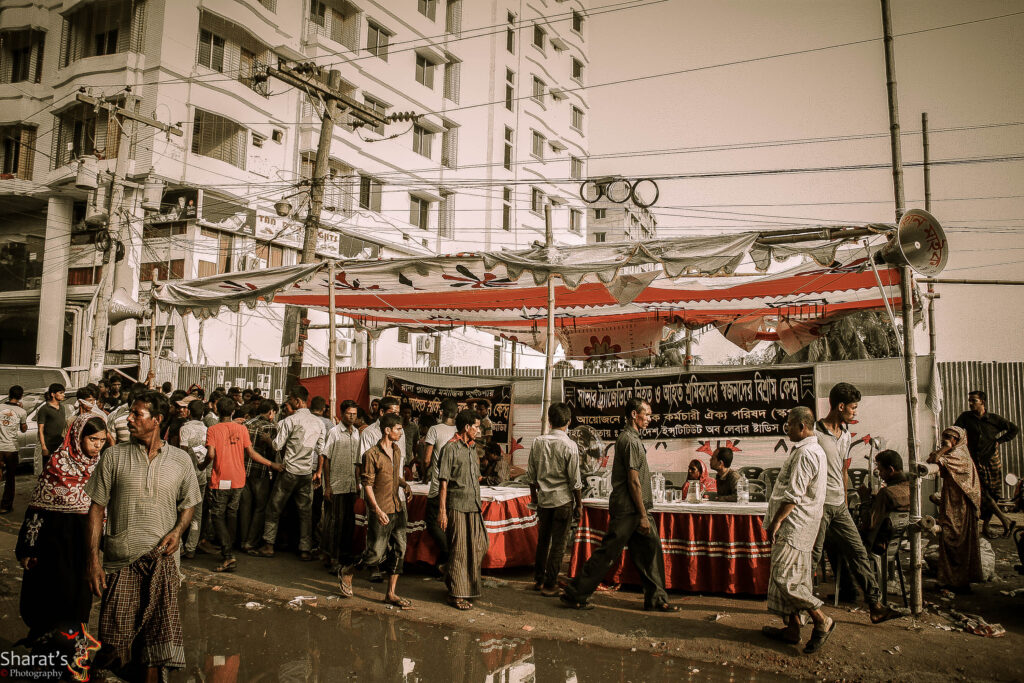
Savar, April 2013. Relatives gather around an improvised information desk near the Rana Plaza site, waiting to register names and receive updates.
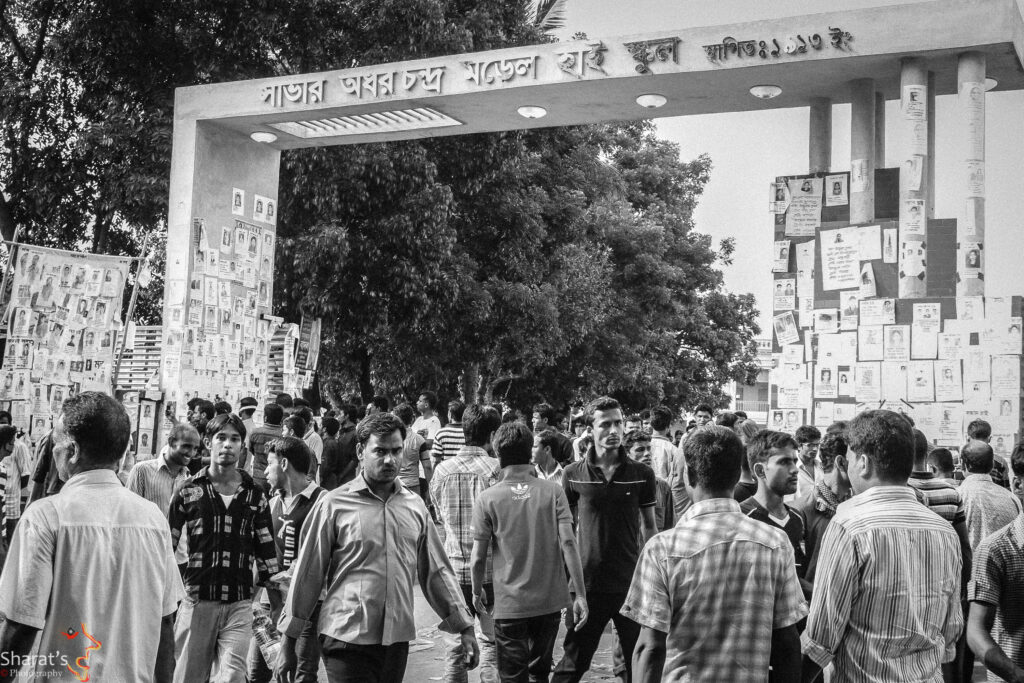
Savar, April 2013. Relatives gather around an improvised information desk near the Rana Plaza site, waiting to register names and receive updates.
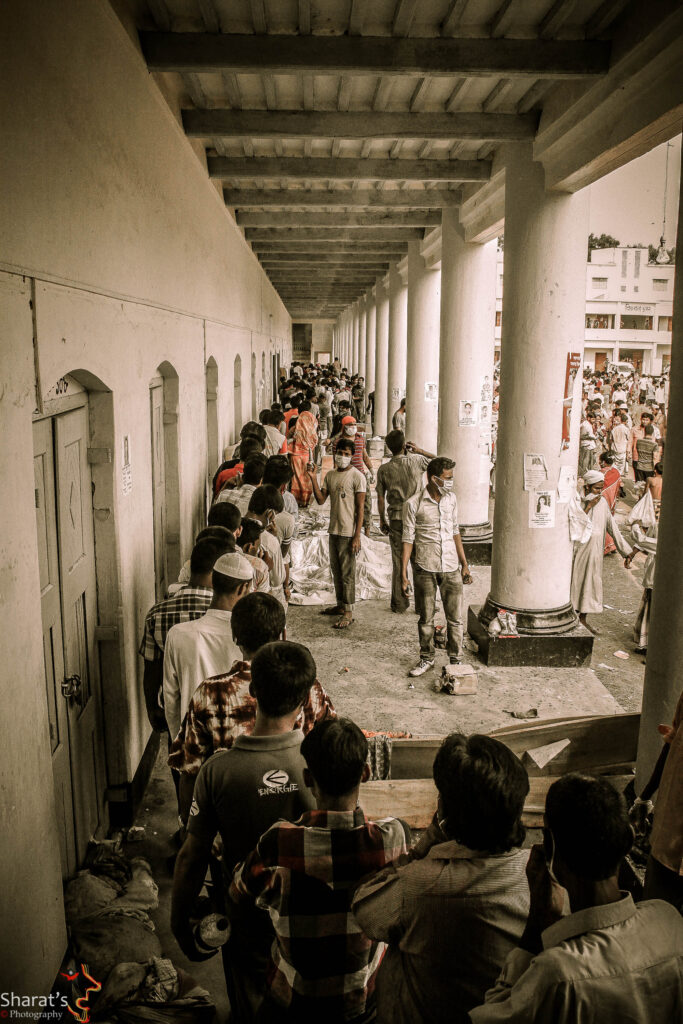
Savar, April 2013. Relatives queue along a corridor while notices and photocopied photographs of missing workers are posted on pillars and walls.
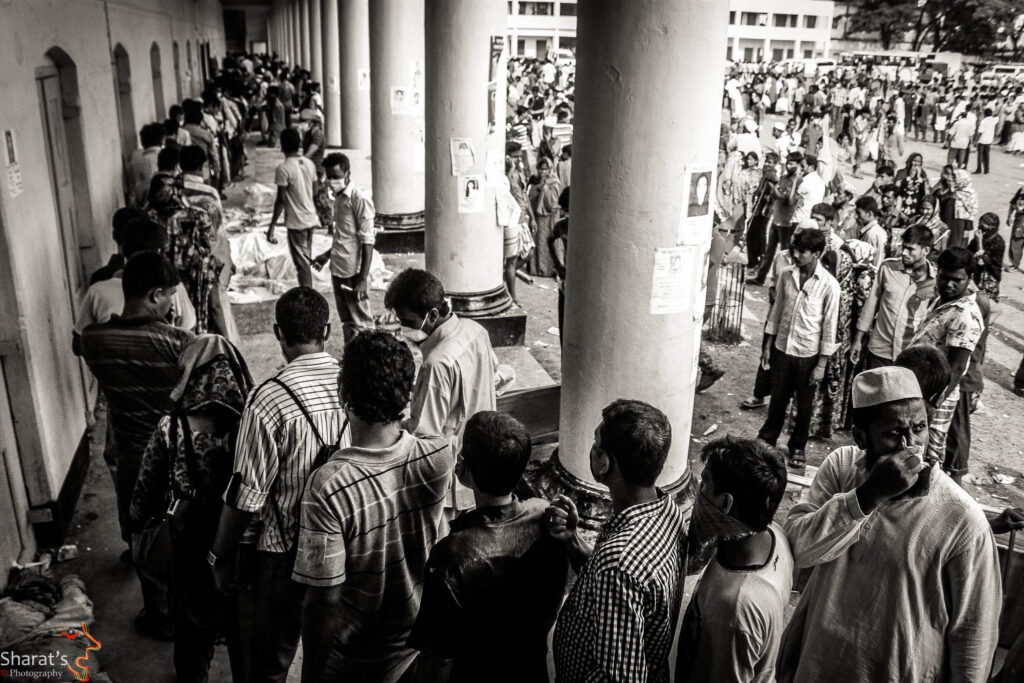
Savar, April 2013. A long queue forms inside a public building used for identification and information distribution following the collapse.
SECTION II — COLLECTIVE APPEALS AND PUBLIC GATHERING
As formal channels of communication remained limited, collective appeals emerged in open spaces. Relatives and community members used visible displays—papers held aloft, posted lists, and verbal calls—to search for missing workers.
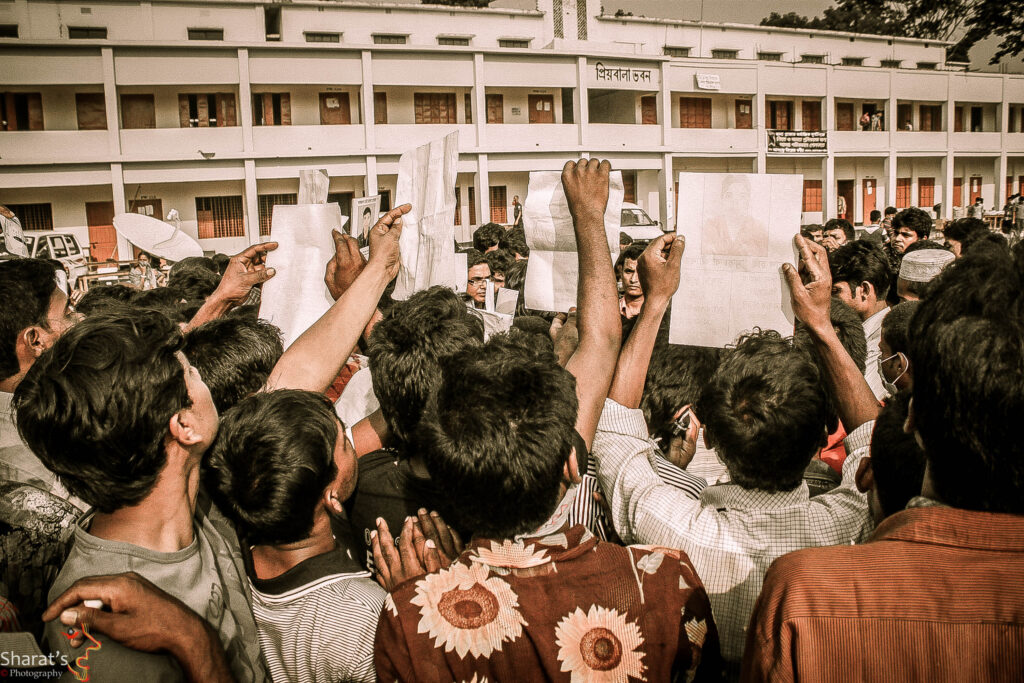
Savar, April 2013. Relatives hold up printed sheets containing names and photographs of missing garment workers during a public gathering.
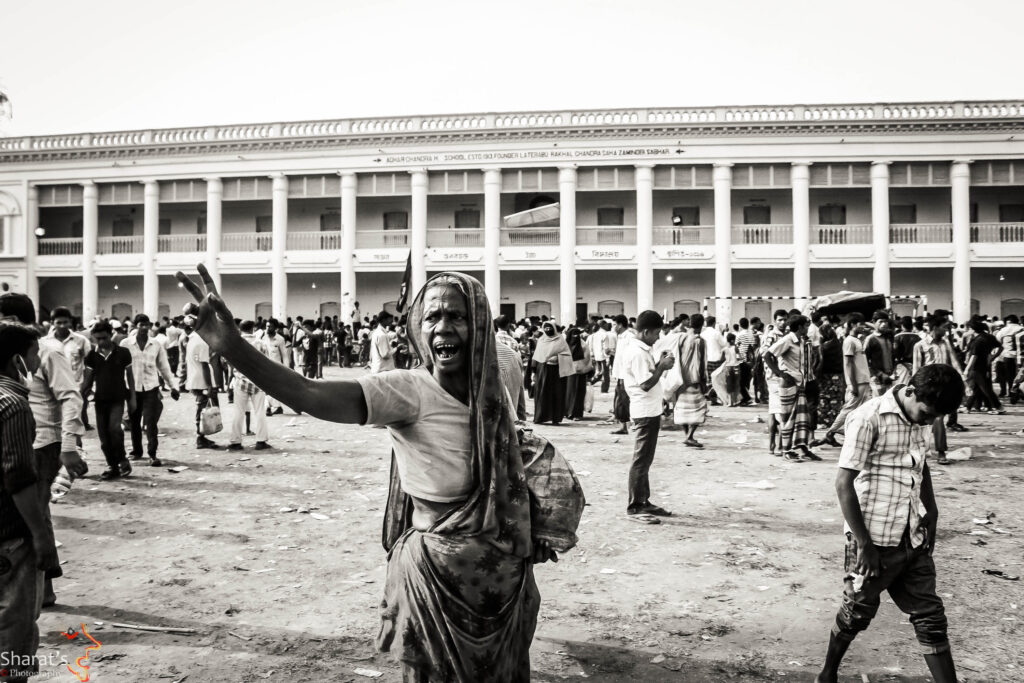
Savar, April 2013. A woman gestures while addressing others in an open ground used as a gathering point for families of missing workers.
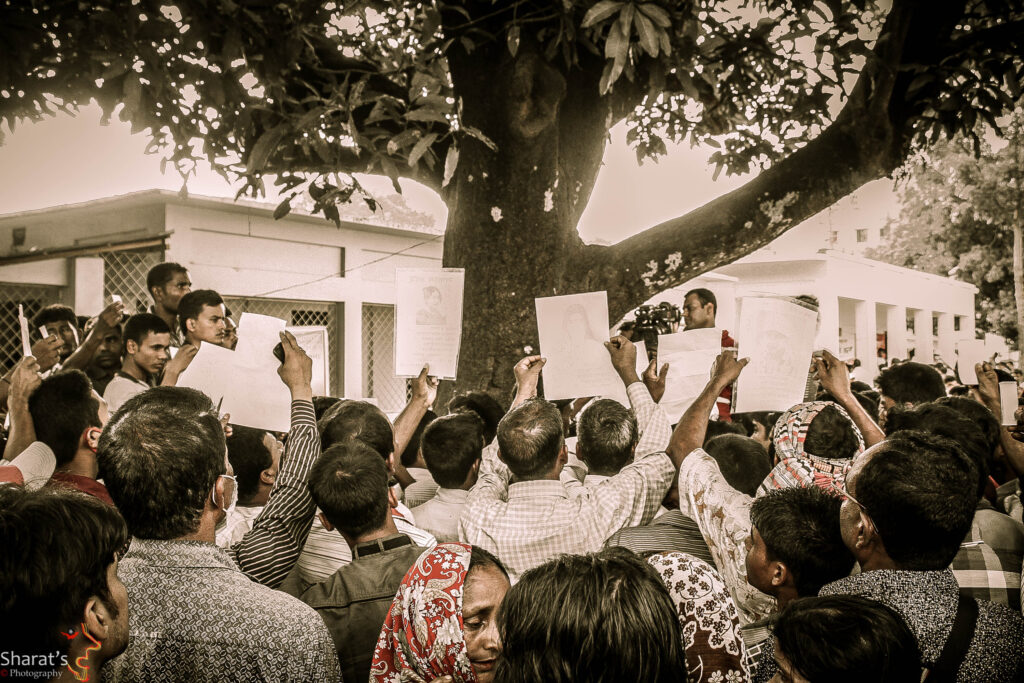
Savar, April 2013. A dense crowd raises printed notices beneath a tree where missing-person information had been temporarily collected and displayed.
SECTION III — LISTS, RECORDS, AND TEMPORARY ARCHIVES
In the absence of centralized records, handwritten lists and chalkboards functioned as provisional archives, recording names, phone numbers, and fragments of identification.
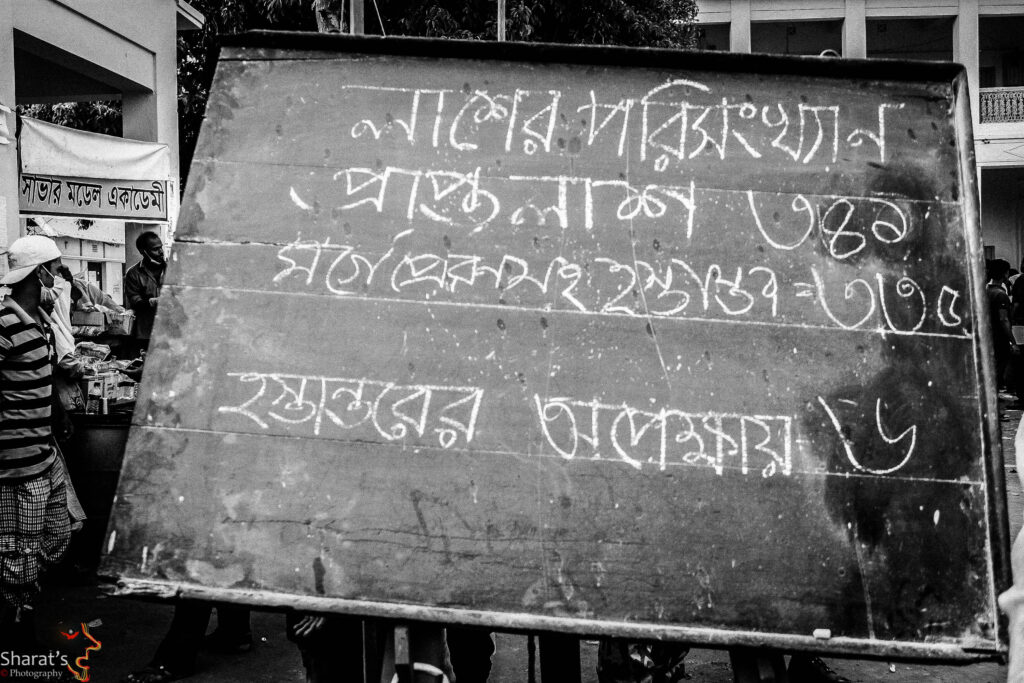
Savar, April 2013. A handwritten list of names and phone numbers recorded on a chalkboard used for tracking missing and identified workers.
SECTION IV — RELIEF, TRANSPORT, AND MOVEMENT
Alongside search efforts, relief distribution and transportation operated through ad hoc arrangements involving volunteers, students, and local organizations.
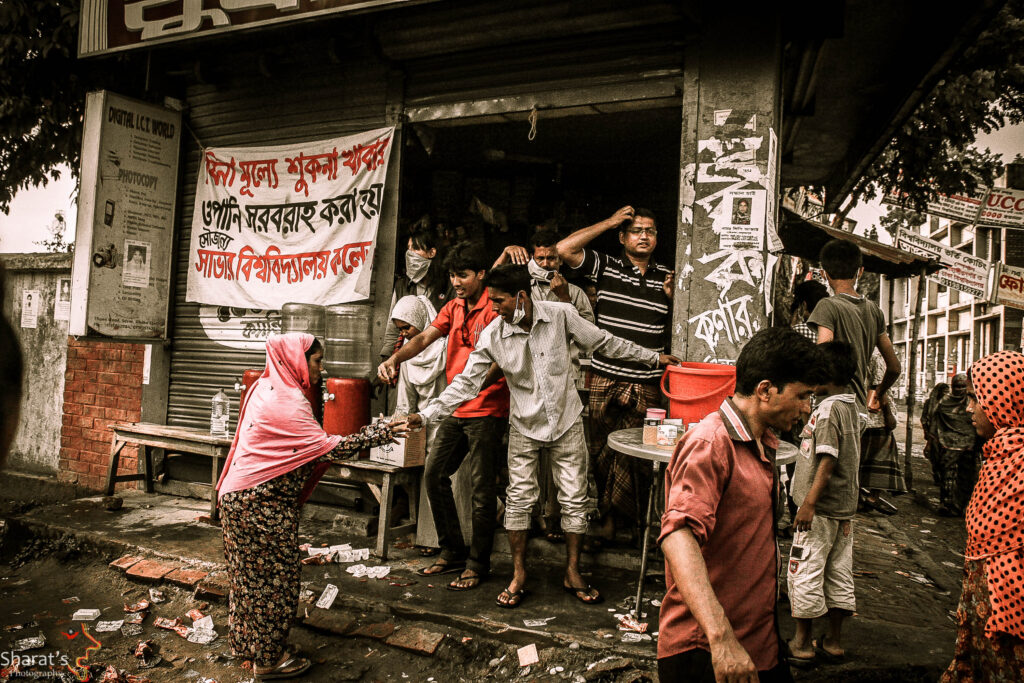
SECTION V — RESCUE OPERATIONS AND STRUCTURAL EXPOSURE
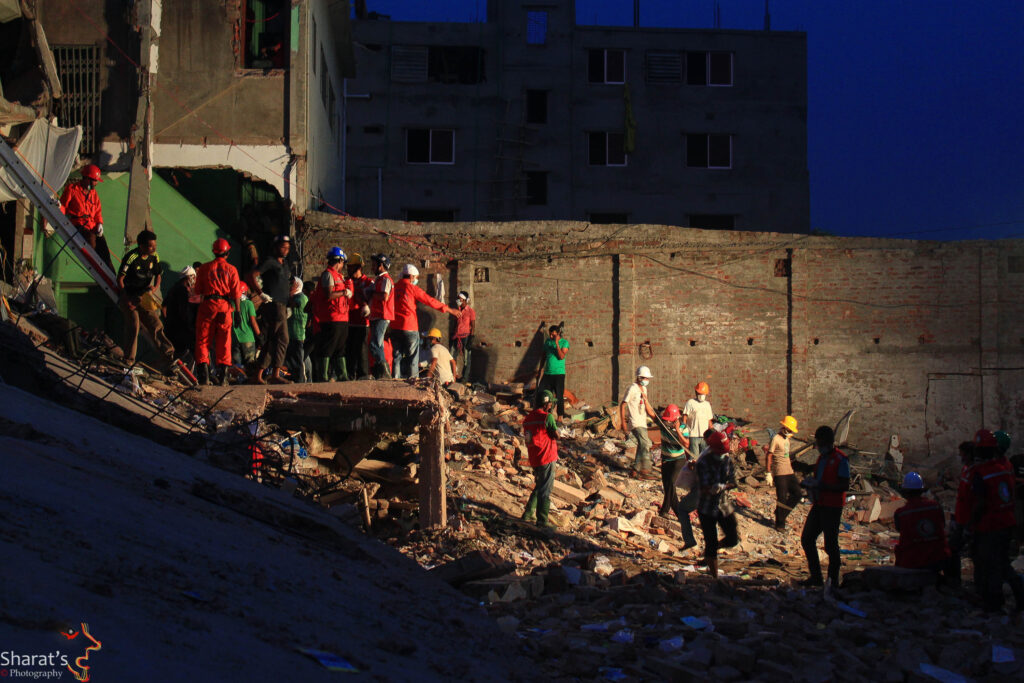
As rescue operations intensified, the interior of Rana Plaza became increasingly visible. Collapsed floors, exposed columns, and improvised access routes revealed the material conditions under which garment production had taken place.
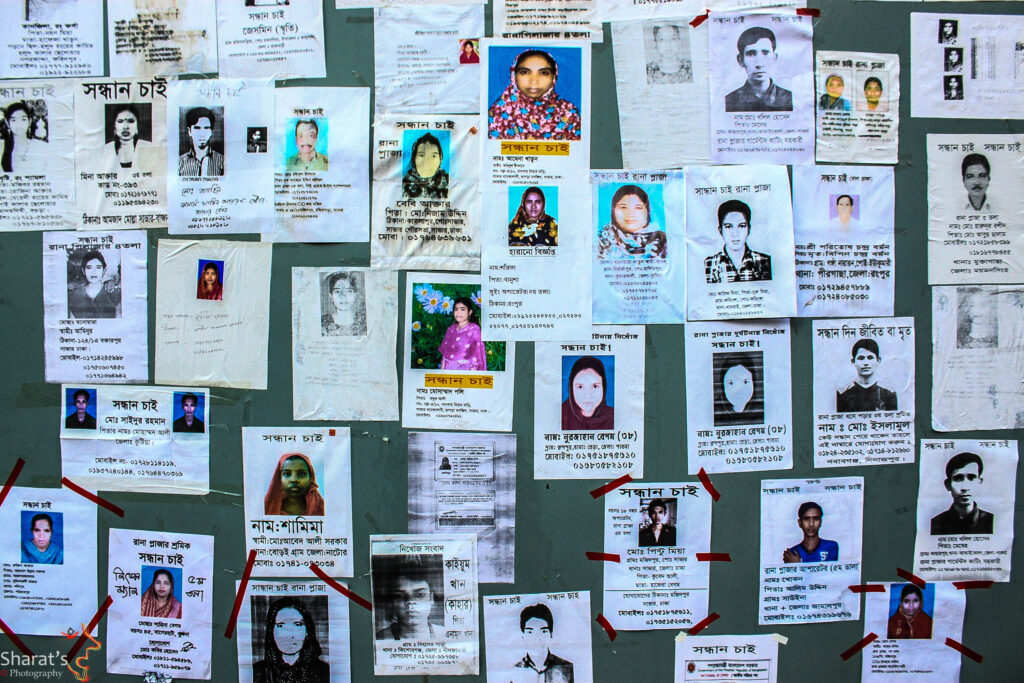
Savar, April 2013. A wall covered with handwritten and printed notices displaying photocopied photographs, names, and mobile phone numbers of missing garment workers.
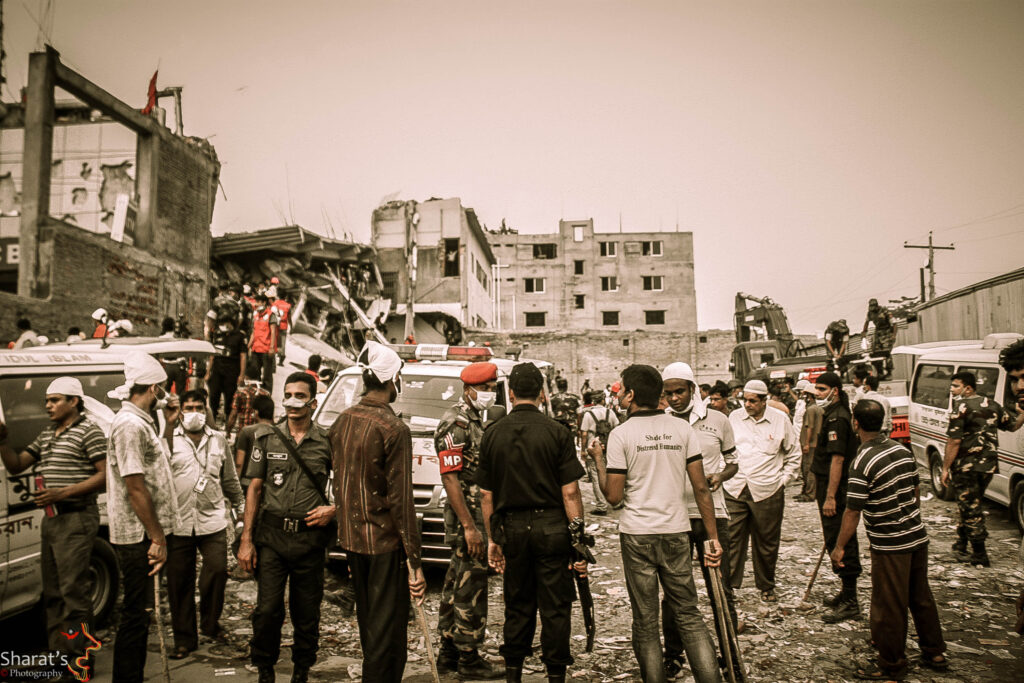
Savar, April 2013. Rescue personnel, security forces, and volunteers gather amid debris as recovery operations continue at the Rana Plaza site.
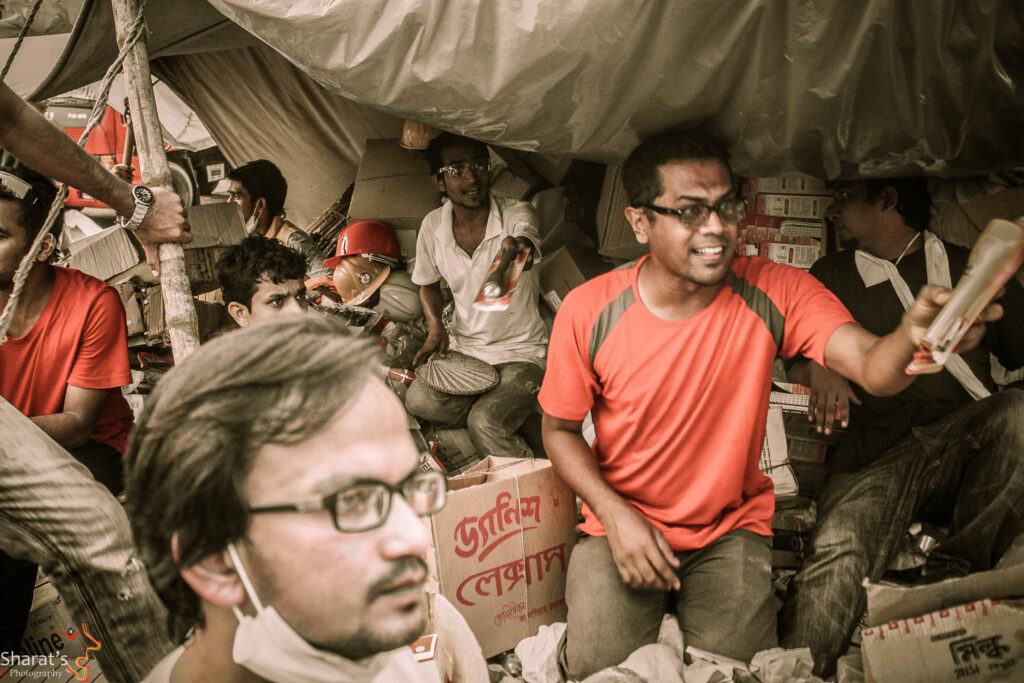
Savar, April 2013. Volunteers distribute bottled water and supplies from an improvised shelter adjacent to the collapse site.
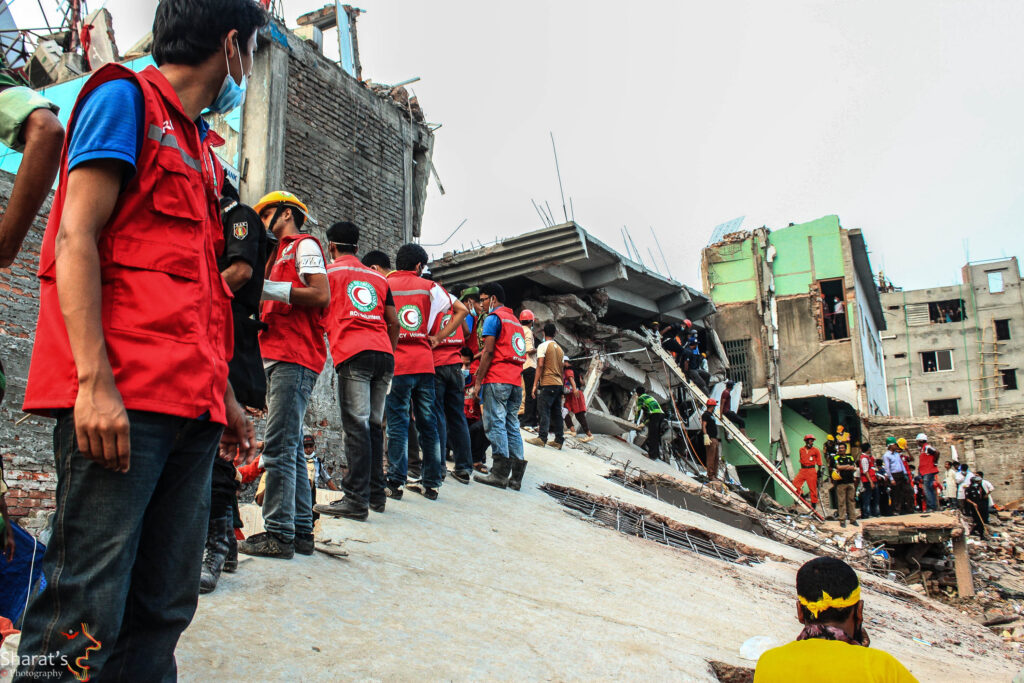
Savar, April 2013. Volunteer rescue workers form a line while approaching a collapsed section of the building during ongoing recovery efforts.
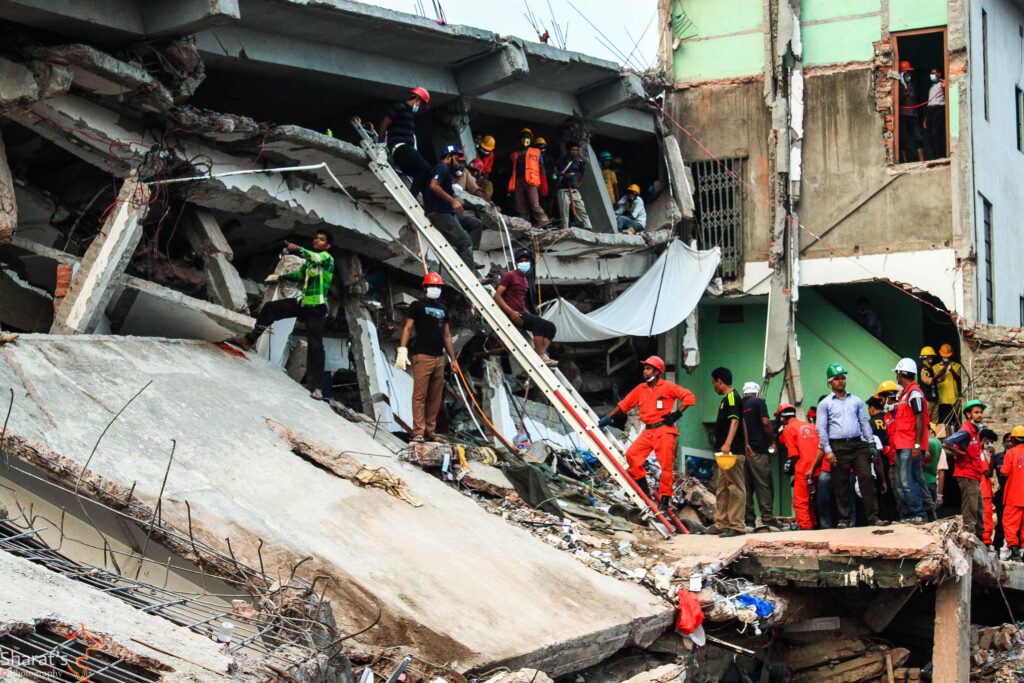
Savar, April 2013. Rescue workers use ladders and ropes to access interior sections of the collapsed Rana Plaza structure.
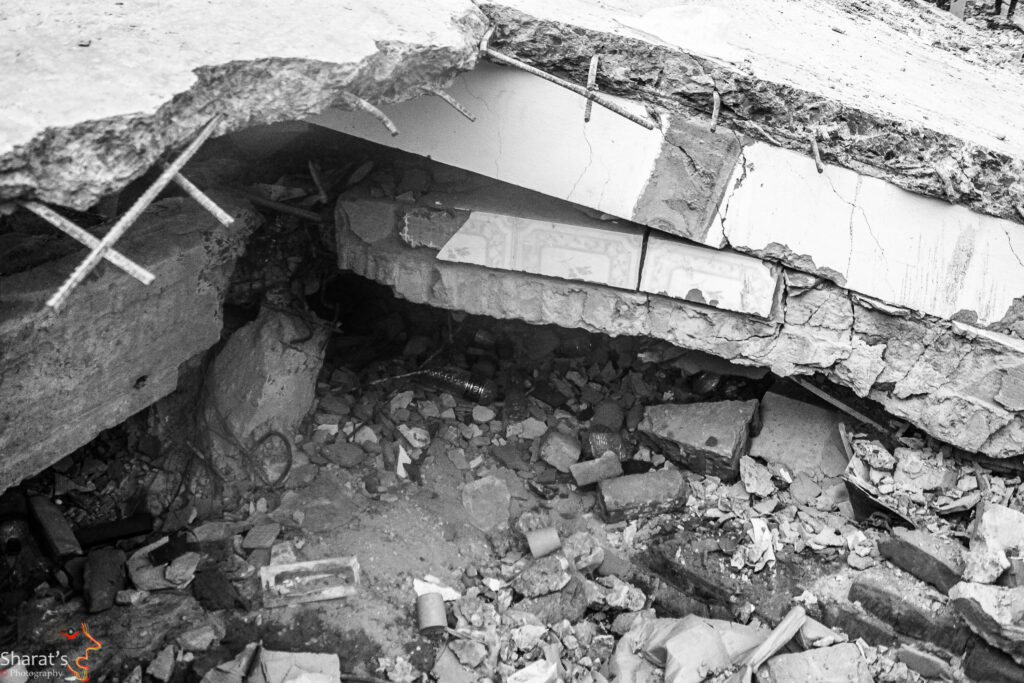
Savar, April 2013. A collapsed concrete floor slab reveals exposed reinforcement bars and debris inside the Rana Plaza structure.
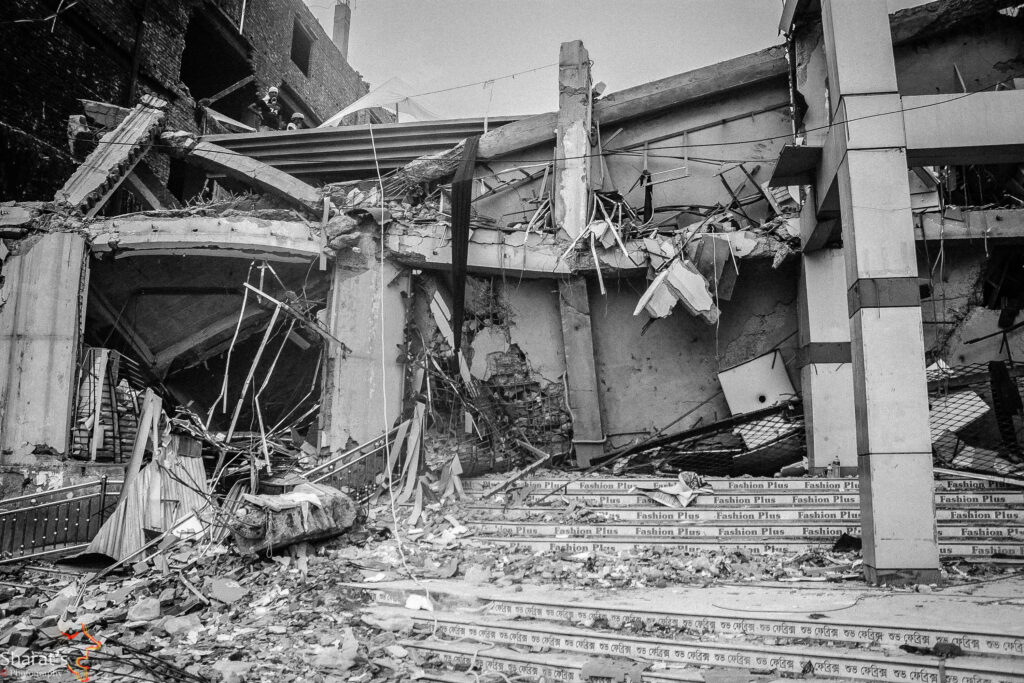
Savar, April 2013. The exposed façade of the Rana Plaza building following the collapse, with interior floors and structural elements visible.
SECTION VI — WAITING, NIGHT, AND CONTAINMENT
As recovery operations extended into the night, access to the site became increasingly restricted. Crowds gathered behind temporary barriers, waiting for updates under conditions of prolonged uncertainty.
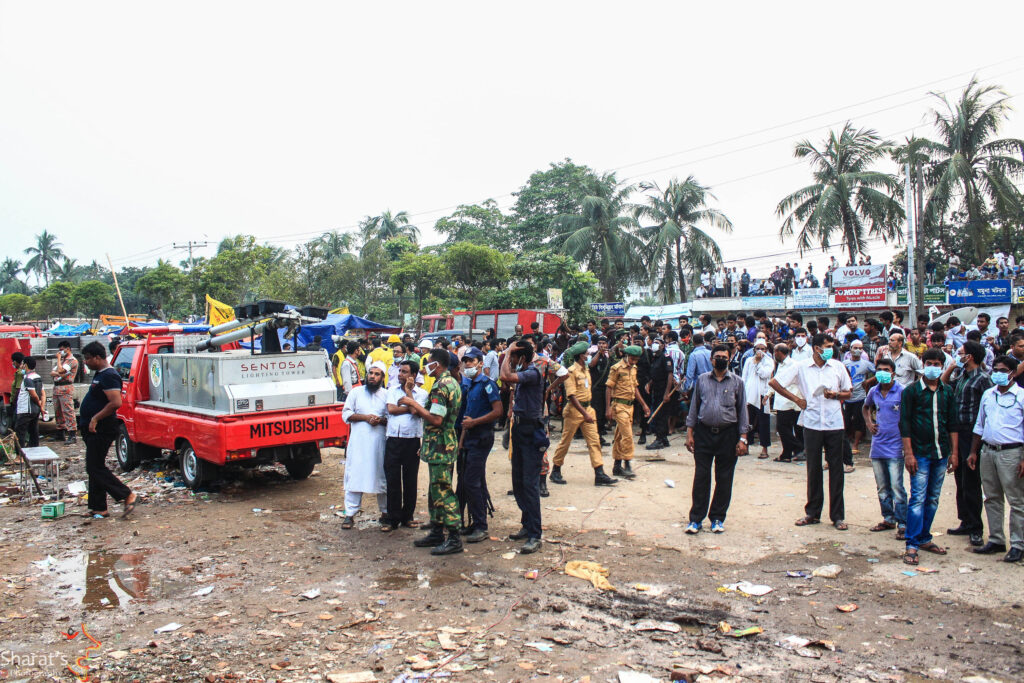
Savar, April 2013. Security forces and civilians stand along a cordoned roadside near the Rana Plaza site as recovery operations continue.
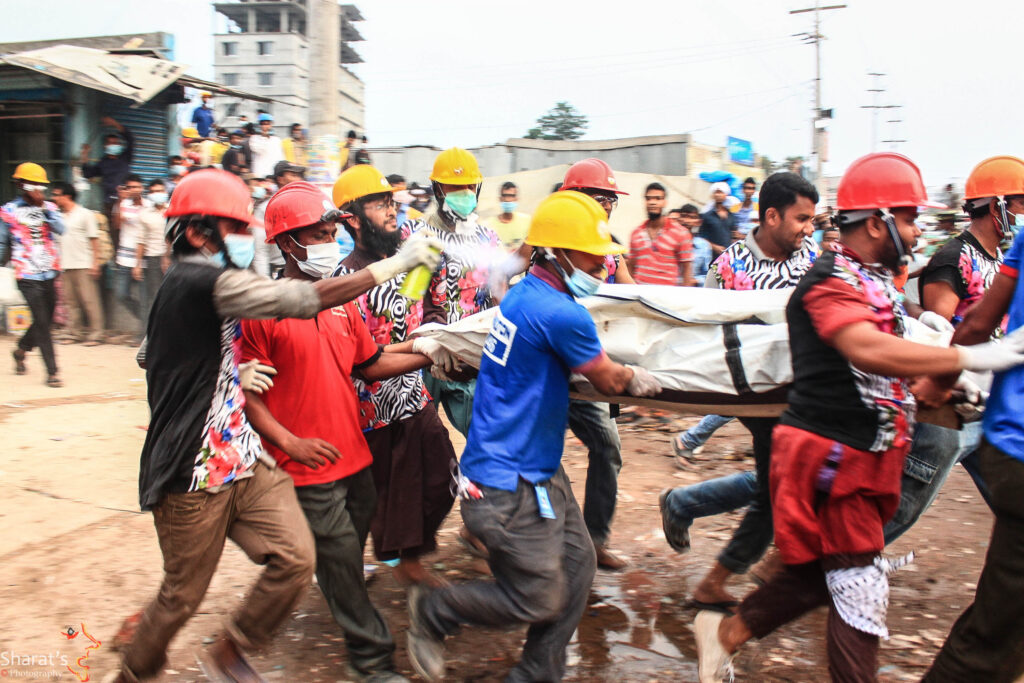
Savar, April 2013. Volunteer rescue workers carry a recovered body wrapped in cloth from the collapse site during ongoing operations.
Savar, April 2013. A crowd gathers behind a temporary metal barricade at night, waiting for updates during extended recovery efforts.
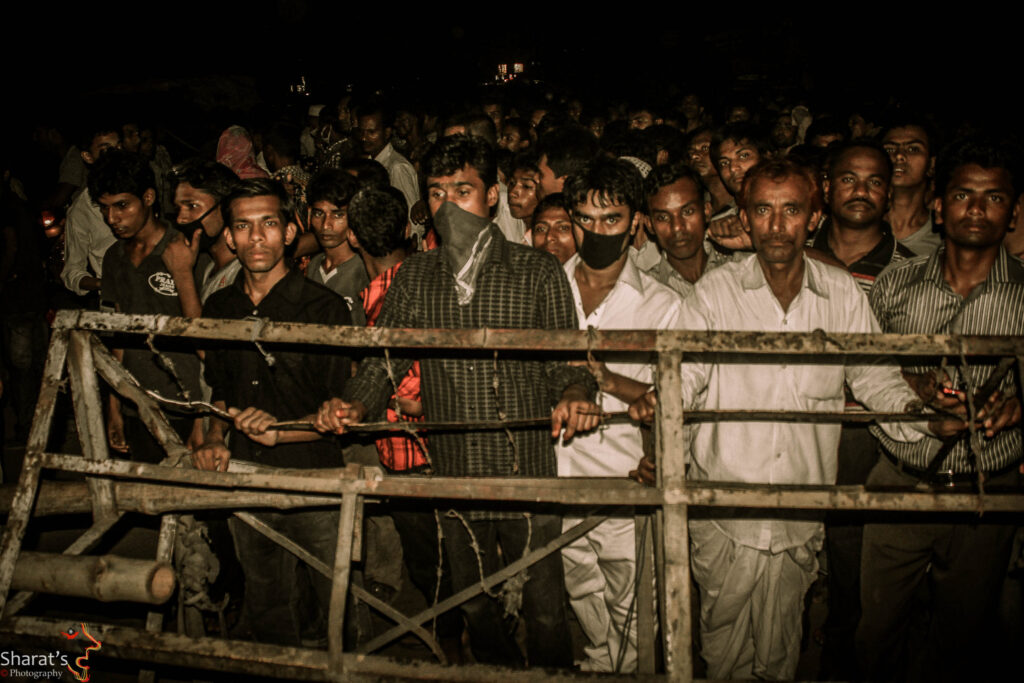
Savar, April 2013. Members of the public wait behind barricades during nighttime recovery operations near the Rana Plaza site.
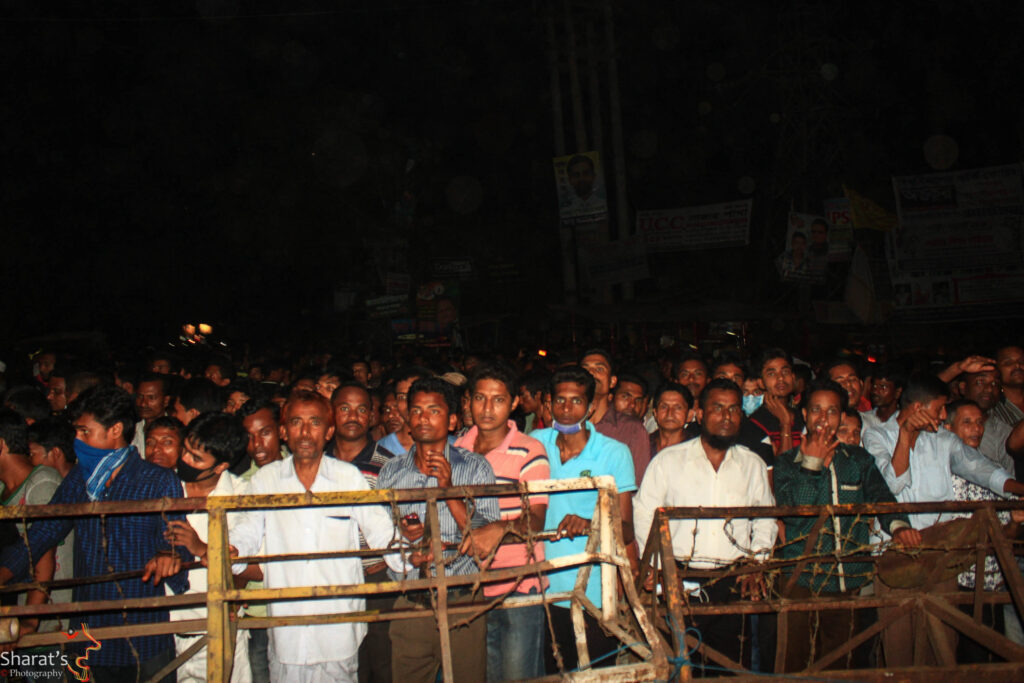
As recovery operations extended into the night, public access became increasingly restricted. Crowds gathered behind temporary barriers, waiting for information in prolonged conditions of uncertainty.
This archive preserves selected visual records from April 2013 as historical material for study, reflection, and public memory, without claiming completeness or closure.